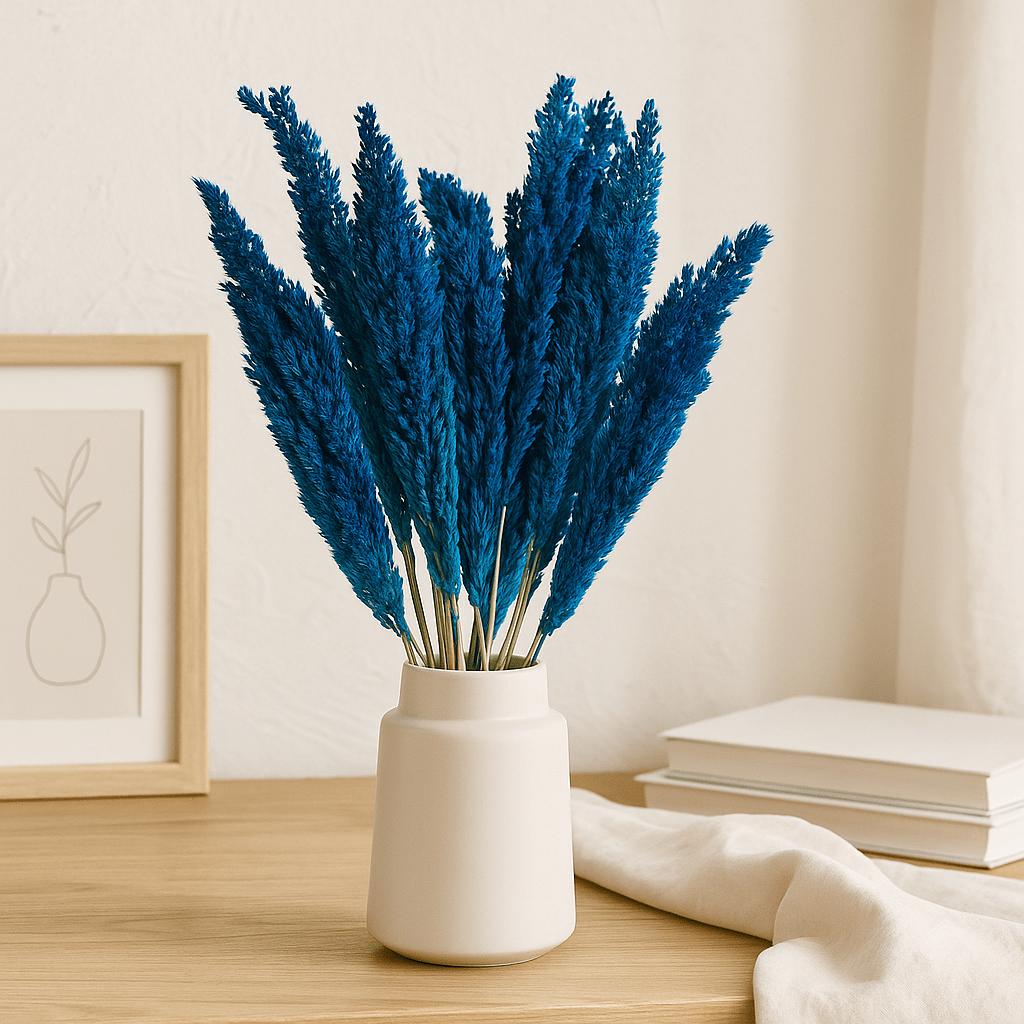
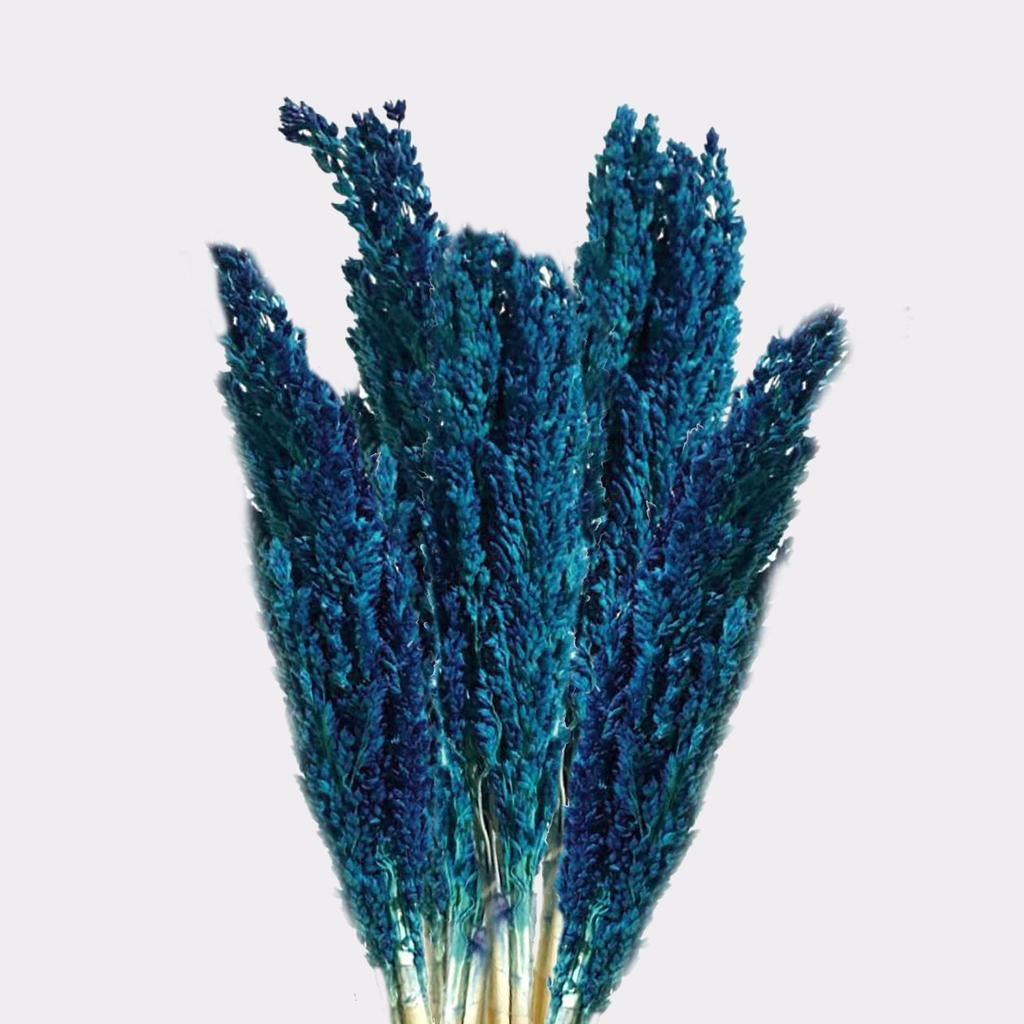
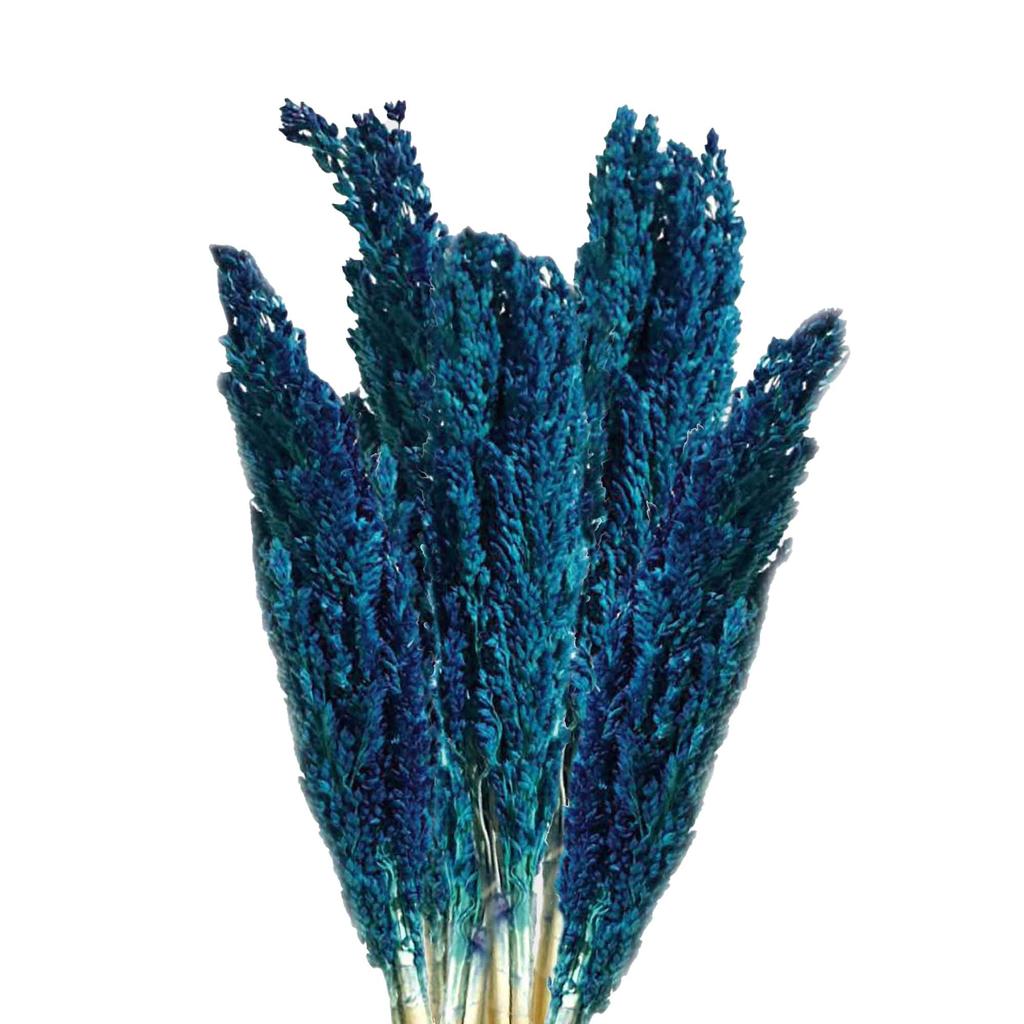
Six stalks of sorghum grass, dried and dyed a soft blue, bound at the base and cut to 50 cm. The kind of thing that sits easily in a tall vase or leans against a wall, bringing texture and a little colour without demanding attention.
What it is
Sorghum bicolor — sometimes called broomcorn — is a tall grass grown across warm climates for grain, fodder, and the sturdy stalks themselves. Once harvested and dried, the stems hold their shape and a gentle rustling quality. Here they've been dyed blue and bundled in sixes, each stalk slightly different in thickness and the way it tapers. Handmade in Indonesia.
Where it works
On a desk beside a window. In a meditation corner where you want something living without the upkeep. Grouped with other dried stems — pampas, wheat, anything neutral — to anchor the arrangement. The blue reads as a muted slate in most light, neither bright nor dull, and it sits well against white walls or wood.
Common questions
How long do they last?
Indefinitely if kept dry. The colour may fade slowly over months in direct sun, settling toward grey-blue.
Do they shed?
Not noticeably. Sorghum stems are fairly robust once dried, though the occasional seed head or leaf fragment may drop if handled roughly.
region of manufacture: Indonesia


 No-delivery refund