It contains a fantastic meaning to pray for longevity, wealth, peace, and prosperity of descendants.
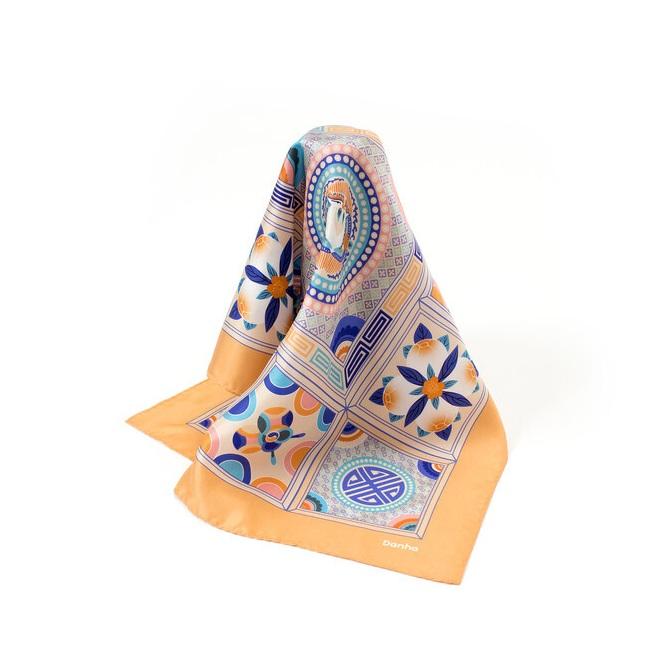
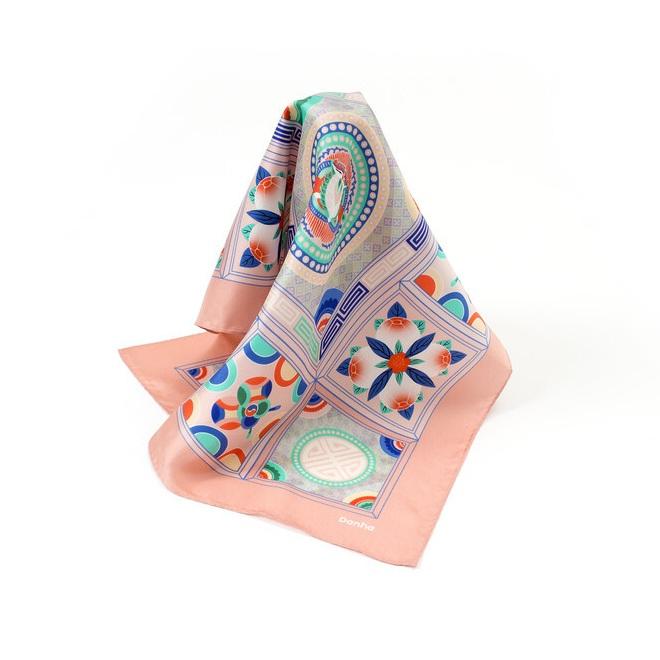
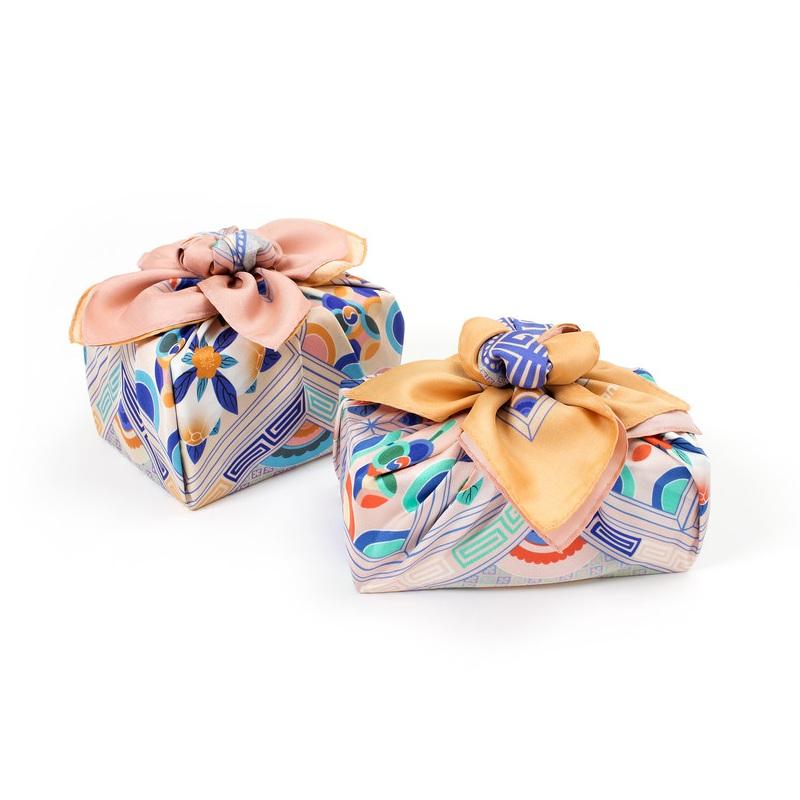
It is a silk scarf with a motif of a cloth used in the royal court of Joseon.
Phong Huangmun Humanities Bulletin [鳳凰紋 引紋袱]
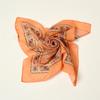
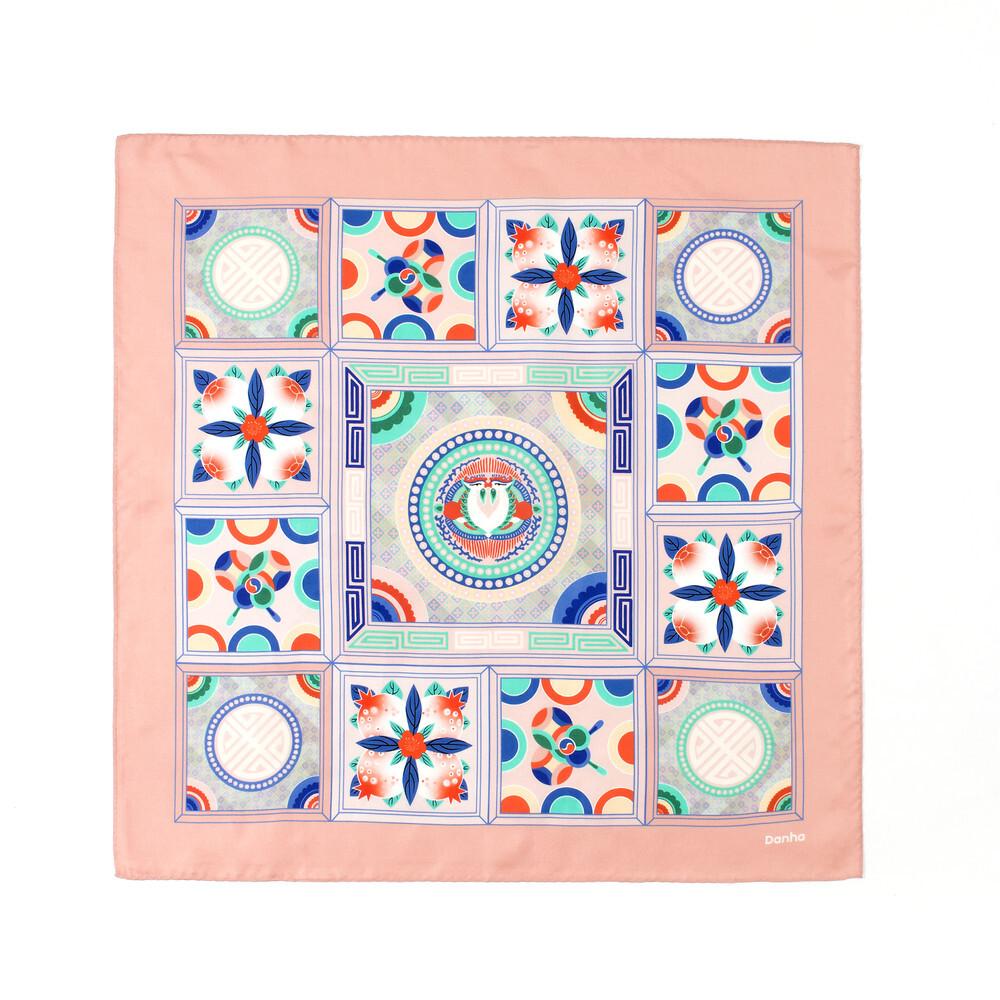
In the Joseon court, cloths of various materials, sizes, and shapes were widely used. Important gifts were carefully packaged with silk cloths and strings, and even in the living spaces of the palace, such as sedimentation, suragan, and barn, cloths were essential household items to wrap and cover various items. Some of the cloths in the National Palace Museum are written in ink, such as the contents, place of use, time of production, size, and quantity. The entire beam is divided into a grid and a pair of phoenixes surrounded by multiple layers of performance (連珠紋) are drawn in the center, and the nematodes (圓壽紋) are placed in the four-corner compartments. Bomun (紋) such as Geumjeong (犀角), Seogak (扇), Seonbo (葫盧), and Horo (手柑), and fruit gates such as tangerines, peaches, Buddhist 錠, and pomegranates are arranged alternately.
- Sources at the National Palace Museum -
Product Description
Rooted in the elegance of the Joseon royal court, this 100% silk scarf is inspired by pojagi — the traditional Korean wrapping cloths once used inside the royal palace to carry precious gifts and ceremonial objects. Designed by Danha, a Seoul-based brand dedicated to reinterpreting Korean heritage aesthetics for modern life, each scarf carries hand-drawn traditional patterns brought to life on luxurious pure silk.
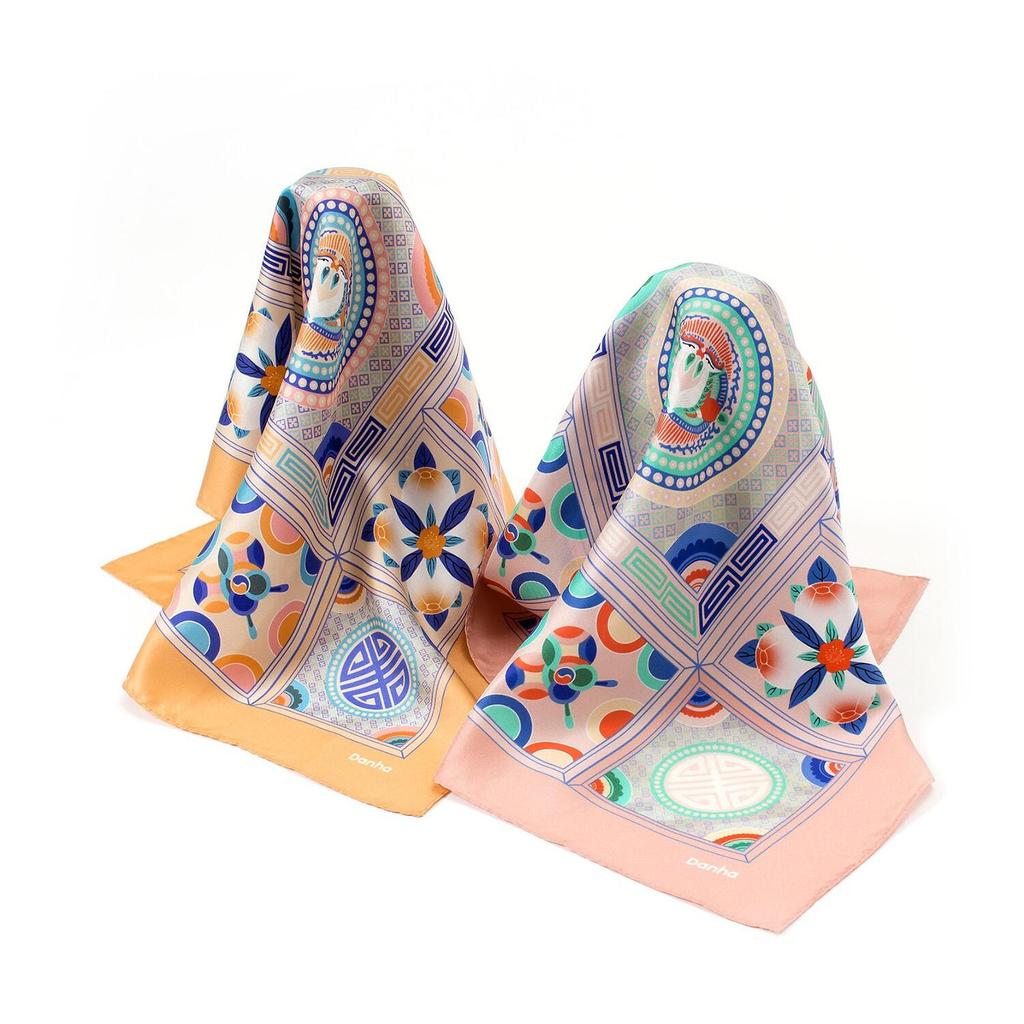
The central motif features a majestic pair of phoenixes (bonghwang) encircled by layered yeonjumun (連珠紋) pearl-bead border patterns, a design drawn directly from an artifact held at the National Palace Museum of Korea. Surrounding the phoenixes, the grid-divided composition alternates between bowmun (treasure symbols such as gold ingots, rhinoceros horn, folding fans, and gourds) and gwasil-mun (fruit motifs including tangerines, peaches, Buddha's hand citrus, and pomegranates). Every element carries a deep traditional symbolism: longevity, prosperity, peace, and the blessing of many descendants.
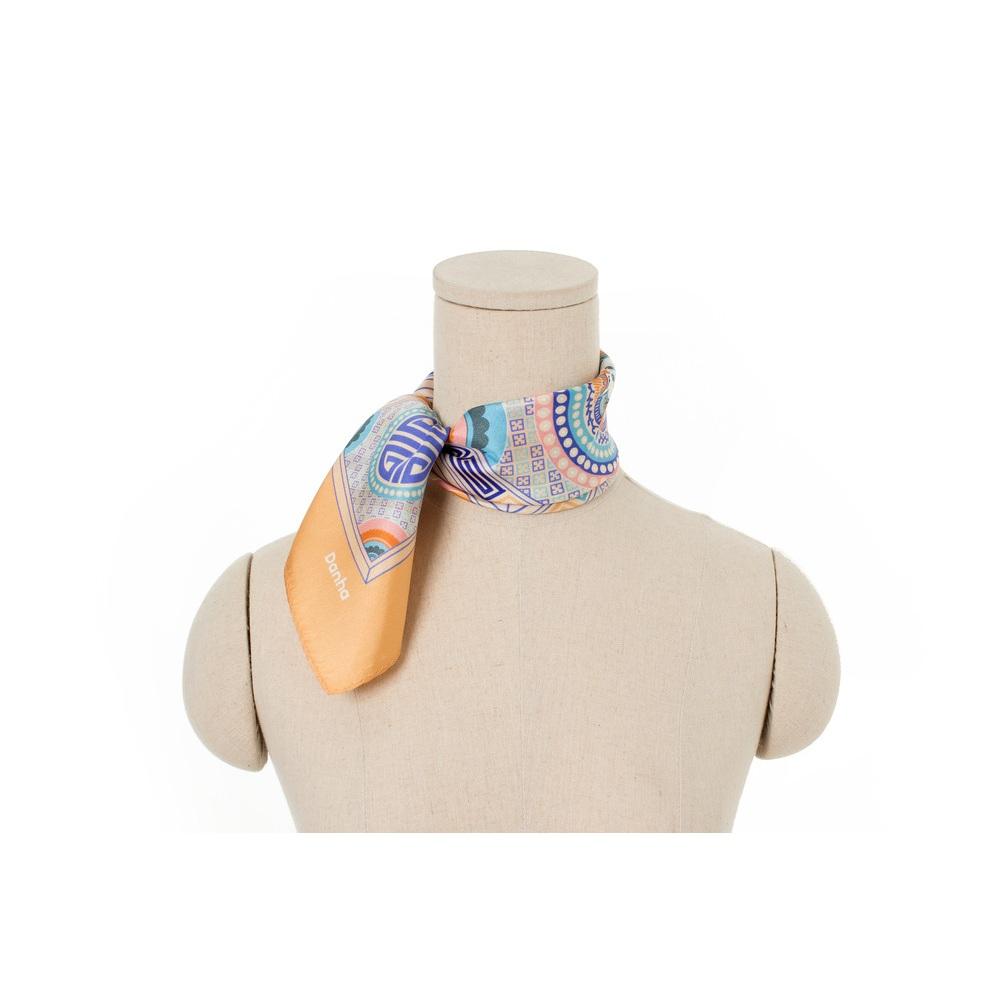
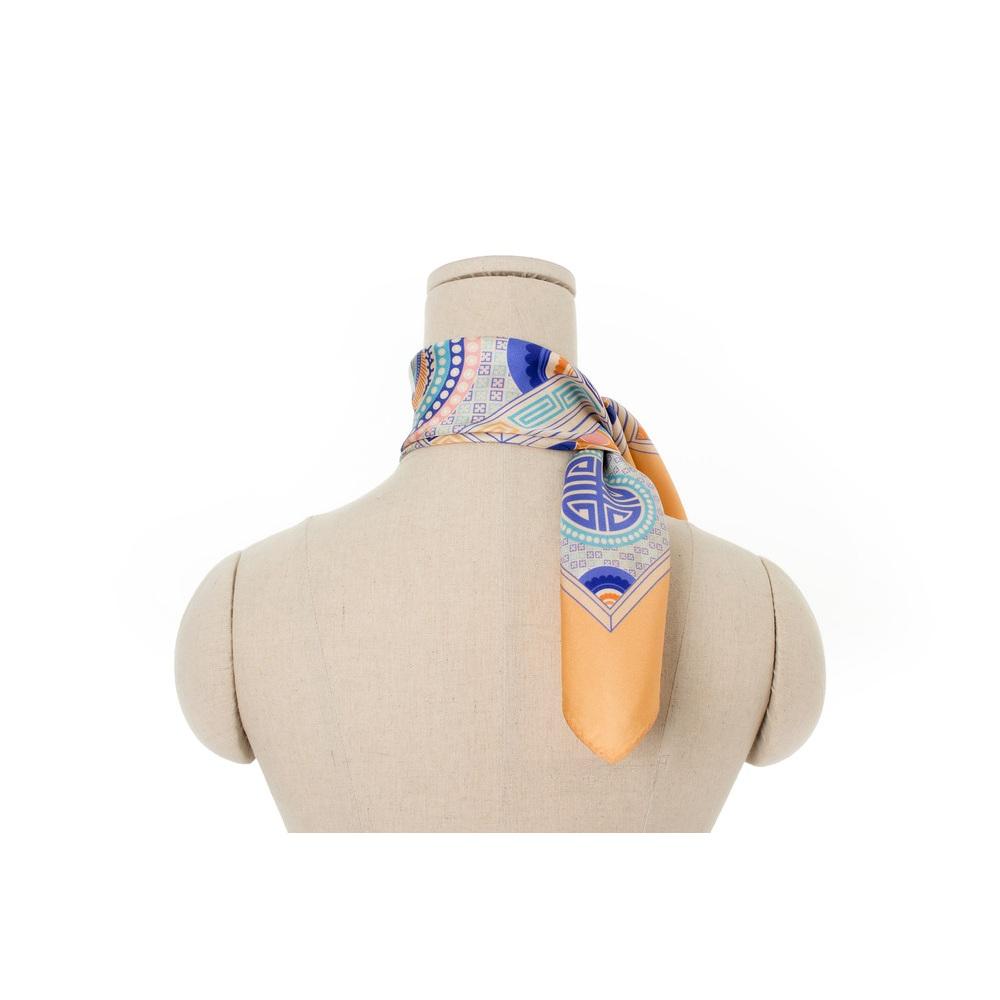
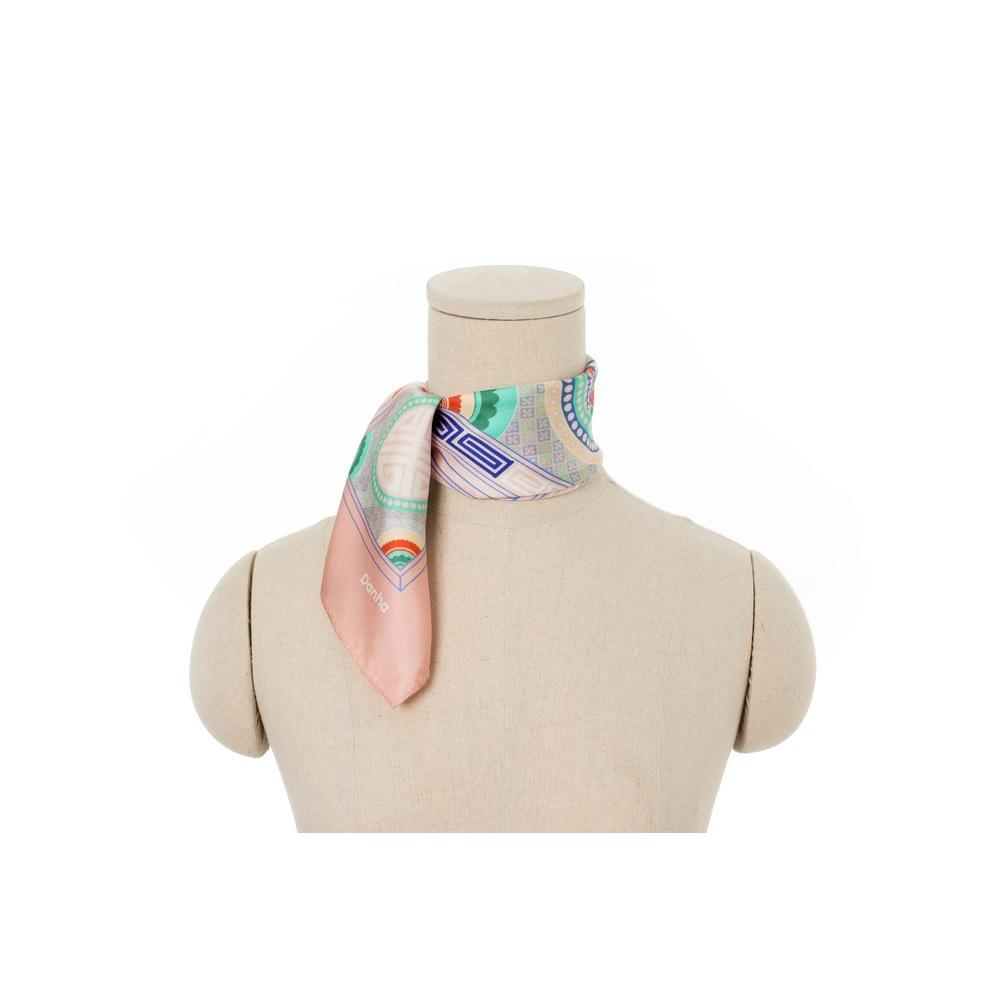
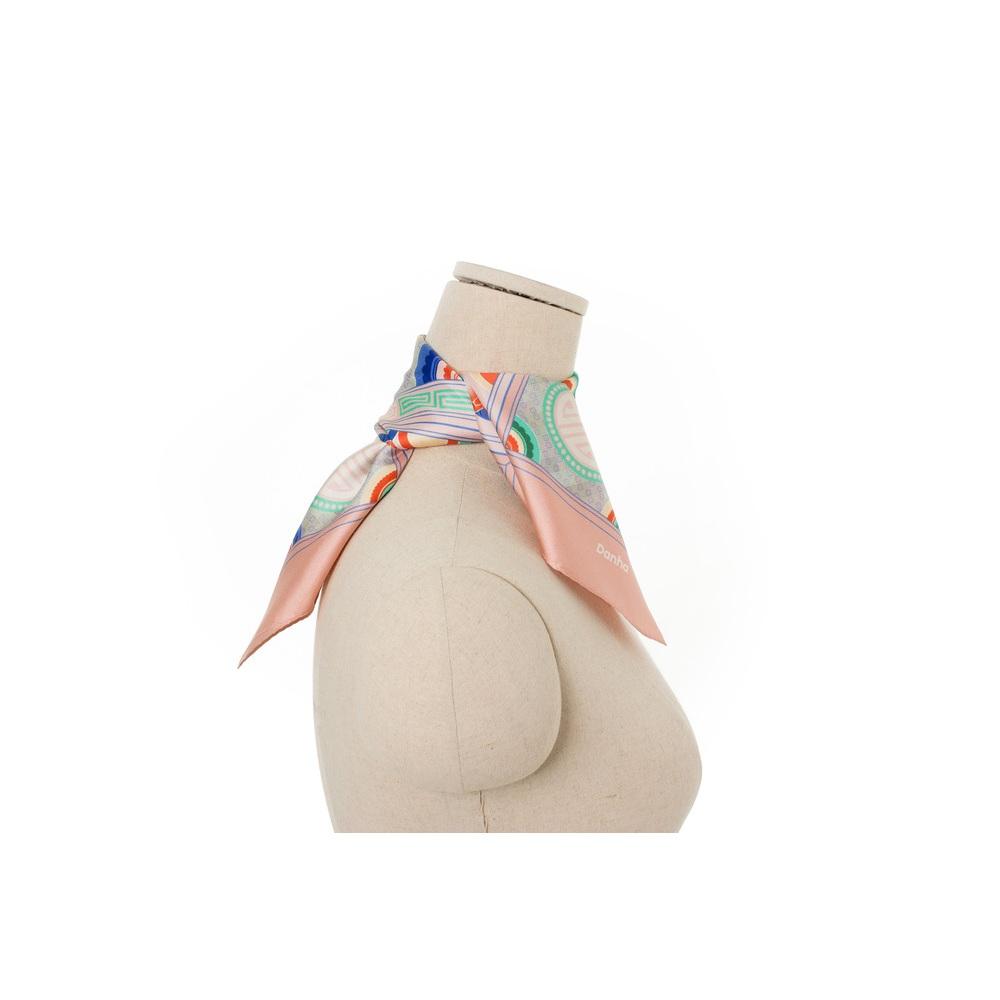
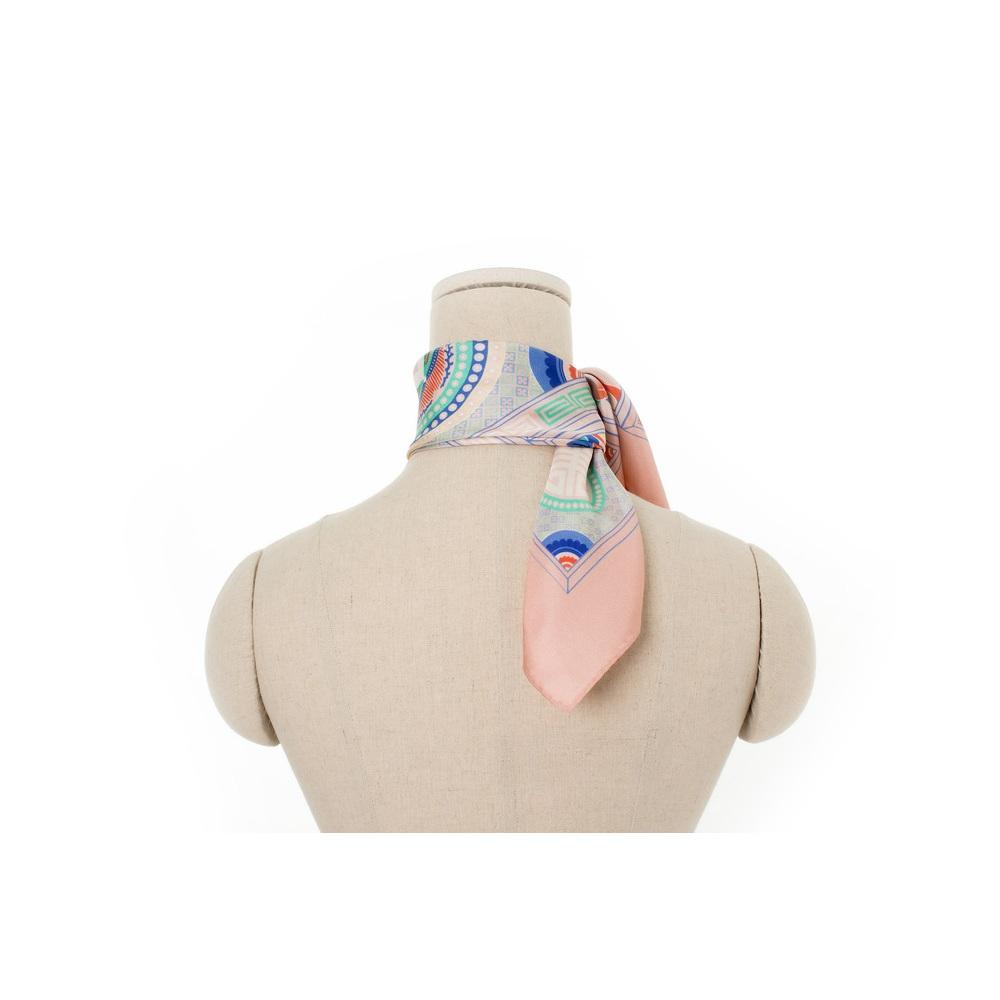
Available in two distinctive colourways — Orange and Pink — each version interprets the same royal composition through a different emotional lens. The Orange colourway radiates warmth and vitality; the Pink colourway offers a softer, more romantic sensibility. Both are equally striking when worn as a neck scarf, tied to a bag, used as a decorative pocket square, or displayed as a small textile art piece.
All patterns are hand-drawn original artwork by Danha's design atelier, making each scarf a wearable piece of Korean cultural heritage.
Key Features
Inspired by pojagi (Korean royal court wrapping cloth) from the Joseon Dynasty, sourced from the National Palace Museum of Korea collection
Central phoenix pair (bonghwang) motif — a symbol of grace, virtue, and royal dignity in Korean tradition
Surrounding panels feature auspicious treasure symbols (bowmun) and fruit motifs (gwasil-mun): tangerine, peach, Buddha's hand citrus, pomegranate — each symbolising longevity, luck, and abundance
100% pure silk — lightweight, lustrous, and exceptionally soft against skin
Hand-drawn traditional patterns — original artwork by Danha's in-house design team
Versatile square format (53×53cm): wear as a neck scarf, headscarf, bag accessory, pocket square, or decorative textile
Available in 2 colourways: Orange (warm, vibrant) and Pink (soft, romantic)
Ideal as a premium gift: unique Korean cultural item with universal aesthetic appeal
Brand: Danha (단하) — Seoul-based Korean heritage lifestyle brand
How to Use / Styling Tips
This scarf is designed for versatile everyday wear and gifting. Here are some ways to style it:
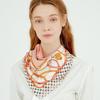
As a neck scarf — Fold diagonally into a triangle and drape loosely around the neck for an effortless layered look. Alternatively, fold into a narrow band and tie in a loose knot at the front.
As a bag charm / accessory — Tie around the handle of a handbag or tote for an instant pop of colour and cultural storytelling.
As a headscarf — Fold into a narrow strip and tie around the head or ponytail. Works beautifully with both casual and dressed-up looks.
As a pocket square — Fold into a rectangle and tuck into a suit breast pocket for a unique, artful detail.
As a decorative wrap or display piece — Place flat or draped over a surface as a small textile art piece. The traditional pattern is detailed enough to be appreciated as a decorative object on its own.
Care Instructions
Dry cleaning recommended — this is the safest method to preserve the silk's lustre and the hand-drawn pattern's vibrancy
If hand-washing at home: use cold water only, with a gentle detergent formulated for silk or delicate fabrics; do not wring or twist
Do not machine wash
Do not tumble dry; lay flat or hang to dry away from direct sunlight
Do not bleach
Iron on the lowest (silk) setting, or steam-iron on the reverse side with a cloth barrier
Condition: new
Washing Care: Do not bleach, Do not tumble dry, Dry clean




 No-delivery refund


![Scarf 70 X 70 Cm Square Stole Pattern Scarf Sun Protection Sunburn Protection Neck UV Protection Commuting Travel Bag Ornament Bandana Gift [MOOKISOO]](https://img.joomcdn.net/a800b3f2630e7843bb793fbfd657b37b3a89afa0_100_100.jpeg)