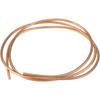
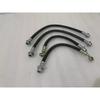
Copper Rigid Brake Lines For Rear Axle: RENAULT LAGUNA 3
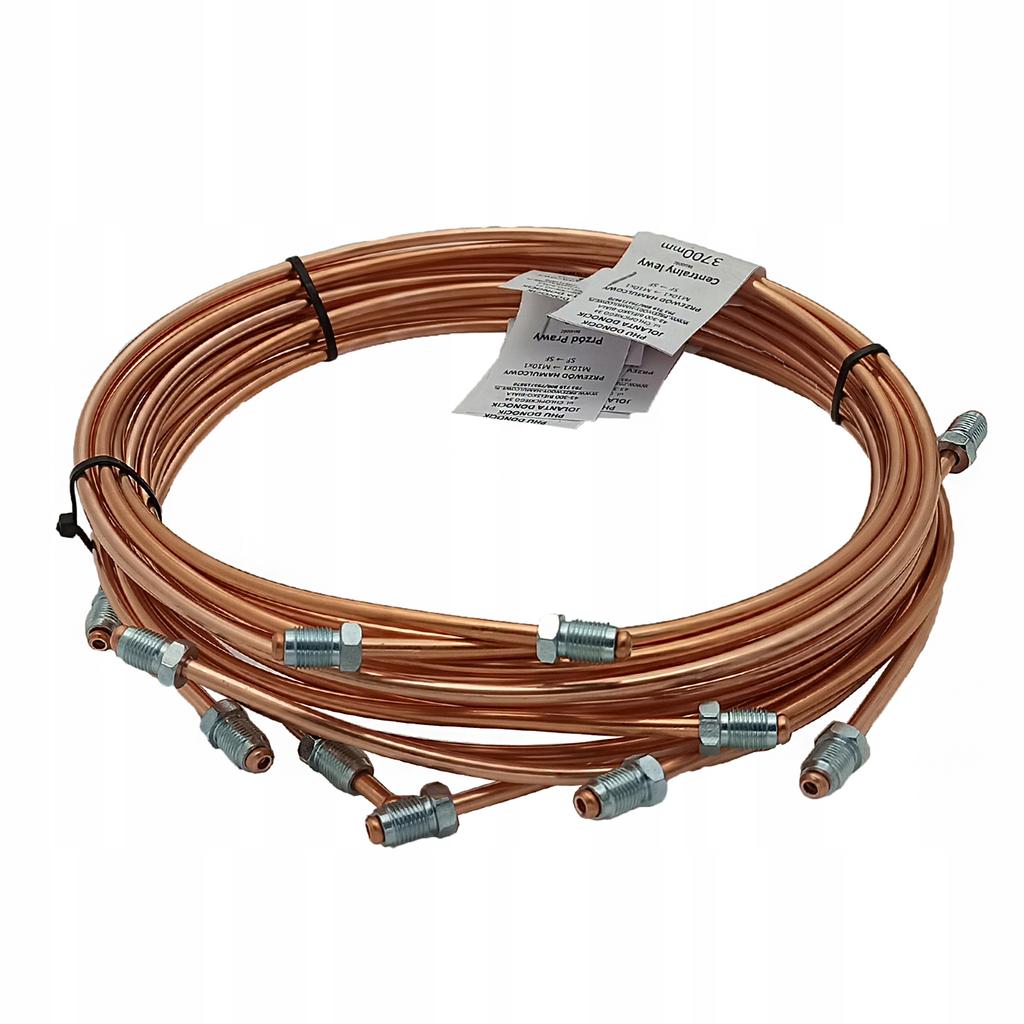
Set of rigid copper brake lines FOR THE REAR AXLE for the car brand:Renault Laguna 3years 2007 – 2015standard models - without 4control system*After purchase, please send the VIN number to select the appropriate set of wires.
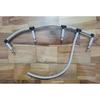
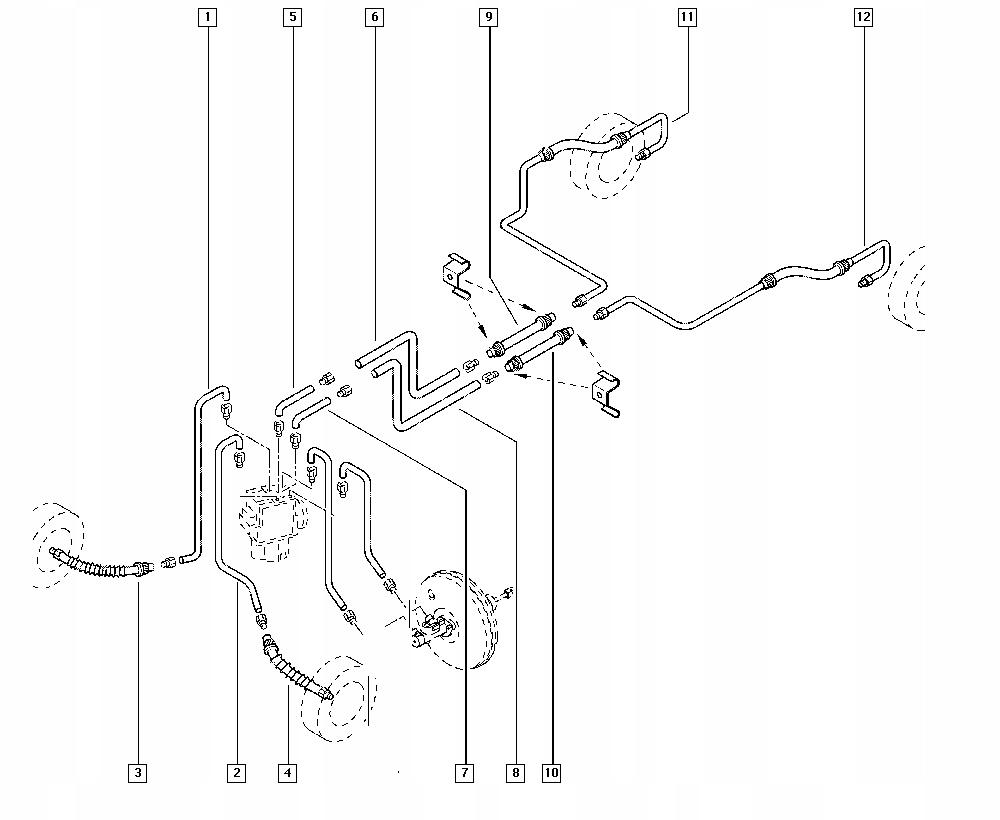
The set includes four copper rigid brake lines:
Central front left - 7
Central front right - 5
Central rear left - 8
Right rear central - 6
And two brass wire connectors ŁPS-1
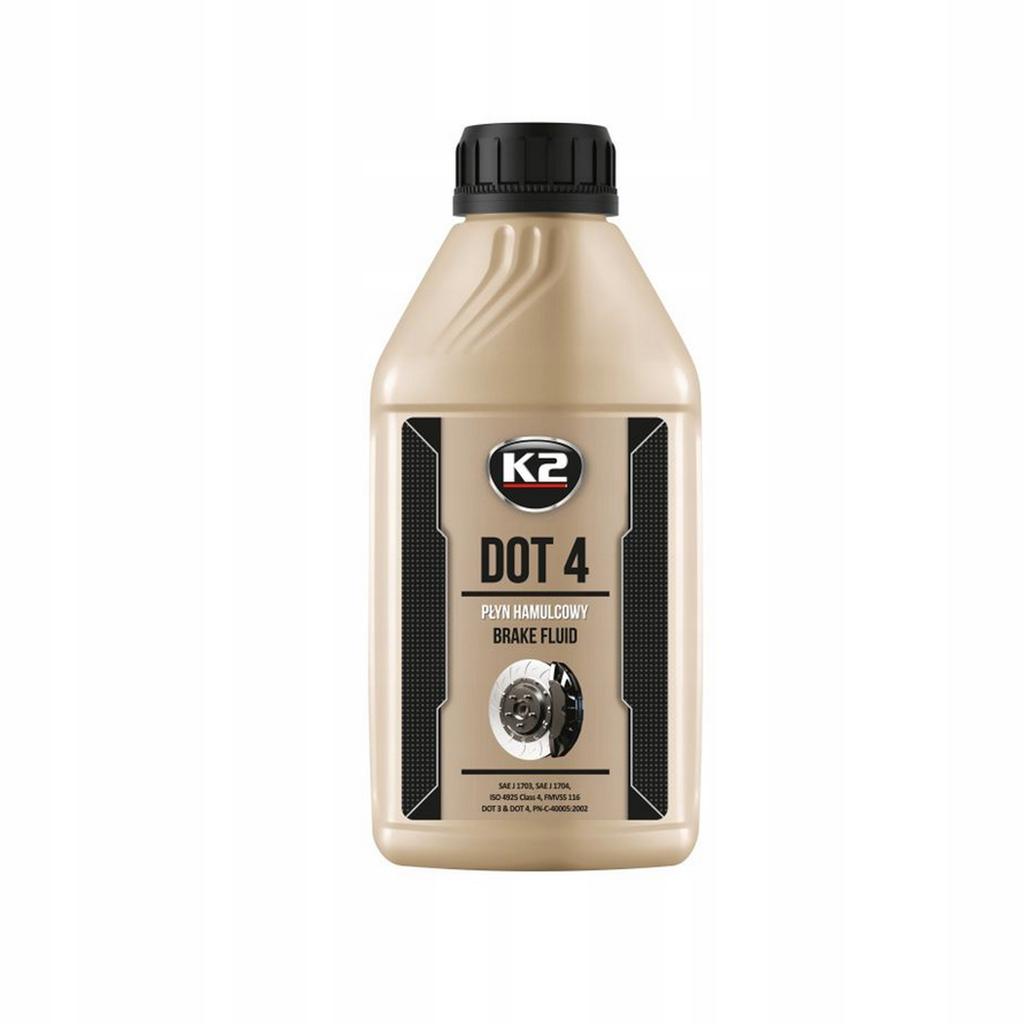
Additionally, we are adding 500ml of DOT-4 brake fluid to this set
Product information:
Our ZPHM series rigid copper brake line kits are made from high-quality, seamless CuDHP R200 copper tubing, compliant with the PN-EN 12449 standard.. This pipe comes from a leading European steel mill, which ensures:
Resilience:
Copper brake lines can operate at a working pressure of up to 220 bar, and an additional safety factor of x3.5 means that the burst pressure exceeds 750 bar.. For comparison, in a typical braking system, the maximum pressure reaches about 100 bar.
Easy to assemble:
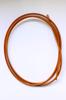
Copper with a hardness of R200/R220 is relatively plastic, making crimping and profiling possible even with simple hand tools, which significantly facilitates installation.
Ready-to-assemble set:
The hoses in our set are ready for installation – they have the appropriate types of crimped fittings, and the ends have the correct size and thread pitch.. Each cable is made to measure and marked with its location, which significantly speeds up assembly.
The dimensions of the wires are precisely matched based on the technical specifications of the vehicle manufacturer. Additionally, our technical department checks the correctness of the selected parts set based on the VIN number, which ensures the maximum possible accuracy and minimizes the risk of discrepancies between catalog data and the actual condition of the vehicle.
High-quality galvanized steel tips:
The wire ends in ZPHM sets are made of galvanized, high-grade free-cutting steel, which ensures their high resistance to corrosion.. Each tip is a product of Polish manufacturing, which guarantees controlled quality and compliance with European standards.
Also available in ZPHM/M - ZPHM/I versions made with brass or stainless steel tips.
Assembly and profiling:
The cables are supplied in coils, properly secured for transport. Require profiling before assembly. Benders can be used for profiling, but a skilled mechanic can also manage without specialized tools.
Summary:
Rigid copper brake lines are an excellent choice for people looking for products combining high corrosion resistance, durability, and ease of installation. Made from high-quality materials, ZPHM sets guarantee long-lasting reliability, even in harsh operating conditions.. Their ease of profiling makes installation quick and hassle-free, and consequently cheaper, making them an attractive option for owners of older or more budget-friendly vehicles.
FAQ – Frequently Asked QuestionsWhat to choose copper ZPHM or steel ZPHS?1. What are the advantages of rigid copper brake lines:Copper wires are resistant to corrosion, which makes them excellent for use in highly corrosive environments. Additional advantages of copper wires are:Ease of making fittings and bends – Copper is easy to work with, so fittings and bends are made more easily and basic simple tools are sufficient for their production.Faster assembly and profiling – The plasticity of copper means that the wires are easily shaped, which reduces installation time and makes replacement less complicated.Economical choice – Copper wires are a cheaper alternative to steel wires, allowing for low-cost restoration of full functionality to older vehicles.2. What are the disadvantages of copper wires?Copper pipe is less mechanically durable than steel pipe, but its strength parameters significantly exceed the loads typical for braking systems. (The minimum burst pressure is 7 times higher than the pressure in the braking system )Copper can also react electrochemically with steel tips or aluminum components, which over time can make it difficult to disassemble the elements.. For this reason, copper wires are mainly intended for "single use", there is a high probability of damaging the wire during its disassembly – and after each disassembly of a rigid wire, it is recommended to make new crimps. ( to eliminate this problem, you can use Our tips made of brass or stainless steel )3. How do steel wires surpass copper ones?Sets of rigid steel brake lines are characterized by higher mechanical strength and by most manufacturers are used on the so-called. first assembly. These pipes are made of double-walled steel tubes, copper-plated on the inside, galvanized and painted on the outside. In PHU DONOCIK, to increase their corrosion resistance, we use additional protective heat-shrinkable sleeves.. Steel cables are a premium product for demanding customers who want to maintain the vehicle's factory quality during long-term operation.. Steel brake lines can also be made using brass or stainless steel ends.4. What are the disadvantages of steel pipes?Steel cables are more demanding in terms of processing – swaging and fraying require the use of specialized tools and higher skills. Profiling and assembly are more difficult than in the case of copper, which is why replacement is recommended for experienced mechanics.. The higher time consumption of their installation means higher replacement costs. Steel wires also have lower resistance to corrosion than copper wires, which requires additional periodic inspections.5. Summary:Both types of hoses ensure many years of safe operation of the braking system. The choice of material type depends on the user's preferences: Copper wires are an economical, easy-to-install solution ideal for older vehicles, whereas steel ones are an option for customers who value durability and factory quality for many years.




 No-delivery refund