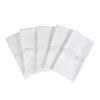
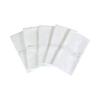
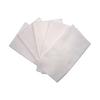
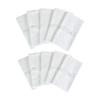
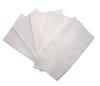
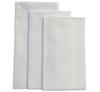
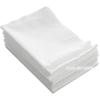
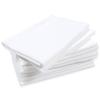
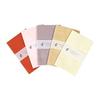
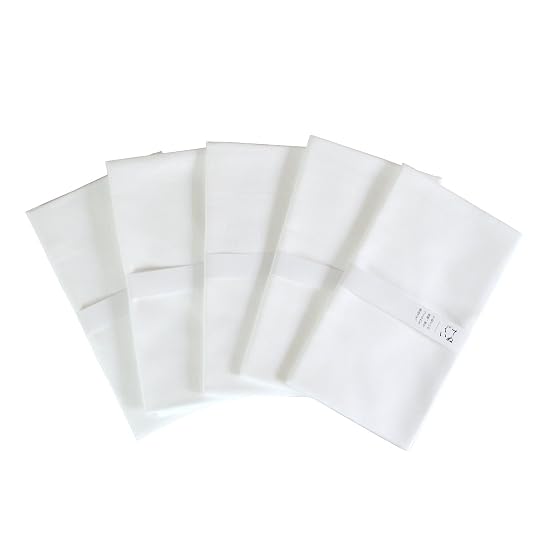
"White Tenugui," woven in Sakai City, Osaka, a region famous for its tenugui production.
Designed with the theme of versatility, we have stripped away everything unnecessary.
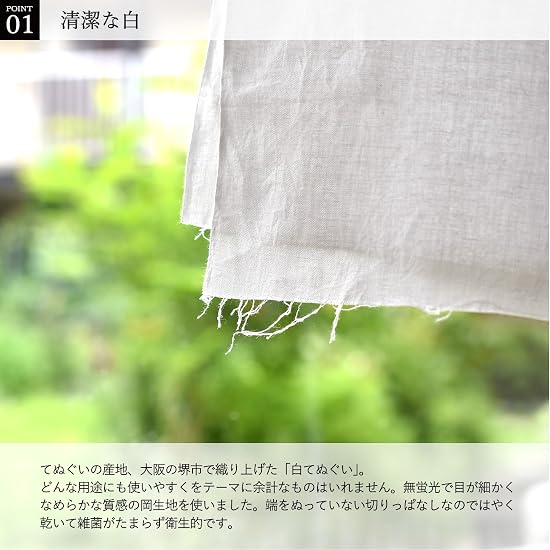
We used "Oka" fabric, which is non-fluorescent, fine-textured, and smooth to the touch.
We highly recommend it for cooking and facial cleansing.
Generally, people use a salad spinner or a bowl and colander to drain vegetables, but if you wrap the vegetables in a clean white tenugui and shake it, the centrifugal force combined with the absorbent nature of the cloth allows you to drain them quickly.
Ever since I learned this, I have exclusively used white tenugui for draining.
It takes up no space and doesn't add to your dishwashing.
It can even easily drain piping hot boiled vegetables, ensuring your dressed dishes and warm vegetable sides don't become watery.
It is also recommended for draining tofu.
For simple tasks like draining vegetables, you can keep the white tenugui clean just by rinsing it with water and hanging it to dry.
I’d like to share a secret trick I actually heard from a tenugui manufacturer.
The incredibly fine fibers of the tenugui fabric can remove pore impurities and excess dead skin cells when washing, leaving your skin smooth.
It is a surprising facial cleansing method that even removes heavy makeup effortlessly.
Furthermore, because the edges are left raw (not hemmed), it dries quickly, preventing bacteria buildup and keeping it hygienic.
I have reaffirmed that there is a good reason why these have been used for so many years.
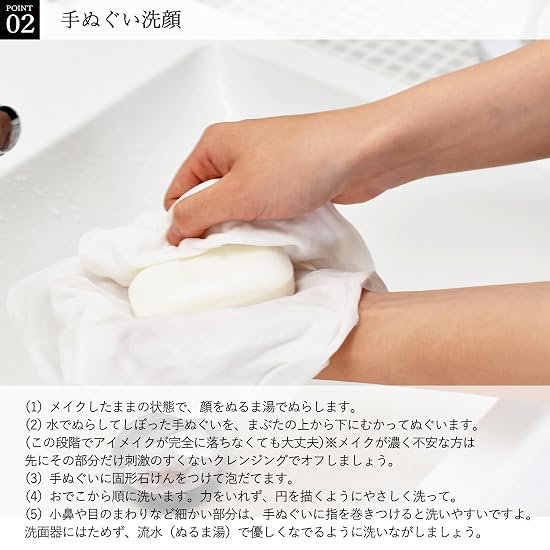
Washing your face is simple; all you need is a tenugui and regular soap.
(1) With your makeup on, wet your face with lukewarm water.
(2) Wet the tenugui with water, wring it out, and wipe from the top of your eyelids downward.
(Don't worry if your eye makeup doesn't come off completely at this stage.)
*If you are concerned about heavy makeup, remove that part first with a gentle cleanser.
(3) Apply solid soap to the tenugui and lather it up.
(4) Wash starting from your forehead. Wash gently in circular motions without applying pressure.
(5) For detailed areas like the sides of the nose and around the eyes, wrapping the tenugui around your finger makes it easier to wash.
Do not wash in a basin; rinse with running lukewarm water.
The key is to use a gentle, stroking motion.
Scrubbing hard will damage your skin, so as long as you are careful about that, you are on your first step toward smooth skin.
[Clean White]"White Tenugui," woven in Sakai City, Osaka, a region famous for its tenugui production. Designed with the theme of versatility, we have stripped away everything unnecessary. We used "Oka" fabric, which is non-fluorescent, fine-textured, and smooth to the touch. We highly recommend it for cooking and facial cleansing.
[Daily Use in Cooking]On cooking shows, you will always see a white tenugui sitting on the sink. The chefs use it to quickly wipe the wet sink or to carefully wipe their knives after every cut. I have always admired those beautiful movements. Keeping the sink dry and clean while cooking, and wiping excess moisture off knives and cutting boards, apparently makes a difference in the final dish. Since professionals do it, we can incorporate these habits at home. Focusing on such small processes might be the shortcut to delicious cooking.
[Recommended for Draining Vegetables]Generally, people use a salad spinner or a bowl and colander to drain vegetables, but if you wrap the vegetables in a clean white tenugui and shake it, the centrifugal force combined with the absorbent nature of the cloth allows you to drain them quickly. Ever since I learned this, I have exclusively used white tenugui for draining. It takes up no space and doesn't add to your dishwashing. It can even easily drain piping hot boiled vegetables, ensuring your dressed dishes and warm vegetable sides don't become watery. It is also recommended for draining tofu. For simple tasks like draining vegetables, you can keep the white tenugui clean just by rinsing it with water and hanging it to dry. When peeling potatoes, wrapping them in a tenugui prevents them from being too hot. It is much easier to peel them this way than with your bare hands.
[Tenugui Facial Cleansing]I’d like to share a secret trick I actually heard from a tenugui manufacturer. The incredibly fine fibers of the tenugui fabric can remove pore impurities and excess dead skin cells when washing, leaving your skin smooth. It is a surprising facial cleansing method that even removes heavy makeup effortlessly. Furthermore, because the edges are left raw (not hemmed), it dries quickly, preventing bacteria buildup and keeping it hygienic. I have reaffirmed that there is a good reason why these have been used for so many years. Washing your face is simple; all you need is a tenugui and regular soap. The key is to use a gentle, stroking motion. Scrubbing hard will damage your skin, so as long as you are careful about that, you are on your first st





 No-delivery refund