Worth knowing:
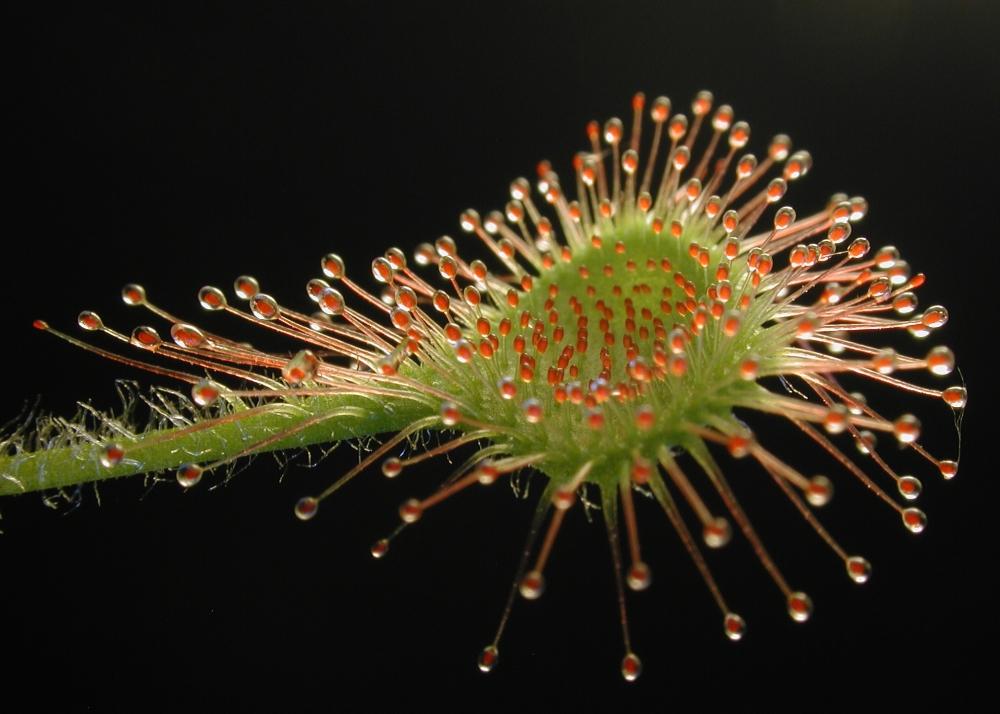
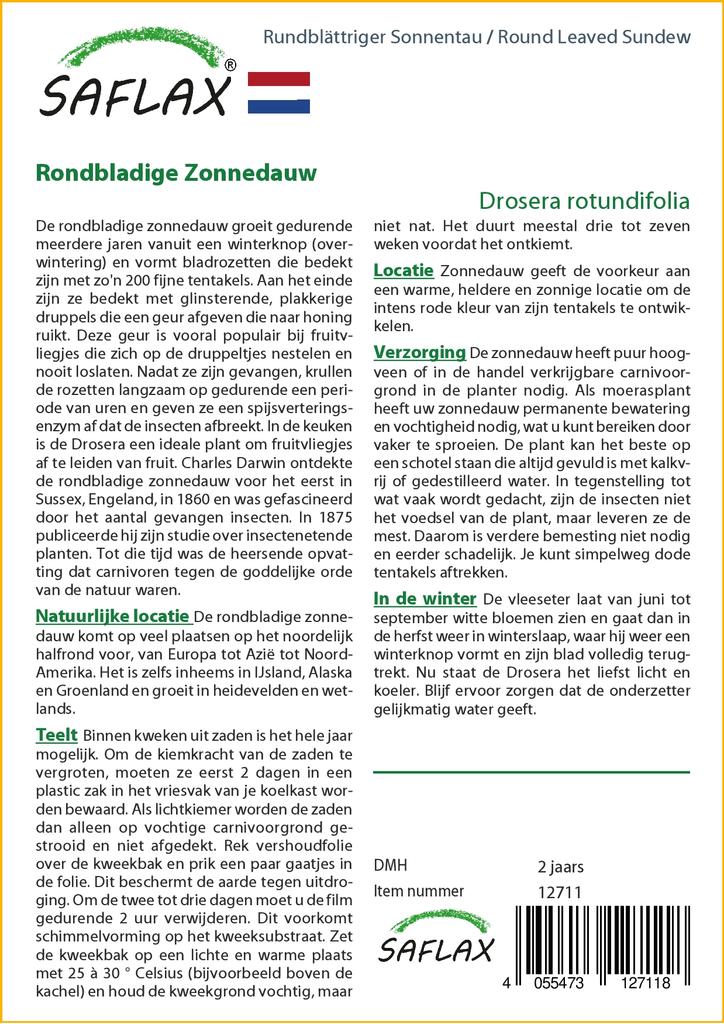
The perennial Round Leaved Sundew springs from a winter bud (hibernaculum) and grows leaf rosettes that feature around 200 fine tentacles. At the end of the tentacles are shiny, sticky drops with a honey fragrance. This scent is very popular by fruit flies that come to sit on the drops and, of course, get stuck. The rosettes curl inwards after the catch, which takes a couple of hours, while releasing a digestive enzyme that slowly decomposes the fruit flies. Placed in your kitchen the Drosera is the ideal plant to divert fruit flies from your fruits. Charles Darwin first discovered the Round Leaved Sundew in 1860 in Sussex, England, and was fascinated by the amount of insects the plant catches. In 1875 he published his study of carnivorous plants. Until then it was the common belief that carnivores are against the God-given natural order.
Natural Location:
The Round Leaved Sundew can be found in many places on the northern hemisphere, from Europe to Asia and until North America. It even grows in Iceland, Alaska and Greenland where its natural habitat are moors and wetlands.
Cultivation:
Seed propagation indoors is possible throughout the year. To increase the germinability, you should keep the seeds sealed in a plastic bag in the freezer of your refrigerator for about two days. As a light germinator the seeds of the Round Leaved Sundew can simply be spread on moist carnivore potting compost without putting any compost earth on top. Cover the seed container with clear film to prevent the earth from drying out, but don’t forget to make some holes in the clear film and take it every second or third day completely off for about 2 hours. That way you avoid mold formation on your potting compost. Place the seed container somewhere bright and warm with a temperature between 25°C and 30° Celsius (for instance near a heater) and keep the earth moist, but not wet. Usually it takes about three to seven weeks until germination.
Place:
Sundew prefers a warm, bright and sunny place, to develop that intensive red colouring of its tentacles.
Care:
The Sundew needs either raised bog peat or customary carnivore soil for cultivation. Since it is a marsh plant, constant watering is required and a high humidity, which can also be acquired by spraying the plant regularly. It is best to keep the plant on a saucer which should always be filled with lime-deficient water. Contrary to the popular opinion, the insects are not the food of the Sundew, but merely the fertilizer for the plant. That is why fertilizing is not necessary and rather destructive for cultivation. Dead tentacles can simply be ripped off.
During the winter:
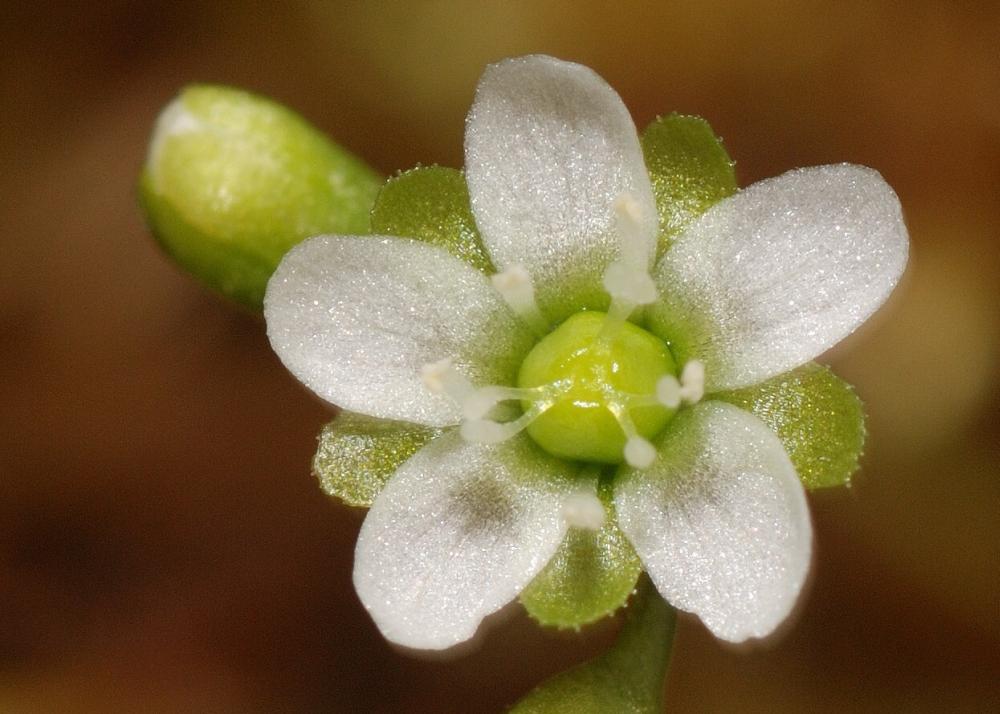
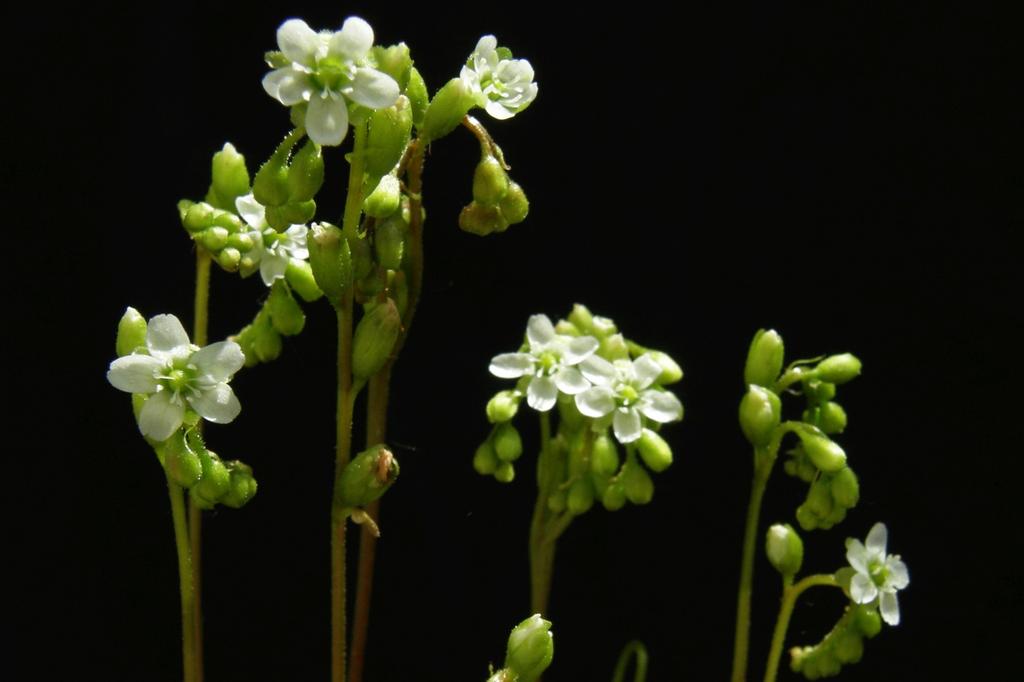
The Round Leaved Sundew shows white flowers from June until September and goes afterwards into hibernation in autumn while producing another winter bud and retracting the leaves completely. By then the Drosera likes to be kept in a bright and cooler place, where it still gets water consistently through the saucer.
Picture credits:
- © © Rosta Kracík - CC-BY-SA-3.0 - http://creativecommons.org/licenses/by-sa/3.0
- © Frank Laue - © Saflax - http://www.saflax.de/copyright
- © Frank Laue - © Saflax - http://www.saflax.de/copyright
- © NoahElhardt - CC-BY-2.5 - http://creativecommons.org/licenses/by-sa/2.5
- © Petr Dlouhý - CC-BY-SA-3.0 - http://creativecommons.org/licenses/by-sa/3.0
- © Petr Dlouhý - CC-BY-SA-3.0 - http://creativecommons.org/licenses/by-sa/3.0
- © Michal Rubeš - CC-BY-3.0 - http://creativecommons.org/licenses/by/3.0/
- © Rosta Kracík - CC-BY-3.0 - http://creativecommons.org/licenses/by/3.0/
- © Rosta Kracík - CC-BY-SA-3.0 - http://creativecommons.org/licenses/by-sa/3.0







 No-delivery refund