Worth knowing:
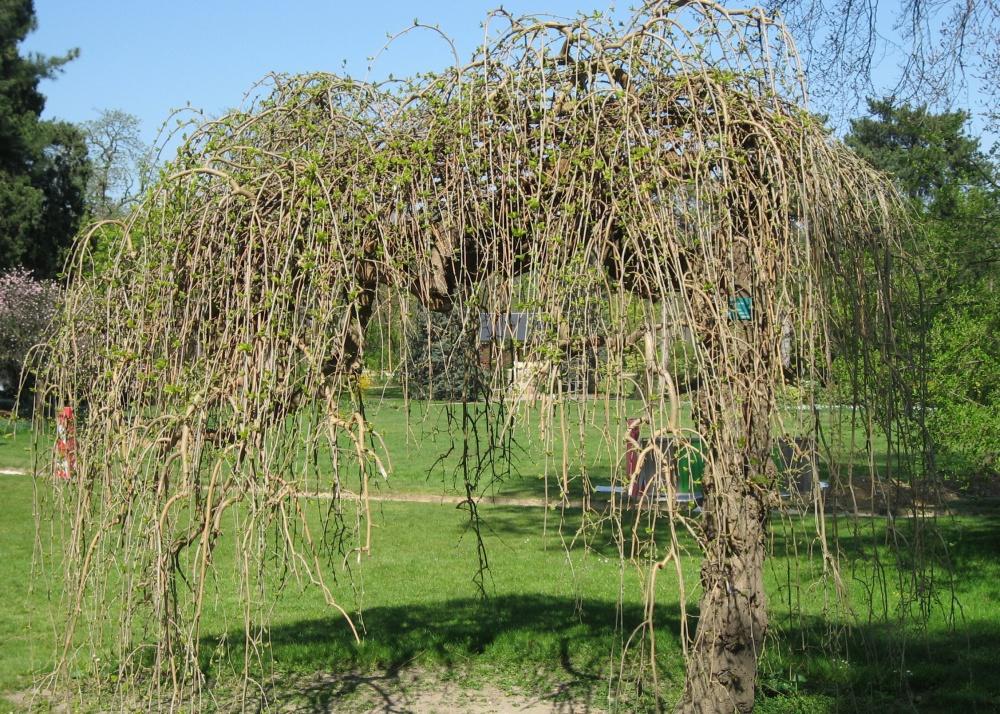
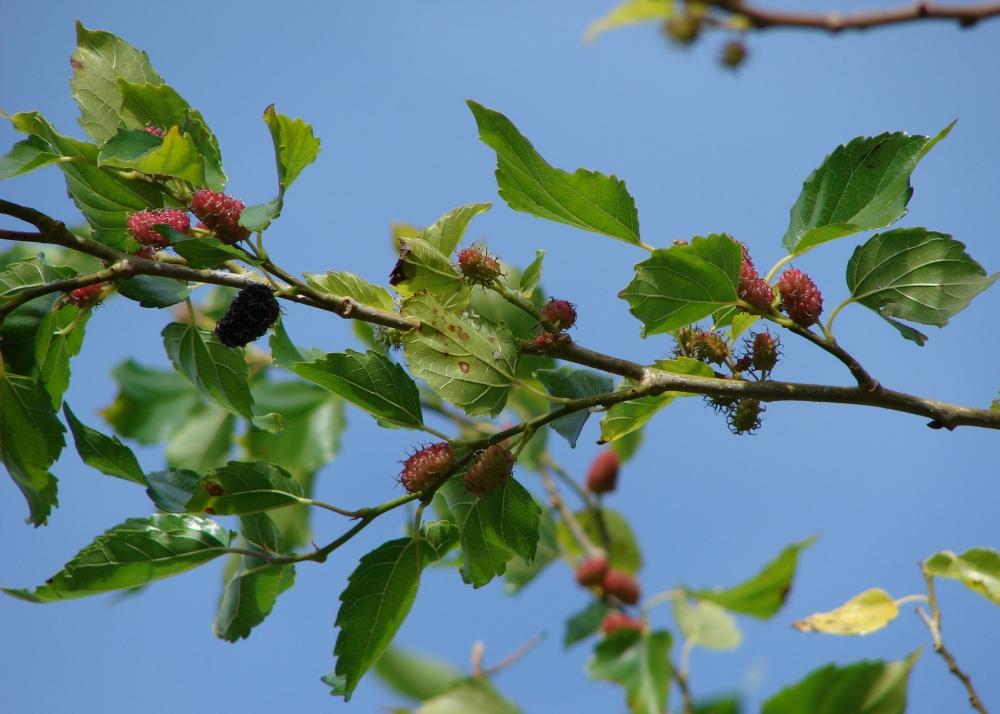
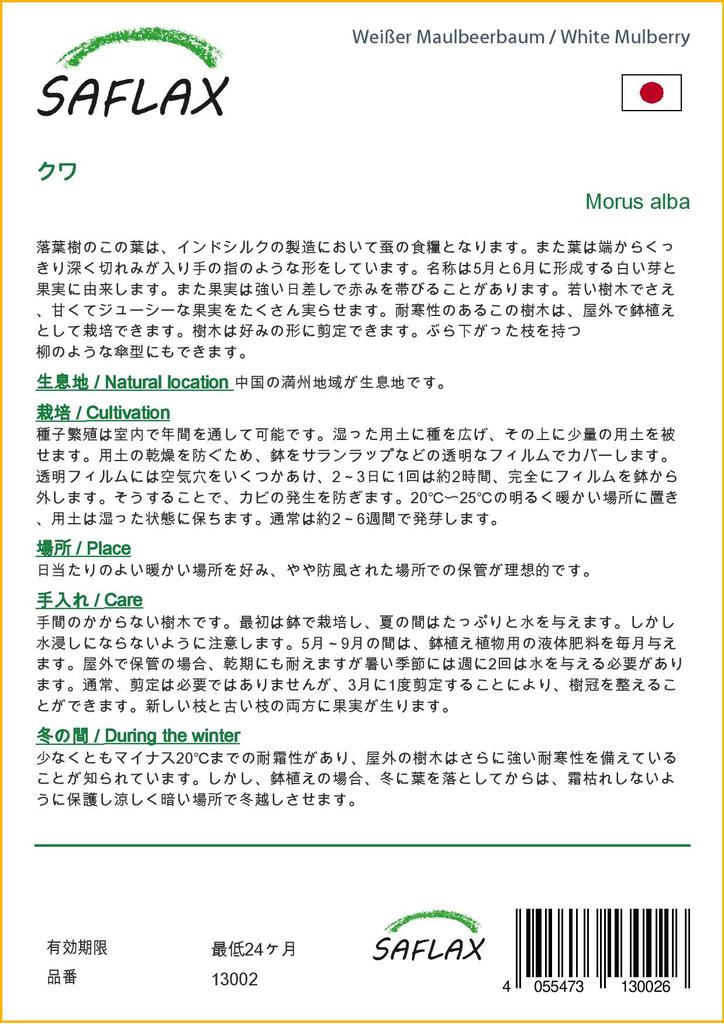
The leaves of the deciduous White Mulberry provide the food for the silkworms in the Indian silk making and come in various shapes, from clear-cut edged to deep-cut finger-shaped. Its name comes from the white buds and white fruits that the plant produces in May and June, although the fruits may take on a reddish colour with strong sunlight. Even young plants can grow copious amounts of the sweet and juicy fruits. The White Mulberry is frost-resistant and can either be planted outdoors or cultivated as a tub plant. You can easily prune the tree to your liking, even willow-like forms with umbrella-shaped hanging branches are possible.
Natural Location:
The White Mulberry has its natural habitat in the Manchuria region of China.
Cultivation:
Seed propagation indoors is possible throughout the year. Spread the seeds onto moist potting compost and put just a little compost earth on top. Then, cover the seed container with clear film to prevent the earth from drying out. Don’t forget to make some holes in the clear film and take it every second or third day completely off for about 2 hours. That way you avoid mold formation on your potting compost. Place the seed container somewhere bright and warm with a temperature between 20° and 25° Celsius and keep the earth moist, but not wet. Usually it takes two to six weeks until germination.
Place:
The White Mulberry prefers sunny and warm places, ideally in a slightly wind-protected spot.
Care:
The White Mulberry is rather carefree. It can be kept in a tub for the first years, where it needs especially during summer proper waterings without waterlogging, as well as fluid fertilizer for tub plants once a month from May until September. Outdoor plants can endure a dry period, but it is better to thoroughly water your plant twice a week in the hot season. Pruning is usually not necessary, but it can be done once a year in March to achieve the desired form and branching of the crown. The White Mulberry produces fruits on the new and the old branches.
During the winter:
The White Mulberry is frost-resistant at least up to -20 °Celsius, and there are known cases where outdoor plants endured even lower temperatures. Tub plants however, need some frost protection or a cool and even darker room for hibernation since the tree will cast the leaves in winter.
Picture credits:
- © © Luis Fernández García - c-by-sa-2.1-es - http://creativecommons.org/licenses/by-sa/2.1/es/deed.pt
- © Frank Laue - © Saflax - http://www.saflax.de/copyright
- © Frank Laue - © Saflax - http://www.saflax.de/copyright
- © Liné1 - CC-BY-SA-3.0 - http://creativecommons.org/licenses/by-sa/3.0
- © B.navez - CC-BY-SA-3.0 - http://creativecommons.org/licenses/by-sa/3.0
- © shioshvili - CC-BY-SA-2.0 - http://creativecommons.org/licenses/by-sa/2.0
- © Daniel Fuchs - CC-BY-SA-3.0 - http://creativecommons.org/licenses/by-sa/3.0
- © Jean-Pol GRANDMONT - CC-BY-SA-3.0 - http://creativecommons.org/licenses/by-sa/3.0
- © Forest & Kim Starr - CC-BY-3.0 - http://creativecommons.org/licenses/by/3.0/









 No-delivery refund