Worth knowing:
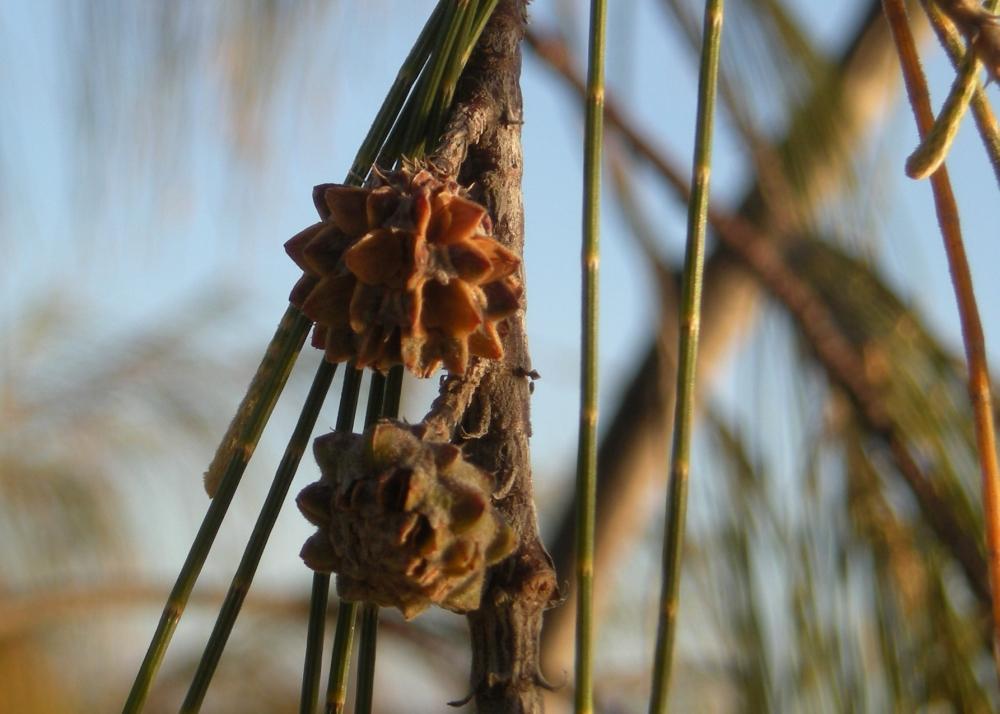
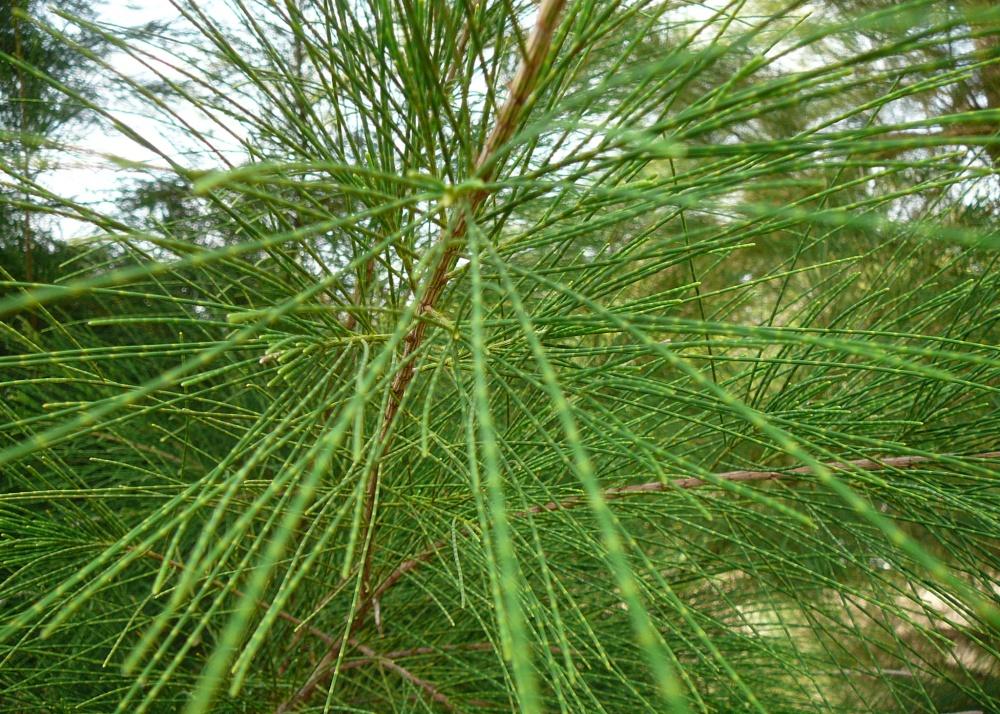
The evergreen and delicate growing Sea Ironwood belongs to the broadleaf trees, even though its leaves became tiny hastate scales over the course of evolution, and make the foliage appear more like a conifer. Because of the small leaf surface the slender growing tree developed the means of evaporation protection to perfection, and adapted accordingly to dry places and sandy soils. Contrary to the inconspicuous male blossoms, the beautiful red coloured female flowers stand out imposingly as hanging tufts. The heartwood of the Sea Ironwood is extremely hard and is in Australia used in railway sleepers.
Natural Location:
The Sea Ironwood comes originally from Australia, but nowadays it can be found everywhere along the beaches of the tropical belt.
Cultivation:
Seed propagation indoors is possible throughout the year. Spread the seeds onto moist potting compost, put just a little compost earth on top and cover the seed container with clear film to prevent the earth from drying out. Don’t forget to make some holes in the clear film and take it every second or third day completely off for about 2 hours. That way you avoid mold formation on your potting compost. Place the seed container somewhere bright and warm with a temperature between 20°C and 25°C and keep the earth moist, but not wet. It will take two to four weeks until germination.
Place:
The Sea Ironwood prefers a warm and full sunny place at a window to the South or in the conservatory. During summer it can also be kept outdoors in wind-protected spot and ideally near a heat-preserving wall.
Care:
Keep the earth consistently moist, but without waterlogging. From late spring until autumn, during the growth period, you may provide your Sea Ironwood with a rather weak dosage of fluid fertilizer for bonsai plants every four weeks.
During the winter:
Your evergreen Sea Ironwood is not frost-resistant and – same as all the year – likes to stay in a bright and warm place. If you want to give it some rest during winter, you can keep it somewhere cooler with a temperature of 10° to 15° Celsius.
Picture credits:
- © © 1. Biswarup Ganguly 2. Sage Ross - CC-BY-SA-3.0 - http://creativecommons.org/licenses/by-sa/3.0
- © Frank Laue - © Saflax - http://www.saflax.de/copyright
- © Frank Laue - © Saflax - http://www.saflax.de/copyright
- © Cliff - CC-BY-2.0 - http://creativecommons.org/licenses/by/2.0
- © Budi Sulistyo - -
- © - . -
- © - -
- © - -
- © - -







 No-delivery refund


