Worth knowing:
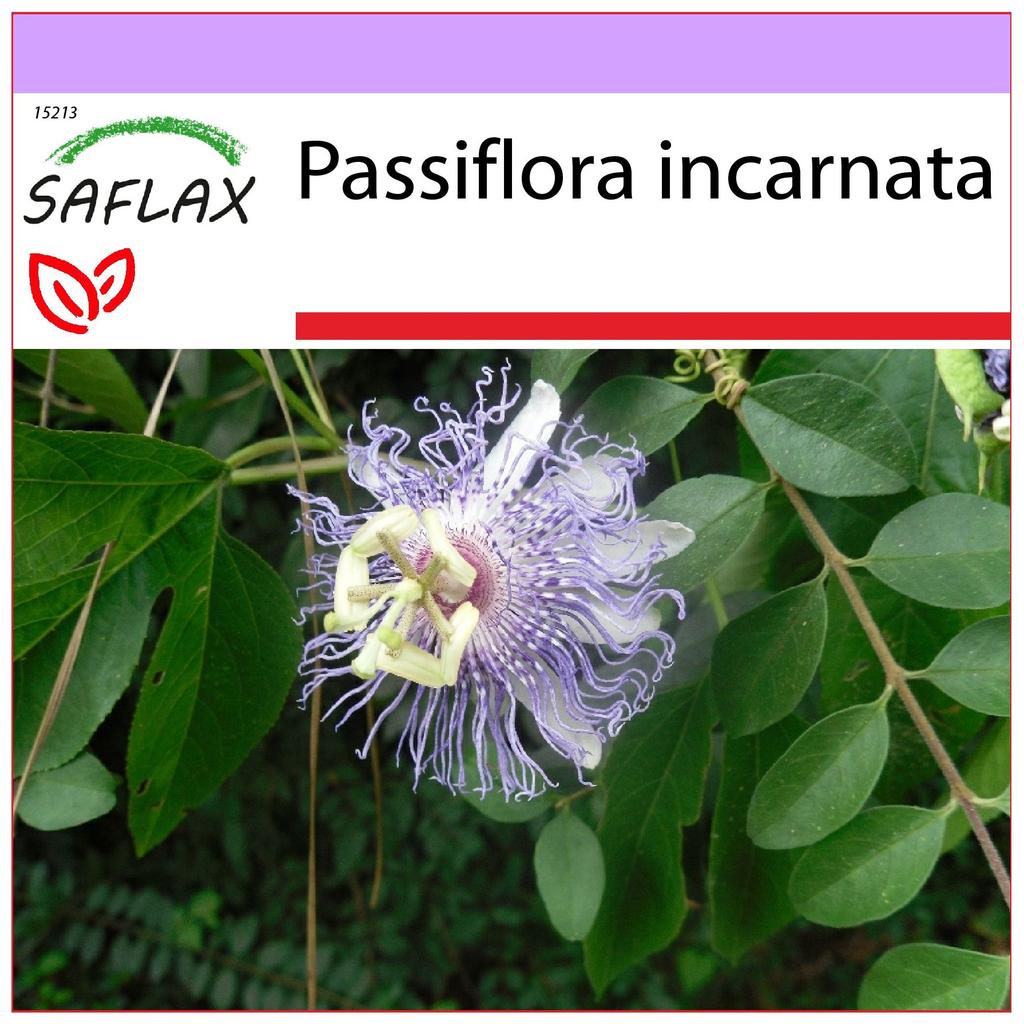
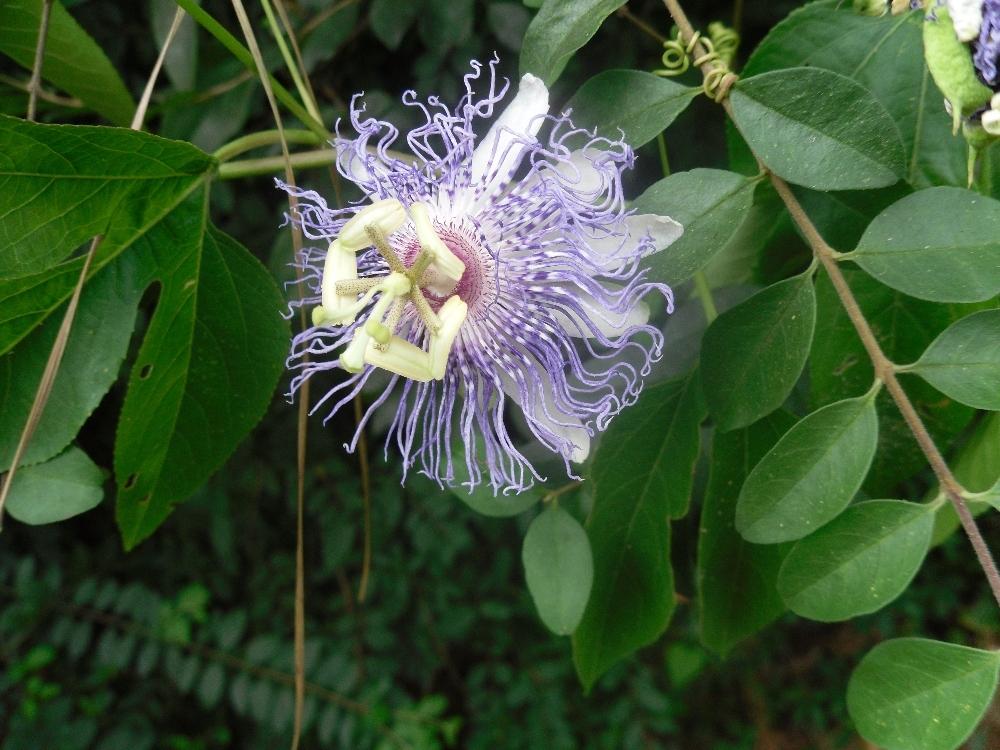
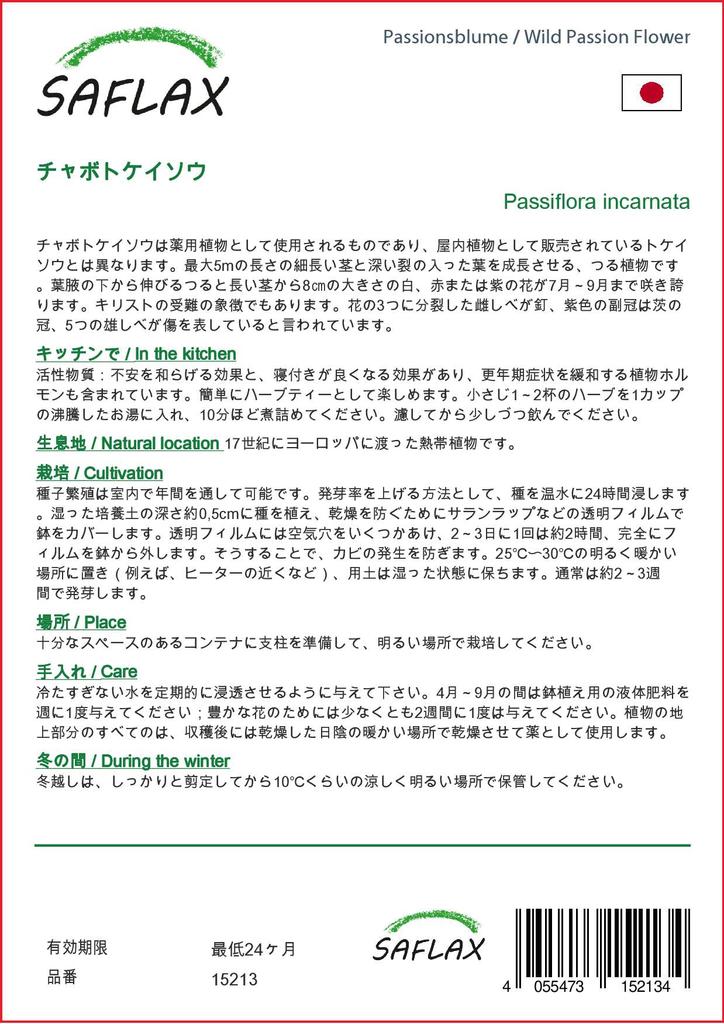
The Passiflora incarnata is the one that is used as a medicinal plant, and should not be confused with the Passiflora caerculea, which is often sold as an indoor plant. The Wild Passion Flower is a climbing plant that develops an up to 5 m long, slender stalk with deeply lobed leaves. From the leaf axils grow vines with long-stalked, up to 8 cm big blossoms that show from July until September with an either white, red or purple colour. The Passiflora symbolizes the Passion of Christ: The blossom shows three grains that resemble nails, the purple corona can be seen as the crown of thorns, and the five stamens symbolize the wounds.
Natural Location:
The Wild Passion Flower is a native tropical plant that has been brought for cultivation to Europe during the 17th century.
Cultivation:
Seed propagation indoors is possible throughout the year. To increase the germinability, you can place the seeds for 24 hours in warm water for priming. Plant the seeds about 0,5 cm deep into moist potting compost, put some compost earth on top, and cover the seed container with clear film to prevent the earth from drying out. Don’t forget to make some holes in the clear film and take it every second or third day completely off for about 2 hours. That way you avoid mold formation on your potting compost. Place the seed container somewhere bright and warm with a temperature between 25°C and 30°C (for example near the heater) and keep the earth moist, but not wet. Usually it takes about two to three weeks until germination.
Place:
The Passiflora prefers a bright and spacy container for cultivation and needs a climbing aid.
Care:
Water the plant regularly and penetratingly with preferably not too cold water. From April until September, you should give fluid fertilizer for tub plants once a week - at least every two weeks to facilitate a rich blossoming. All aerial parts of the plant have medicinal use after you harvested and dried them in a shaded and warm place.
During the winter:
Cut the plant drastically back towards the winter and let it hibernate in a cool and bright place with a temperature around 10° Celsius.
Picture credits:
- © © Jhenderson777 - Public domain - http://creativecommons.org/licenses/publicdomain/
- © Frank Laue - © Saflax - http://www.saflax.de/copyright
- © Frank Laue - © Saflax - http://www.saflax.de/copyright
- © Jhenderson777 - Public domain - http://creativecommons.org/licenses/publicdomain/
- © - -
- © - -
- © - -
- © - -
- © - -






 No-delivery refund