Worth knowing:
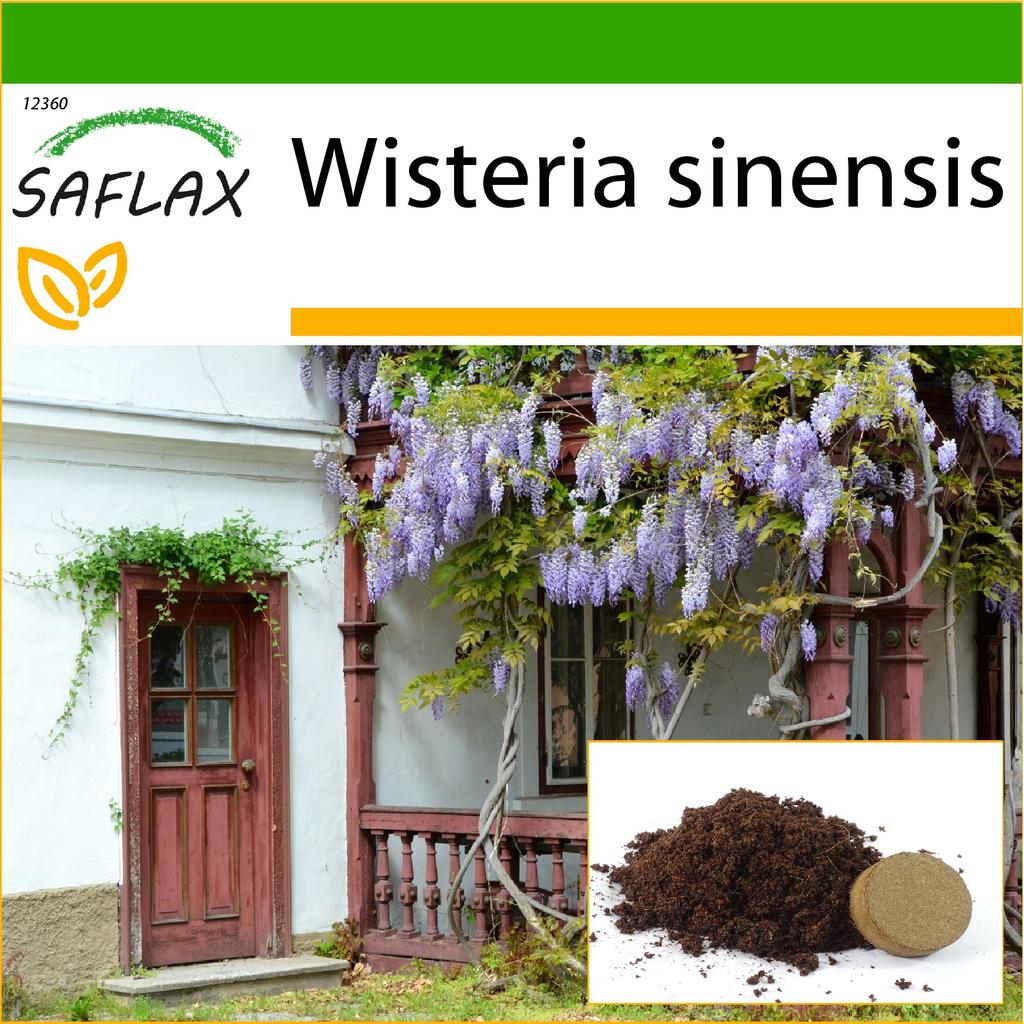
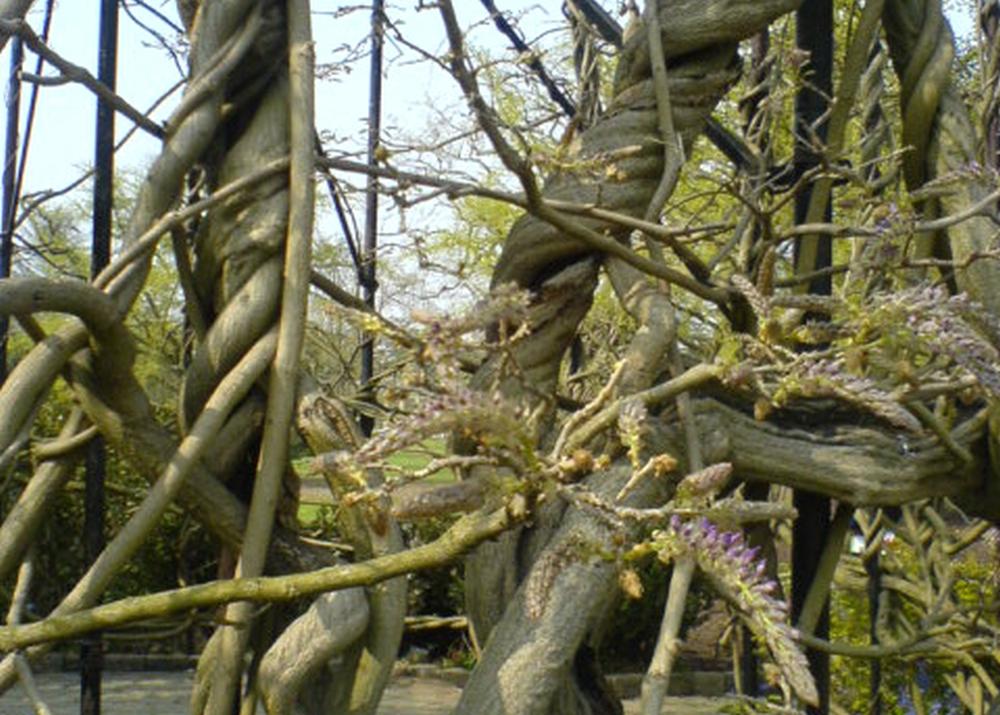
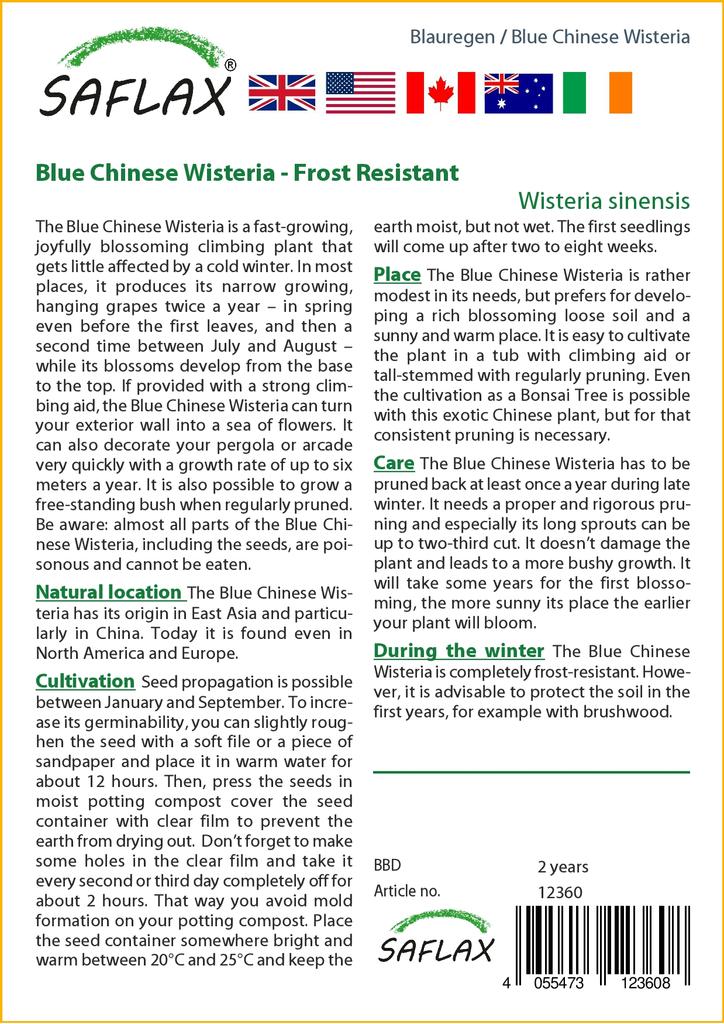
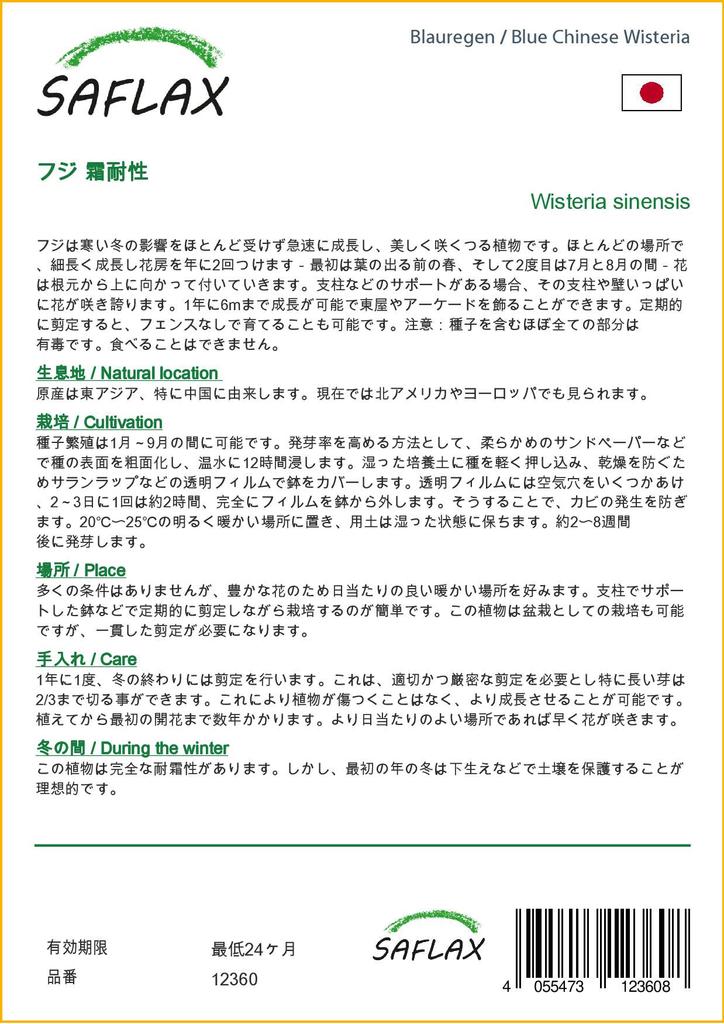
The Blue Chinese Wisteria is a fast-growing, joyfully blossoming climbing plant that gets little affected by a cold winter. In most places, it produces its narrow growing, hanging grapes twice a year – in spring even before the first leaves, and then a second time between July and August – while its blossoms develop from the base to the top. If provided with a strong climbing aid, the Blue Chinese Wisteria can turn your exterior wall into a sea of flowers. It can also decorate your pergola or arcade very quickly with a growth rate of up to six meters a year. It is also possible to grow a free-standing bush when regularly pruned. Be aware: almost all parts of the Blue Chinese Wisteria, including the seeds, are poisonous and cannot be eaten.
Natural Location:
The Blue Chinese Wisteria has its origin in East Asia and particularly in China. Today it is found even in North America and Europe.
Cultivation:
Seed propagation is possible between January and September. To increase its germinability, you can slightly roughen the seed with a soft file or a piece of sandpaper and place it in warm water for about 12 hours. Then, press the seeds in moist potting compost cover the seed container with clear film to prevent the earth from drying out. Don’t forget to make some holes in the clear film and take it every second or third day completely off for about 2 hours. That way you avoid mold formation on your potting compost. Place the seed container somewhere bright and warm between 20°C and 25°C and keep the earth moist, but not wet. The first seedlings will come up after two to eight weeks.
Place:
The Blue Chinese Wisteria is rather modest in its needs, but prefers for developing a rich blossoming loose soil and a sunny and warm place. It is easy to cultivate the plant in a tub with climbing aid or tall-stemmed with regularly pruning. Even the cultivation as a Bonsai Tree is possible with this exotic Chinese plant, but for that consistent pruning is necessary.
Care:
The Blue Chinese Wisteria has to be pruned back at least once a year during late winter. It needs a proper and rigorous pruning and especially its long sprouts can be up to two-third cut. It doesn’t damage the plant and leads to a more bushy growth. It will take some years for the first blossoming, the more sunny its place the earlier your plant will bloom.
During the winter:
The Blue Chinese Wisteria is completely frost-resistant. However, it is advisable to protect the soil in the first years, for example with brushwood.
Picture credits:
- © © Johann Jaritz - CC-BY-SA-3.0 - http://creativecommons.org/licenses/by-sa/3.0
- © Frank Laue - © Saflax - http://www.saflax.de/copyright
- © Frank Laue - © Saflax - http://www.saflax.de/copyright
- © Cliff Hutson - CC-BY-SA-3.0 - http://creativecommons.org/licenses/by-sa/3.0
- © Emoke Dénes - CC-BY-SA-2.5 - http://creativecommons.org/licenses/by-sa/2.5
- © Sten - CC-BY-SA-3.0 - http://creativecommons.org/licenses/by-sa/3.0
- © Schnobby - CC-BY-SA-3.0 - http://creativecommons.org/licenses/by-sa/3.0
- © Dénes Emoke - Public domain - http://creativecommons.org/licenses/publicdomain/
- © Johann Jaritz - CC-BY-SA-3.0 - http://creativecommons.org/licenses/by-sa/3.0











 No-delivery refund


