Worth knowing:
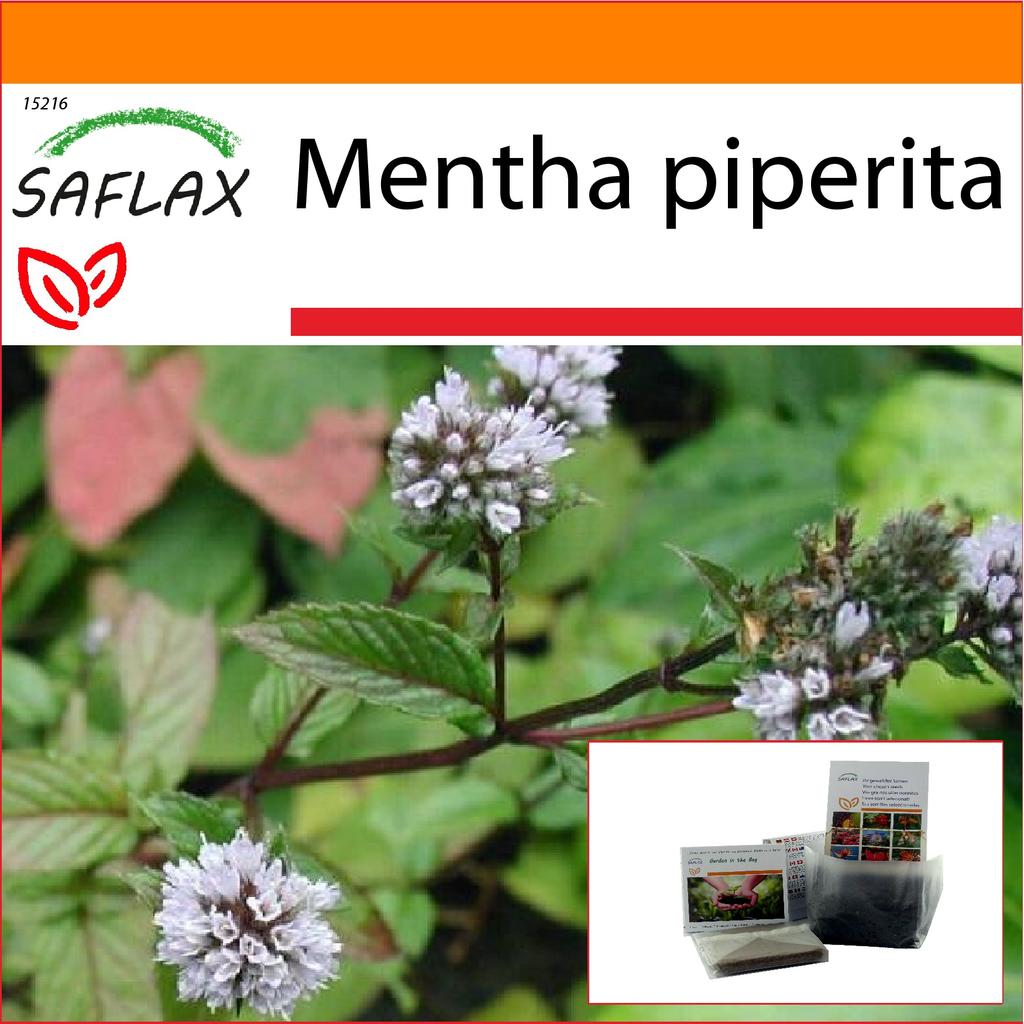
Peppermint is a flat rooted, frost-hard shrub plant that grows 30 to 90 cm tall and produces between July and September pink or purple coloured blossoms. The leaves have a pleasant aromatic taste, initially warming and then noticeable cooling. The Peppermint mainly differs from other mint varieties in its higher menthol and lower carvone content, as well as in a stronger taste. The Peppermint is only known since the late 17th century and can’t be found in the herbal books of the ancient times or the Middle Ages.
Natural Location:
Peppermint always comes from cultures of temperate climate regions.
Cultivation:
The best time for seeding outdoors would be in March and April. Seed propagation indoors, however, is possible throughout the year. Peppermint is a light germinator, and the seeds should only be covered with very little compost earth after gently pressing them onto the potting compost or special herbal soil. Cover the seed container with clear film to prevent the earth from drying out, but don’t forget to make some holes in the clear film and take it every second or third day completely off for about 2 hours. That way you avoid mold formation on your potting compost. Place the seed container somewhere bright and warm with a temperature between 20°C and 25°Celsius and keep the earth moist, but not wet. Outdoor plants should be planted with a breathing space of at least 25 to 30 cm, to avoid nutrient competition and plant diseases. Usually, the first seedlings already come up after 10 to 20 days.
Place:
Peppermint prefers a half-shaded place.
Care:
The best time for harvesting the leaves and shoot tips would be shortly before blossoming, which usually occurs between June and August. The Peppermint multiplies itself through the stolons that always develop new plants.
During the winter:
The plant dies during autumn and sprouts anew in spring.
Picture credits:
- © © Sten Porse - CC-BY-SA-3.0 - http://creativecommons.org/licenses/by-sa/3.0
- © Frank Laue - © Saflax - http://www.saflax.de/copyright
- © Frank Laue - © Saflax - http://www.saflax.de/copyright
- © Sten Porse - CC-BY-SA-3.0 - http://creativecommons.org/licenses/by-sa/3.0
- © - -
- © - -
- © - -
- © - -
- © - -






 No-delivery refund