Worth knowing:
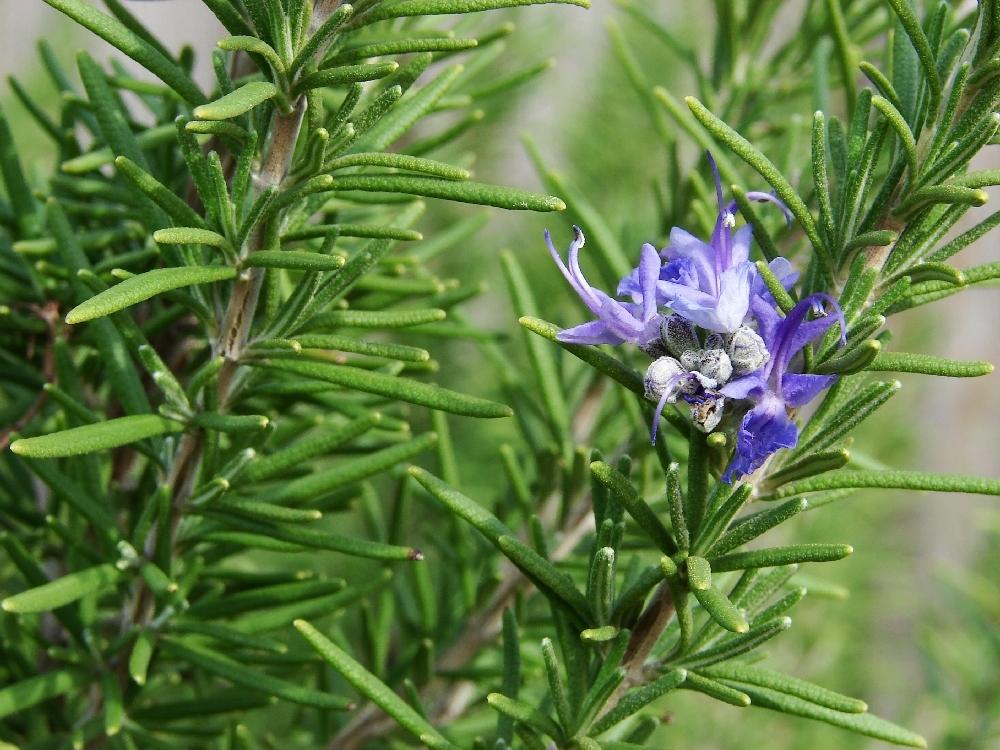
The evergreen, bushy ramified Rosemary can easily be recognized through its intense aromatic fragrance and the deep-green, slender and longish leaves that are slightly coiled to prevent withering. From February until June, the plant produces numerous blue-purple coloured blossoms with highly out standing stamens. Rosemary is a popular medicinal herb since ancient times and is cultivated in cloister gardens since the Middle Ages. The leaves have various herbal contents that allow a widespread use in the healing arts. Rosemary is also known in the Chinese traditional medicine with its regulative effects on the Qi.
Natural Location:
Rosemary grows in wild variety all over the western and central Mediterranean region, from the coastal areas of Portugal until the Ionian Sea.
Cultivation:
Seed propagation indoors is possible throughout the year. Just slightly press the seeds onto moist potting compost and put only very little compost earth on top. Cover the seed container with clear film to prevent the earth from drying out, but don’t forget to make some holes in the clear film and take it every second or third day completely off for about 2 hours. That way you avoid mold formation on your potting compost. Place the seed container somewhere bright and warm with a temperature between 20°C and 25°Celsius and keep the earth – for instance with a water sprayer – moist, but not wet. Depending on the propagation temperature, the first seedlings will come up after two to three weeks.
Place:
Rosemary is best to be kept in a warm and sunny place. During summer, it can also be placed outdoors.
Care:
Water the plant abundantly during summer, but avoid waterlogging. The best time for pruning would be immediately after blossoming.
During the winter:
Rosemary hibernates best in a bright and cool place indoors at a temperature around 5° to 8° Celsius. Water just enough to keep the roots from drying out.
Picture credits:
- © © David R. Tribble - CC-BY-SA-3.0 - http://creativecommons.org/licenses/by-sa/3.0
- © Frank Laue - © Saflax - http://www.saflax.de/copyright
- © Frank Laue - © Saflax - http://www.saflax.de/copyright
- © David R. Tribble - CC-BY-SA-3.0 - http://creativecommons.org/licenses/by-sa/3.0
- © - -
- © - -
- © - -
- © - -
- © - -






 No-delivery refund


