Worth knowing:
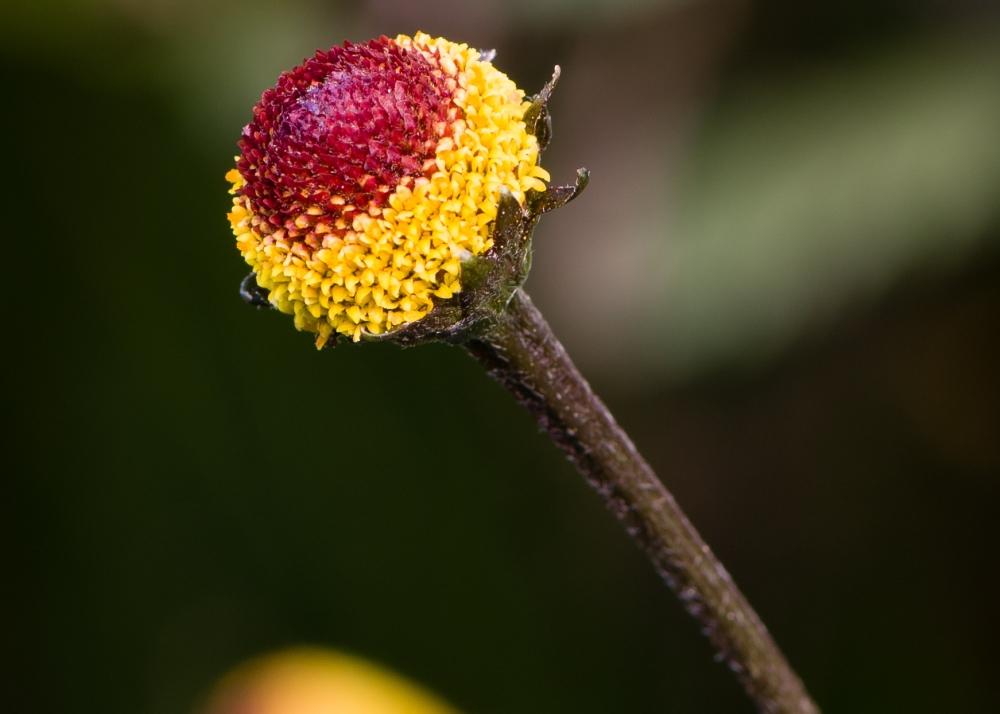
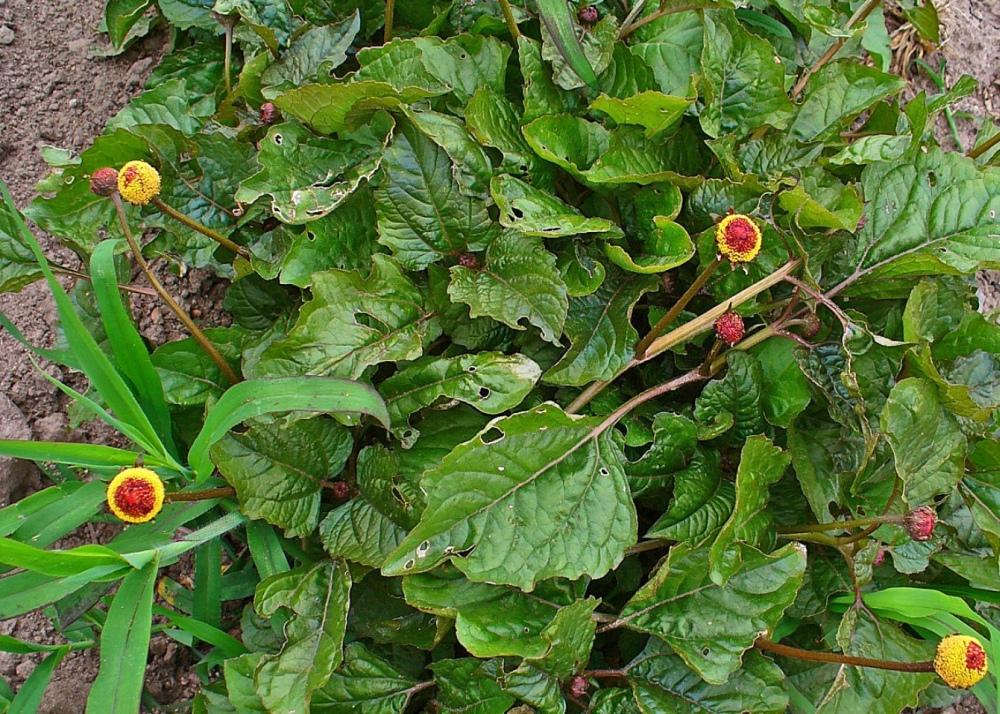
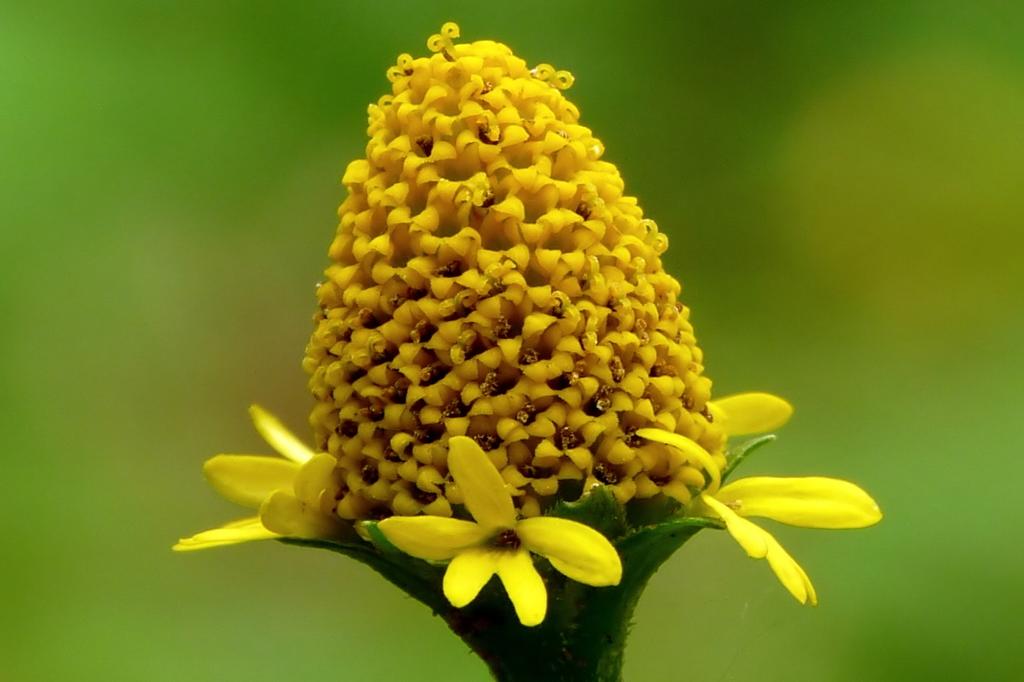
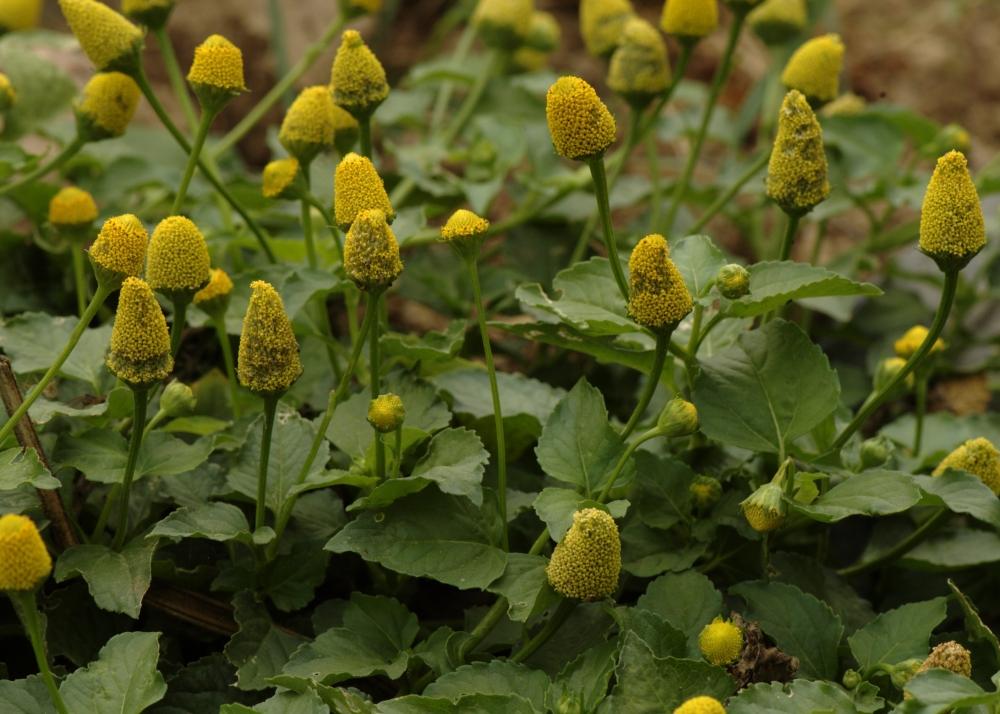
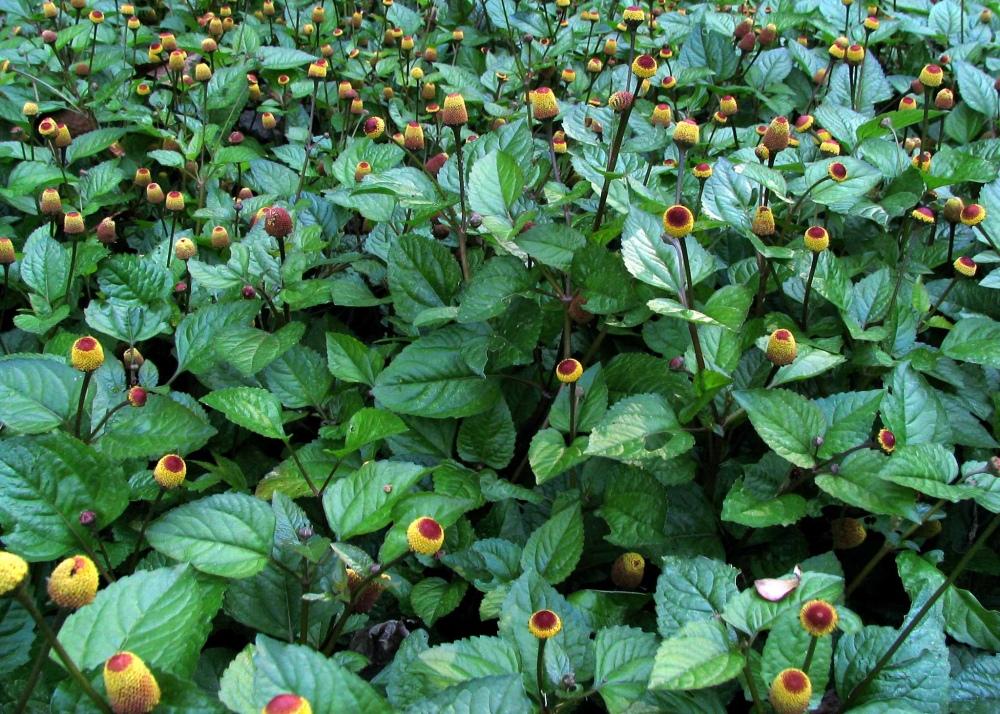
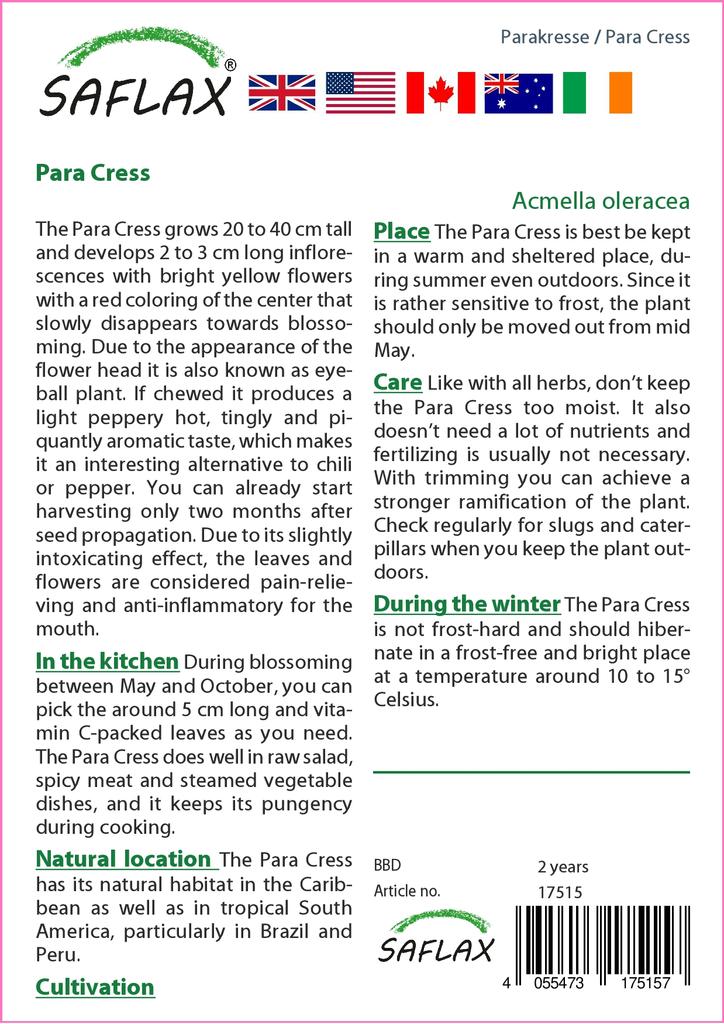
The Para Cress grows 20 to 40 cm tall and develops 2 to 3 cm long inflorescences with bright yellow flowers with a red coloring of the center that slowly disappears towards blossoming. Due to the appearance of the flower head it is also known as eyeball plant. If chewed it produces a light peppery hot, tingly and piquantly aromatic taste, which makes it an interesting alternative to chili or pepper. You can already start harvesting only two months after seed propagation. Due to its slightly intoxicating effect, the leaves and flowers are considered pain-relieving and anti-inflammatory for the mouth.
Natural Location:
The Para Cress has its natural habitat in the Caribbean as well as in tropical South America, particularly in Brazil and Peru.
Cultivation:
Place:
The Para Cress is best be kept in a warm and sheltered place, during summer even outdoors. Since it is rather sensitive to frost, the plant should only be moved out from mid May.
Care:
Like with all herbs, don’t keep the Para Cress too moist. It also doesn’t need a lot of nutrients and fertilizing is usually not necessary. With trimming you can achieve a stronger ramification of the plant. Check regularly for slugs and caterpillars when you keep the plant outdoors.
During the winter:
The Para Cress is not frost-hard and should hibernate in a frost-free and bright place at a temperature around 10 to 15° Celsius.
Picture credits:
- © © 1. H.Zell 2. Ks.mini - CC-BY-SA-3.0 - http://creativecommons.org/licenses/by-sa/3.0
- © Frank Laue - © Saflax - http://www.saflax.de/copyright
- © Frank Laue - © Saflax - http://www.saflax.de/copyright
- © Tuxyso - CC-BY-SA-3.0 - http://creativecommons.org/licenses/by-sa/3.0
- © H. Zell - CC-BY-SA-3.0 - http://creativecommons.org/licenses/by-sa/3.0
- © Kadavoor - CC-BY-SA-3.0 - http://creativecommons.org/licenses/by-sa/3.0
- © Mikrolit - Free Art License -
- © Mikrolit - Free Art License -
- © Phyzome - CC-BY-SA-3.0 - http://creativecommons.org/licenses/by-sa/3.0






 No-delivery refund