Worth knowing:
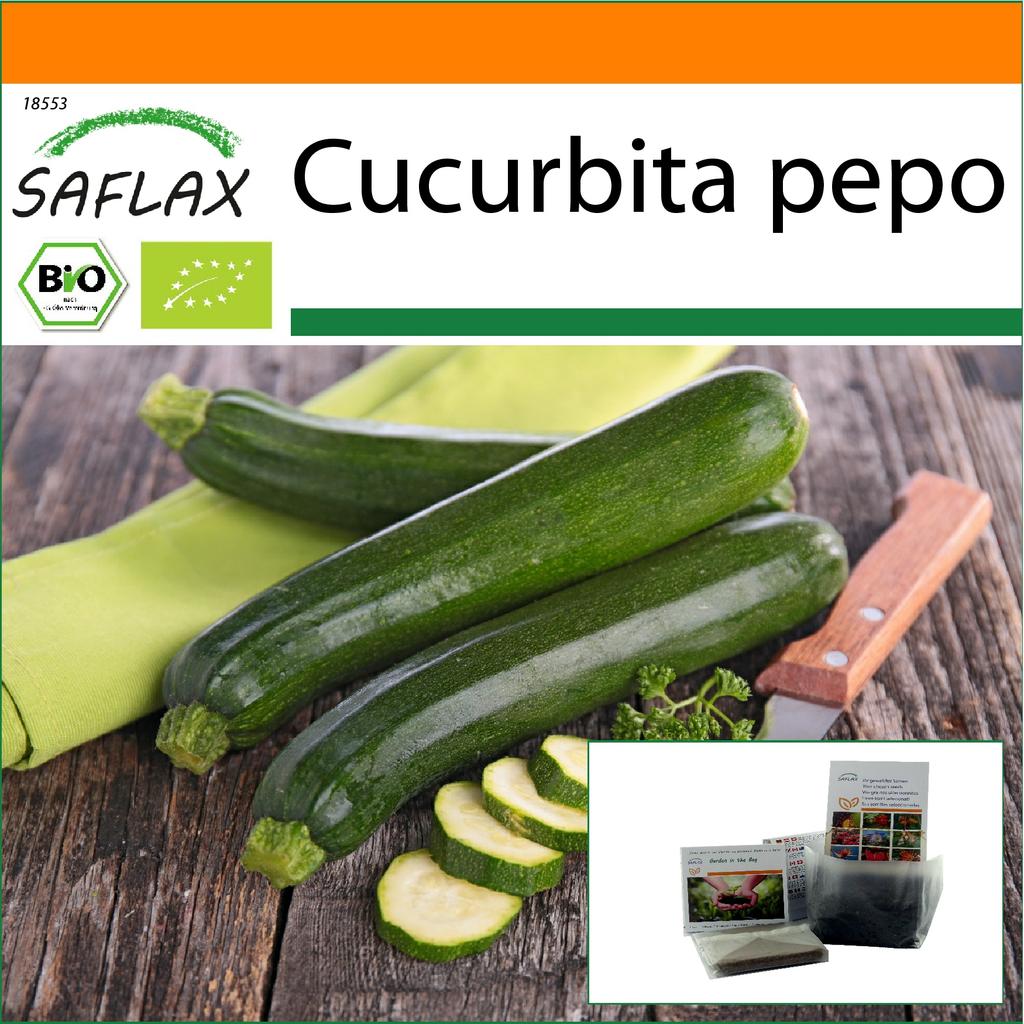
The Italien variety Nero di Milano is a medium-early, dark green, cylinder-shaped zucchini with about 18 to 20 cm long fruits of fine quality. The plant grows upright and openly, which helps with an easy harvest. The fruits are low in calories, rich in vitamins and easy to digest.
Natural Location:
The Marrow or Zucchini is native to Europe and a cultivar from the common vegetable marrow. The original variety was developed at the end of the 17th century in Italy.
Cultivation:
Start propagation only from mid April on the windowsill, otherwise the plants will develop too early and too fast. Make sure to use pots with at least 9 cm in diameter and always place two seeds about 2 cm deep into the substrate. Cover the seed container with clear film that you provide with a few small holes. That way the substrate doesn’t dry out, but also gets some air. Every second or third day, you might want to take the clear film completely off for about 2 hours to avoid mold formation on your potting compost. Place the seed container somewhere bright and warm with a temperature between 20° and 25° Celsius and keep the substrate moist, but not wet. The germination usually takes place after one or two weeks. Later on, you can remove the weak one of the two seedlings. After the Ice Saints in May, the seedlings can be planted out. Now would also be the right time for sowing seeds without pre-propagation directly into the garden patch. It will take about 6 to 8 weeks until the fruits are good to harvest.
Place:
Courgettes prefer a sunny and wind-sheltered place for cultivation with sufficient space (about 1 m²) around them.
Care:
Zucchini plants are heavy feeders and need nutrients. Providing the plants with compost or organic vegetable fertilizer would be the best option. The soil should be regularly loosened up a bit and weed removed. A layer with mulch might also positively affect the soil and protects the fruits on the ground from moisture and starting to rot. The plants need regular watering, but don’t water from above touching the leaves to avoid fungal infestation.
During the winter:
Sow again in the next year.
Picture credits:
- © Frank Laue - © Saflax - http://www.saflax.de/copyright
- © Frank Laue - © Saflax - http://www.saflax.de/copyright
- © Frank Laue - © Saflax - http://www.saflax.de/copyright
- © About © : Contact SAFLAX - - http://www.saflax.de/copyright
- © About © : Contact SAFLAX - - http://www.saflax.de/copyright
- © About © : Contact SAFLAX - - http://www.saflax.de/copyright
- © About © : Contact SAFLAX - - http://www.saflax.de/copyright
- © About © : Contact SAFLAX - - http://www.saflax.de/copyright
- © About © : Contact SAFLAX - - http://www.saflax.de/copyright


 No-delivery refund