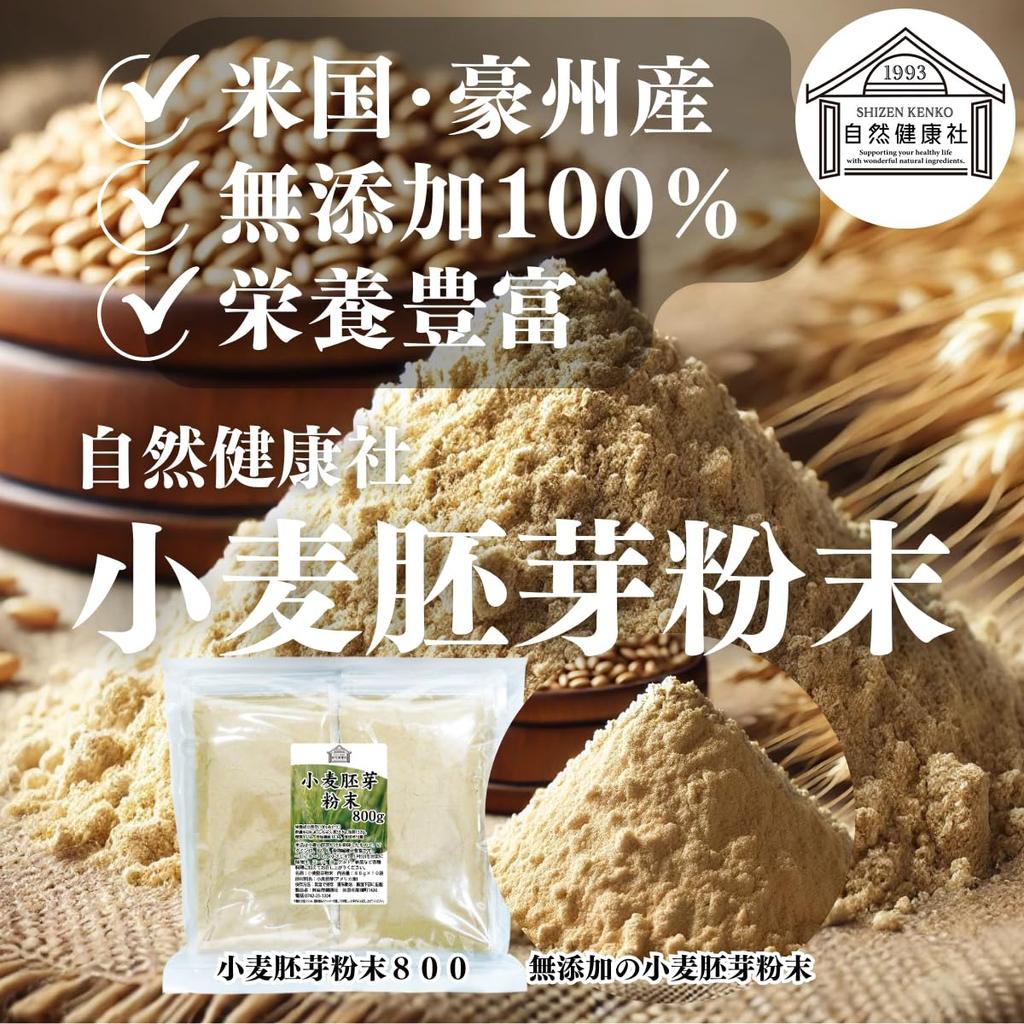
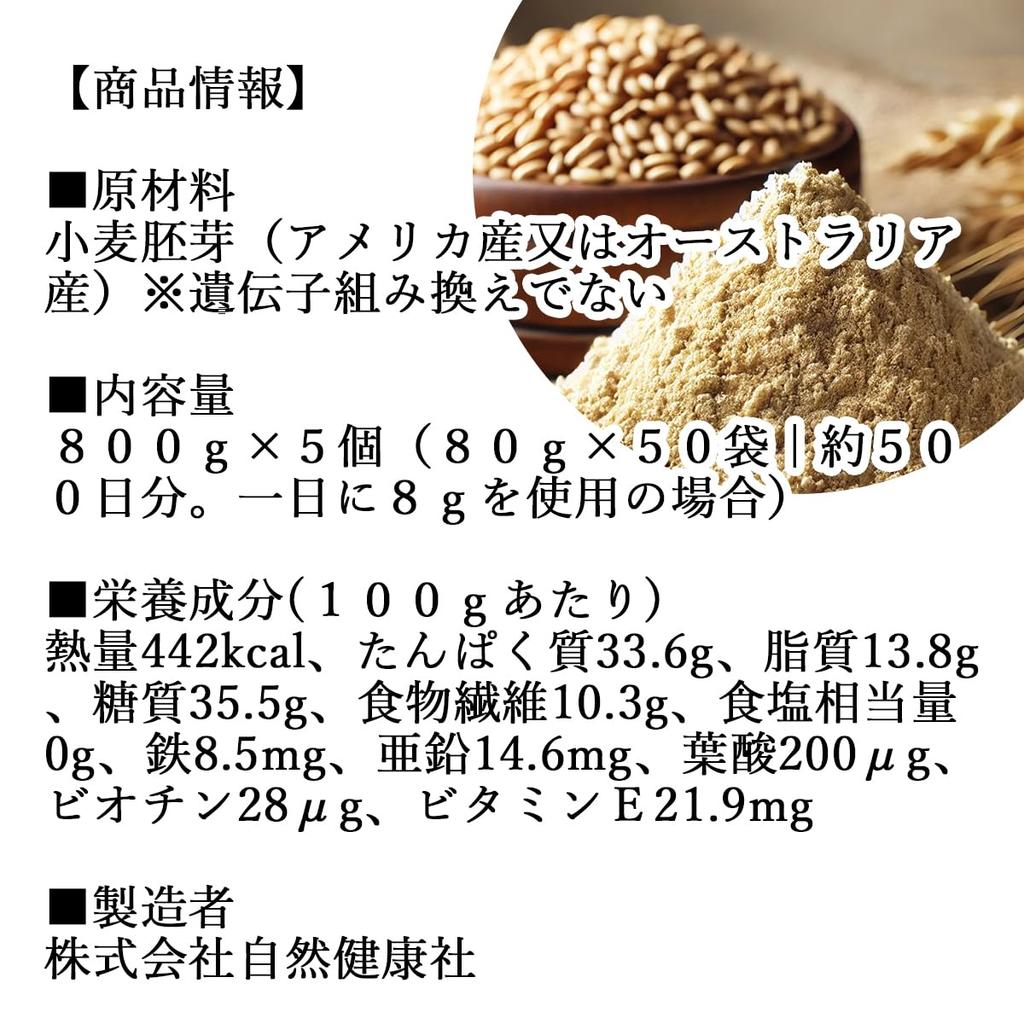
[Ingredients] Wheat germ (produced in America, Australia) *Not genetically modified
[Additive-free] (No fragrances, preservatives, etc.)
[Contents] 800g x 5 pieces (80g x 50 bags | Approx. 500 days' worth. When using 8g per day)
[About wheat germ] Wheat germ makes up about 2% of the whole grain. Contains rare nutrients such as vitamins B1, B2, B6, vitamin E, iron, zinc, folic acid, biotin, and dietary fiber. It is one of the most popular ingredients due to its aromatic flavor.
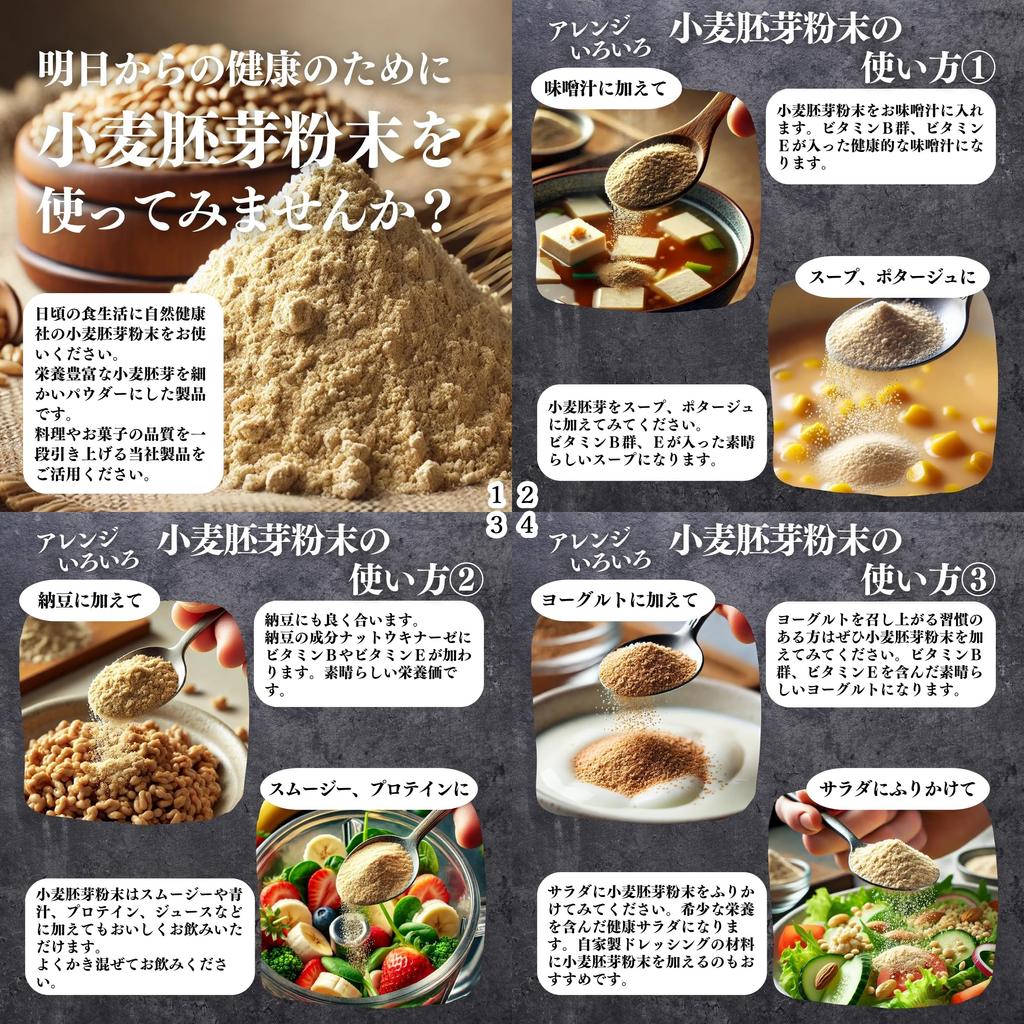
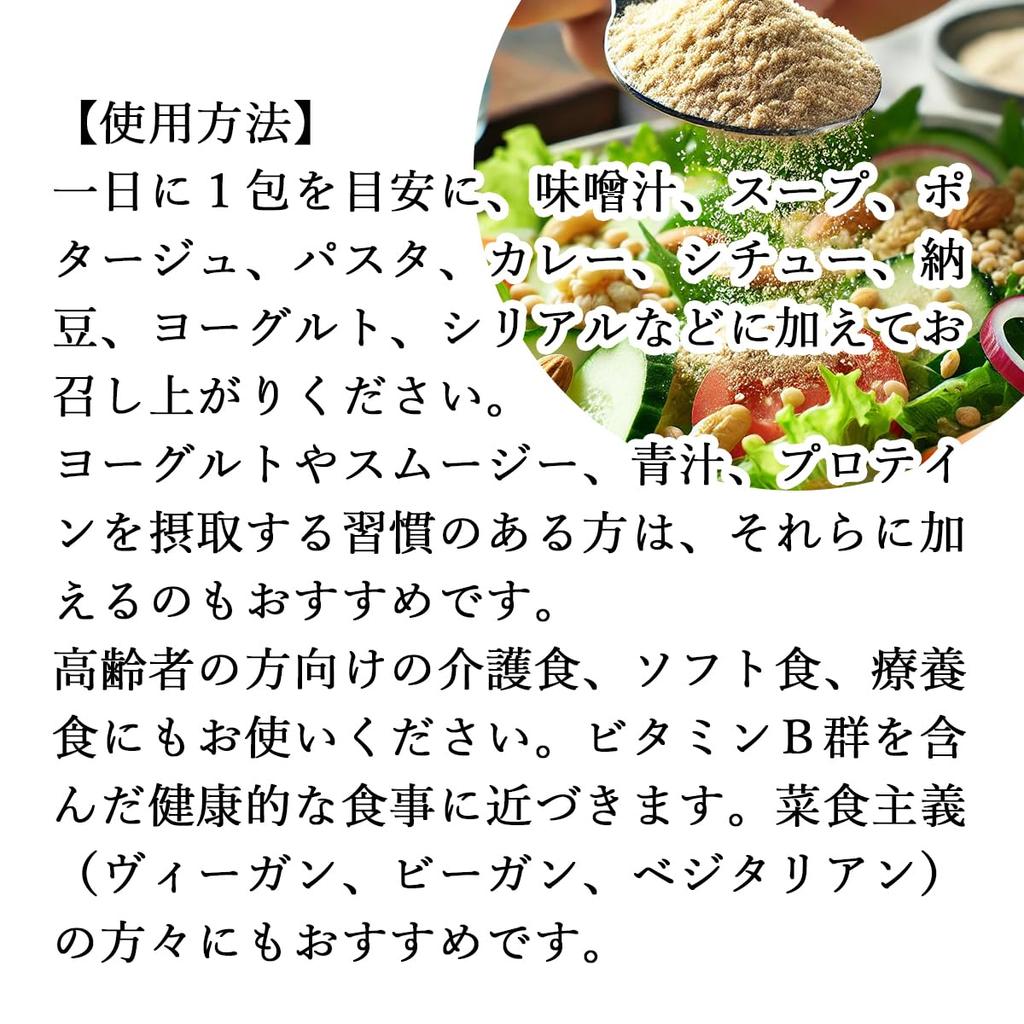
[How to use] Only the germ part of wheat is made into a fine powder. Please enjoy 8-10g per day by adding it to dishes such as pasta, miso soup, soup, curry, and stew. As an ingredient for sweets such as muffins, cookies, scones, and cakes. If you have a habit of consuming yogurt, cereal, smoothies, green juice, or protein, we recommend adding it to those foods.
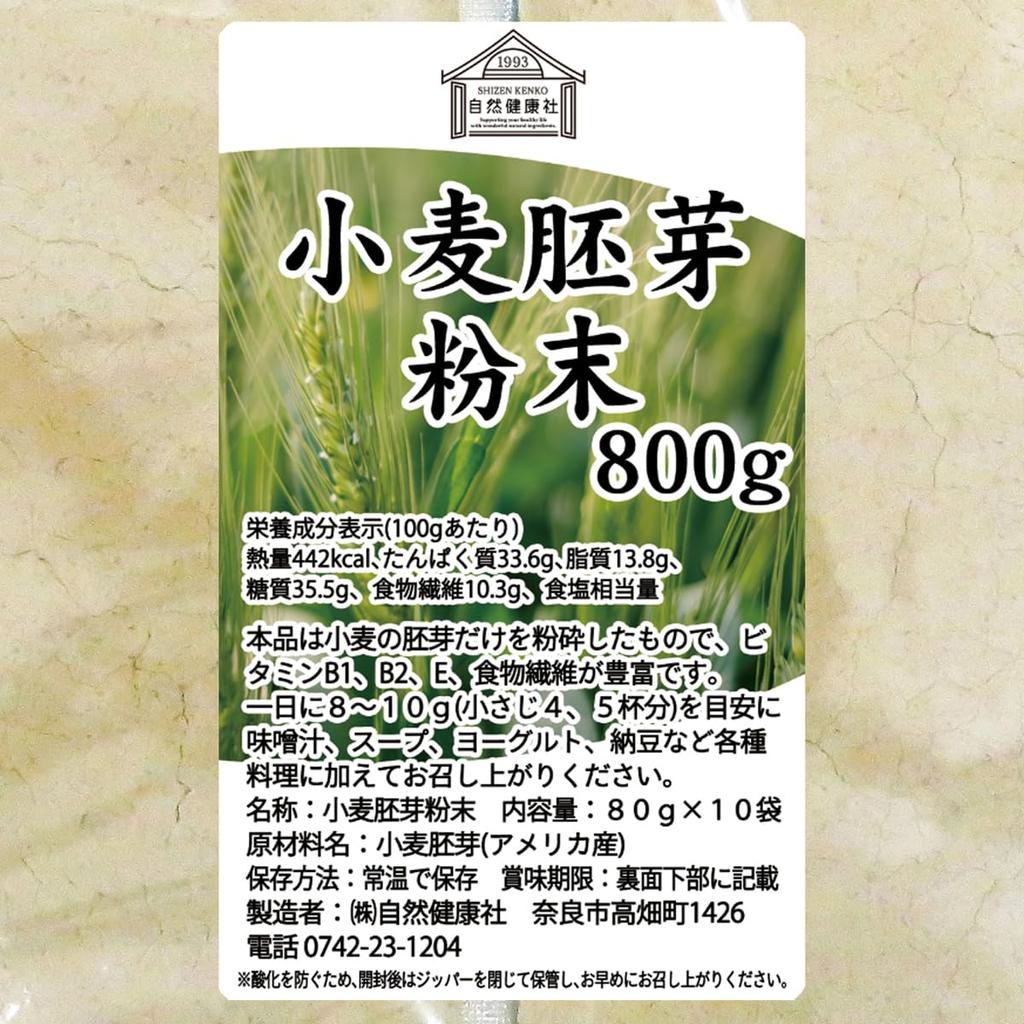
[Nutritional information (per 100g)] Calories: 442 kcal, protein: 33.6 g, fat: 13.8 g, carbohydrates: 35.5 g, dietary fiber: 10.3 g, salt equivalent: 0 g, iron: 8.5 mg, zinc: 14.6 mg, folic acid: 200 μg , biotin 28 μg, vitamin E 21.9 mg
[Best before date] 6 months from the date of manufacture
Comes in a zippered bag for convenient storage
[About wheat germ] Wheat germ is literally the germ of wheat, and it only contains about 2% of the grain. It is rich in nutrients such as vitamins B1, B2, B6, vitamin E, iron, zinc, folic acid, biotin, and dietary fiber. Because it contains these nutrients, it is attracting attention as a supplement, and its flavor is also increasing its popularity. Recently, powdered wheat germ has been used as an ingredient in confectionery and bread making, and is increasingly being mixed into ingredients for pancakes, pancakes, and steamed bread. [About the product] This product is made by removing only the germ from wheat and turning it into powder. It is becoming increasingly popular as a powdered supplement because it allows you to ingest rare nutritional ingredients. As an ingredient for sweets such as muffins, cookies, scones, and cakes. You can also add it to pasta, miso soup, soup, curry, stew, salad, okara, okonomiyaki, or sprinkle it on cereal or brown rice flakes. When added to bread dough, it becomes fragrant, rich, and delicious. Because it is rich in nutrients, it can also be used as a fasting or diet food. [How to use] 8~ per day
Add 10g (4 to 5 teaspoons) to miso soup, soup, potage, pasta, natto, yogurt, cereal, etc. and enjoy. If you have a habit of consuming yogurt, smoothies, green juices, or protein, we recommend adding it to them. It can also be used as an ingredient in nursing care food, soft food, and medical food for the elderly. Eating a healthy diet containing B vitamins. Recommended as power food and slow food for vegetarians (vegans, vegans, vegetarians). Please use it as an ingredient for homemade dressings and sauces. It can be safely consumed by children, infants, pregnant women, and those who are breastfeeding. (Except for those with wheat allergies) Can also be consumed by pets such as dogs.




![Domestically Steamed Ginger Powder 45g X 10 Bags Sugamo Tea Shop Yamanenen [100% Produced] Set, Additive-free](https://img.joomcdn.net/b069723c0f094b27d6fb0b0aa3f2647e498e714f_100_100.jpeg)
![Koujiya Honten Dried Rice Koji 200g X 5 Piece Set In Dried Rice No Uses Oita Prefecture Ideal for Making and Salt Koji [Established 1689] Koji,](https://img.joomcdn.net/d0c2e7cdc7a4d1bb5af9a6702abd4e0bb7ec7189_100_100.jpeg)


![Kojiya Honten Dried Barley Koji 350g X 5 In Barley Koji from Kyushu After No Additives Perfect for Making Miso [Established 1689] (500g](https://img.joomcdn.net/2b62cfed4360cc51f573aa75f69974796458396a_100_80.jpeg)


![Popular Health Tea Zaraki Mulberry Powder Zaraki Furusato [Iwate Prefecture Kosha] (5 Bags)](https://img.joomcdn.net/cd2f08bde97444e000b3f1efbc2e2205ad031b8e_100_100.jpeg)


