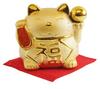
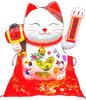
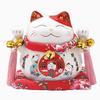
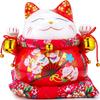
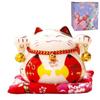
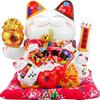
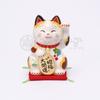
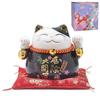
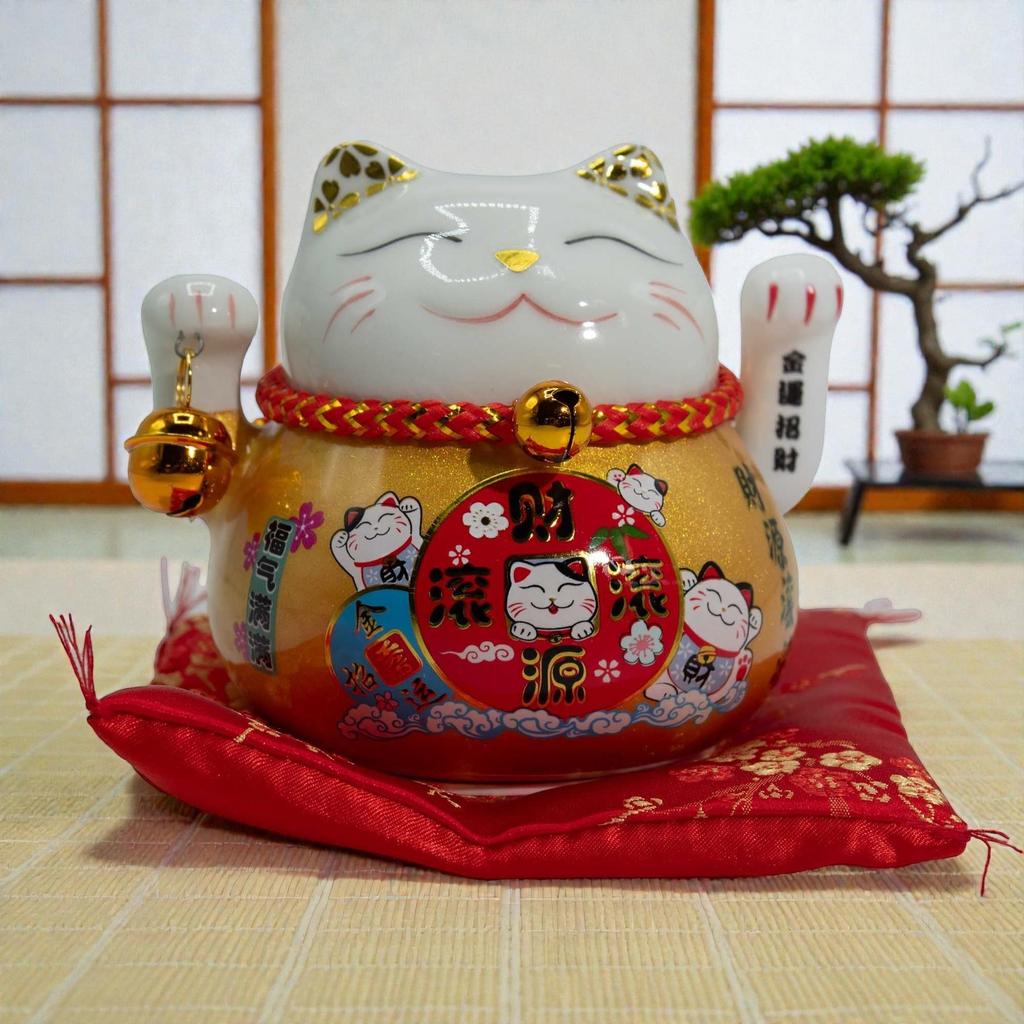
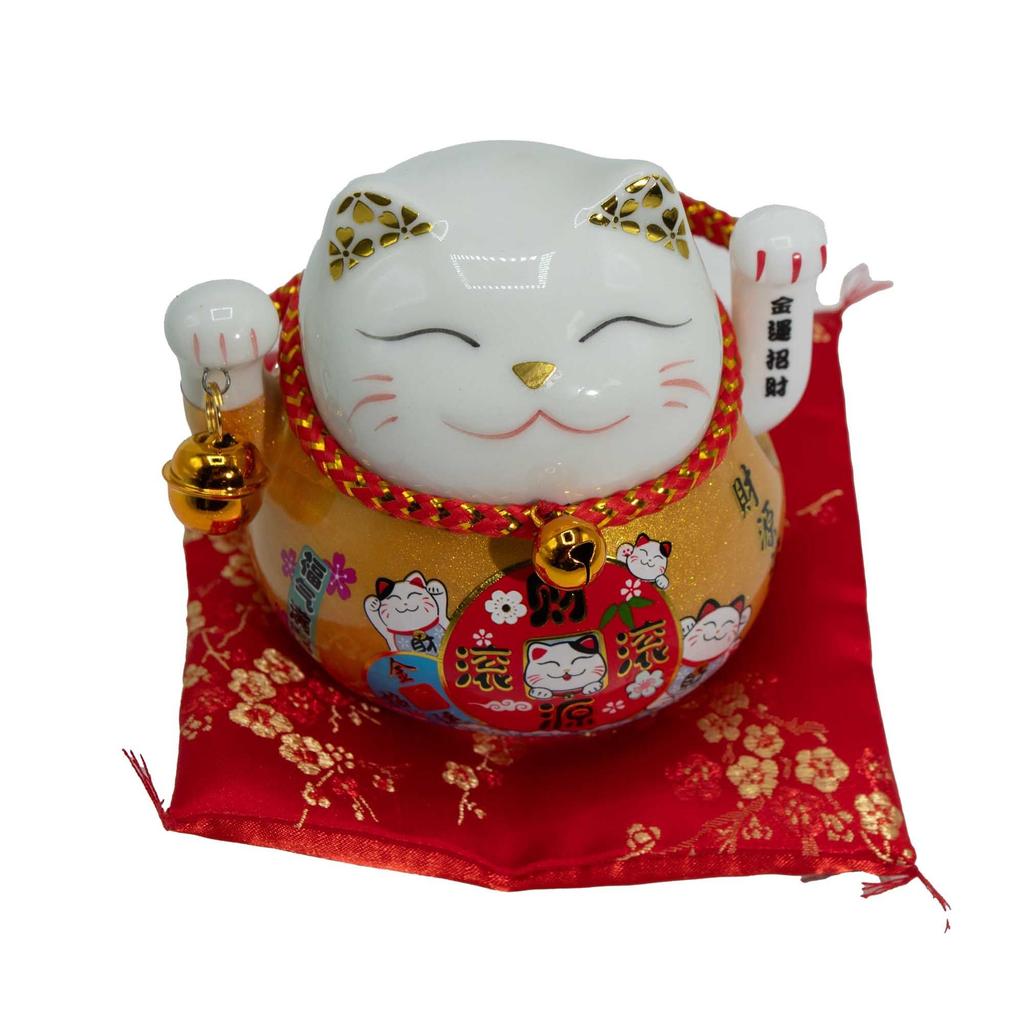
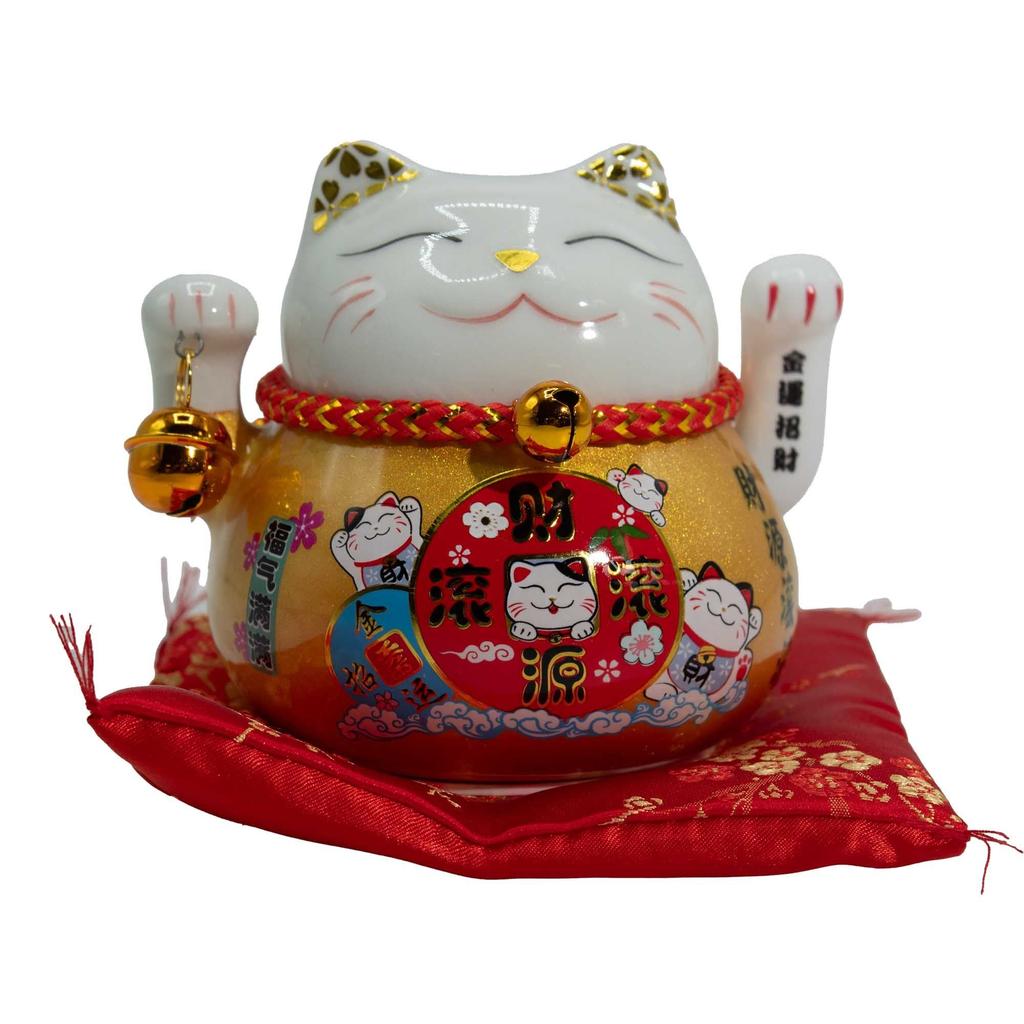
A raised paw gives this gold ceramic Maneki Neko its small, welcoming gesture, the kind of detail that catches the eye on a desk, shelf or shop counter. The rich gold finish, red cushion and decorative surface make it feel cheerful and ceremonial without taking over the room. It is a piece of symbolic décor for anyone who likes their home or workspace to carry a little story.
What gives it presence
The moving paw brings a gentle sense of animation, as if the cat is quietly greeting the day.
Gold tones make it warm and noticeable, especially against wood, books, plants or a darker shelf.
The red cushion gives the figure a traditional base, adding contrast beneath the shining ceramic cat.
Decorative detailing keeps the surface lively, so it reads as more than a plain ornament.
It suits places of welcome: a hallway table, work desk, reception shelf or small shop display.
Ceramic, gold tone and red cushion
The figure is ceramic with a gold-toned finish, set on a traditional red cushion. Its surface is decorative and polished in appearance, giving the cat a bright, ornamental character. The moving paw is part of the design, adding the familiar beckoning gesture associated with this form.
Where to place it
Set it somewhere visible rather than tucked away. A shelf near the door, a counter, a desk corner or a display cabinet all give the raised paw room to be seen.
Keep the ceramic clean with a soft, dry cloth. Avoid abrasive cleaners, and lift it by the body and cushion rather than by the moving paw.
The beckoning cat in Japanese tradition
Maneki Neko belongs to Japanese folk tradition, where the beckoning cat is associated with welcome, good fortune and prosperity. The gesture can look like a wave to Western eyes, but it echoes the Japanese beckoning motion, palm turned down rather than up. Gold versions are especially linked with abundance in modern symbolism, which is why this style is often placed in shops, studios and workspaces. Here, the meani…
region of manufacture: China


 No-delivery refund