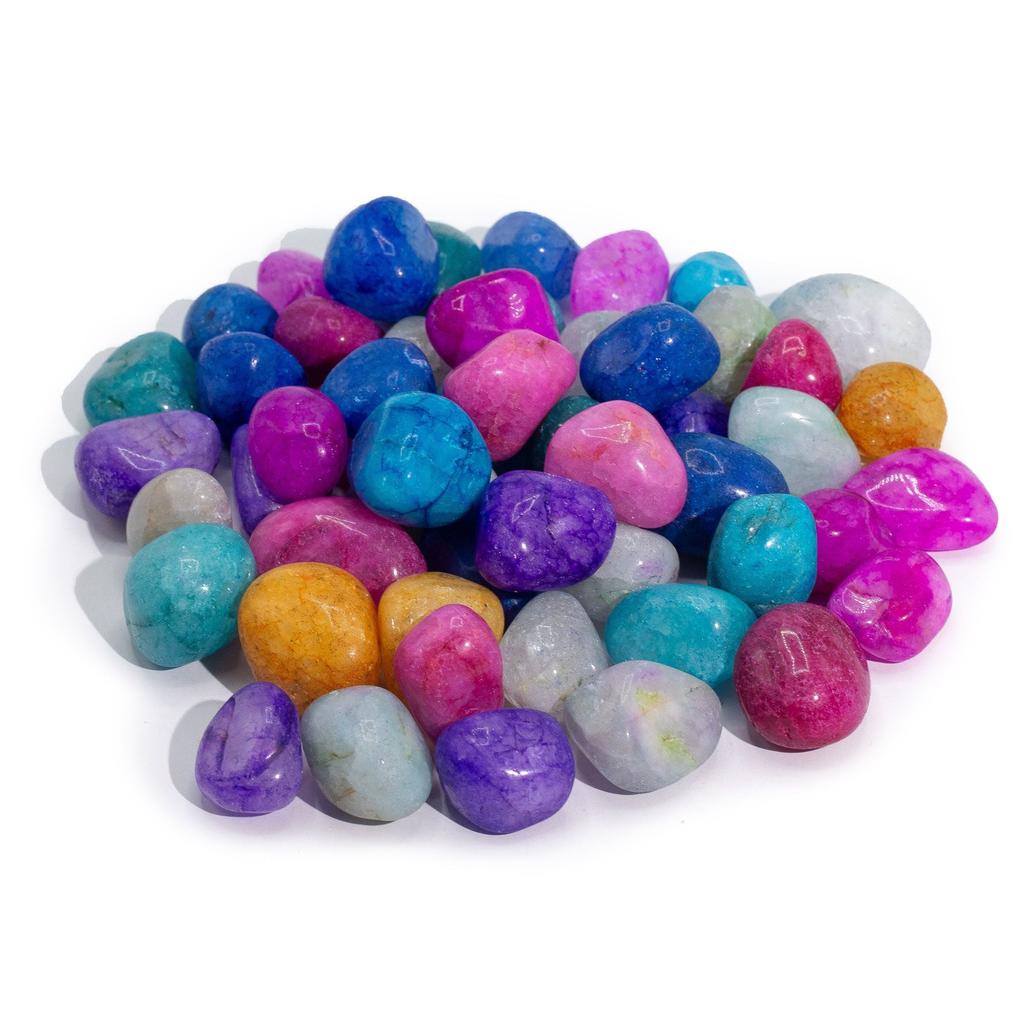
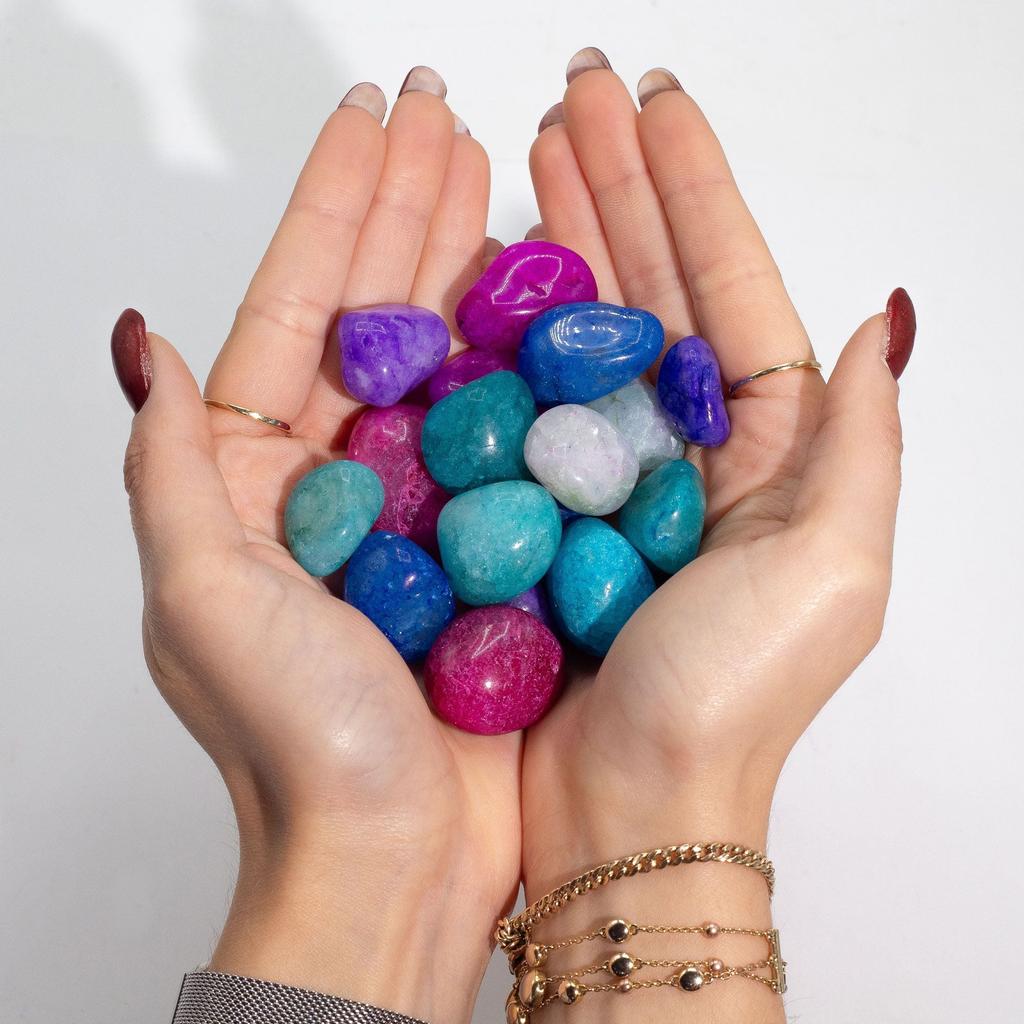
A scattered bowl of mixed crackle quartz tumbled stones brings instant colour to a shelf, altar space or creative table. The polished surfaces catch the light, while the crackled patterns inside each piece give the stones a bright, glassy depth. This is a generous mixed selection for display, mindful sorting, crystal grids, craft work or keeping in a favourite dish.
What you’ll notice in the mix
Glossy tumbled shapes that feel smooth in the hand, with softly rounded edges rather than sharp points.
A lively spread of dyed colour, including blues, purples, pinks, yellows and greens.
Crackle-like lines and cloudy veining running through the stones, so the colour looks layered rather than flat.
Some pieces appear more translucent, while others look milky or richly saturated in the light.
The mixture suits sorting by colour, placing in small bowls, or adding to a decorative crystal arrangement.
Treated quartz with a polished finish
These are treated crackle quartz stones with a polished, tumbled finish. The colours are dyed, giving the collection its playful range of bright tones. Each stone varies in shape, colour depth and internal pattern, which is part of the charm of a mixed tumbled selection.
How to use and care for them
Pour them into a shallow bowl, use them in crystal grids, add them to craft projects, or keep a few pieces on a desk where the colour can catch the light.
To clean, wipe gently with a soft dry cloth. As these stones are dyed and treated, avoid soaking them in water or leaving them in strong direct sunlight for long periods, as this may affect the colour over time.
Quartz in crystal tradition
Quartz has long been one of the most familiar stones in modern crystal practice, often associated with clarity, focus and setting an intention. Crackle quartz adds a decorative, contemporary layer to that tradition: the stone is chosen as much for its colour and light play as for its symbolic place. In a mindful home, pieces like these ar…
region of manufacture: India


 No-delivery refund



![[GOLD STONE] Super Seven Pebbles 100g Small Quartz with Other Minerals Entrapped Purification Goods Nail Parts Natural Stone Power Stone](https://img.joomcdn.net/4d6cba7ecfbfab5a6ef0a18820624bbe450c2dd4_100_100.jpeg)




![Natural Amethyst 1000g Healing Gravels, Size Approx. 5mm-20mm, 100g, 500g, (1kg), Purifying, (1000 Grams) [Used]](https://img.joomcdn.net/f070d83a1f8bc0c39fe1dfe147a291d1c25e9d08_100_100.jpeg)
