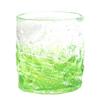
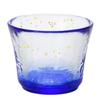
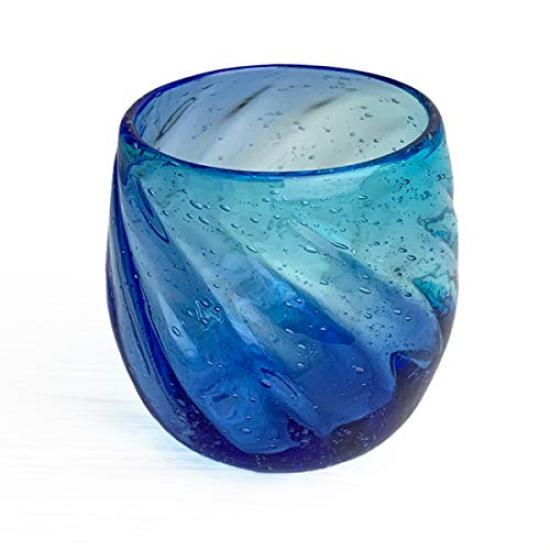
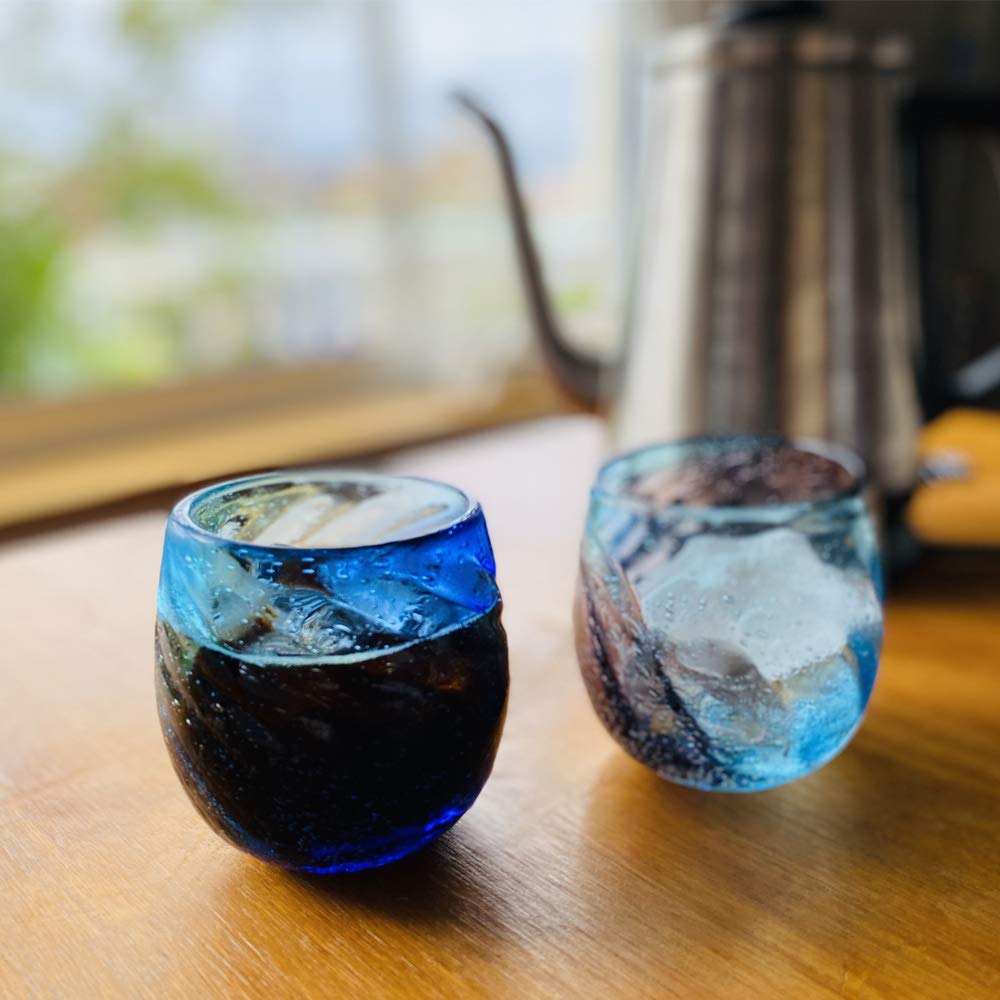
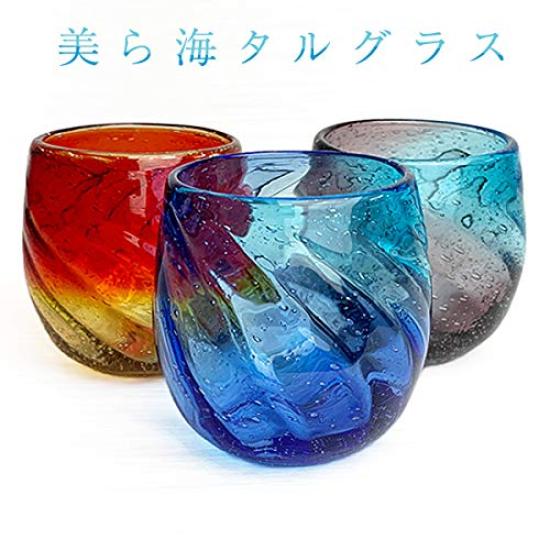
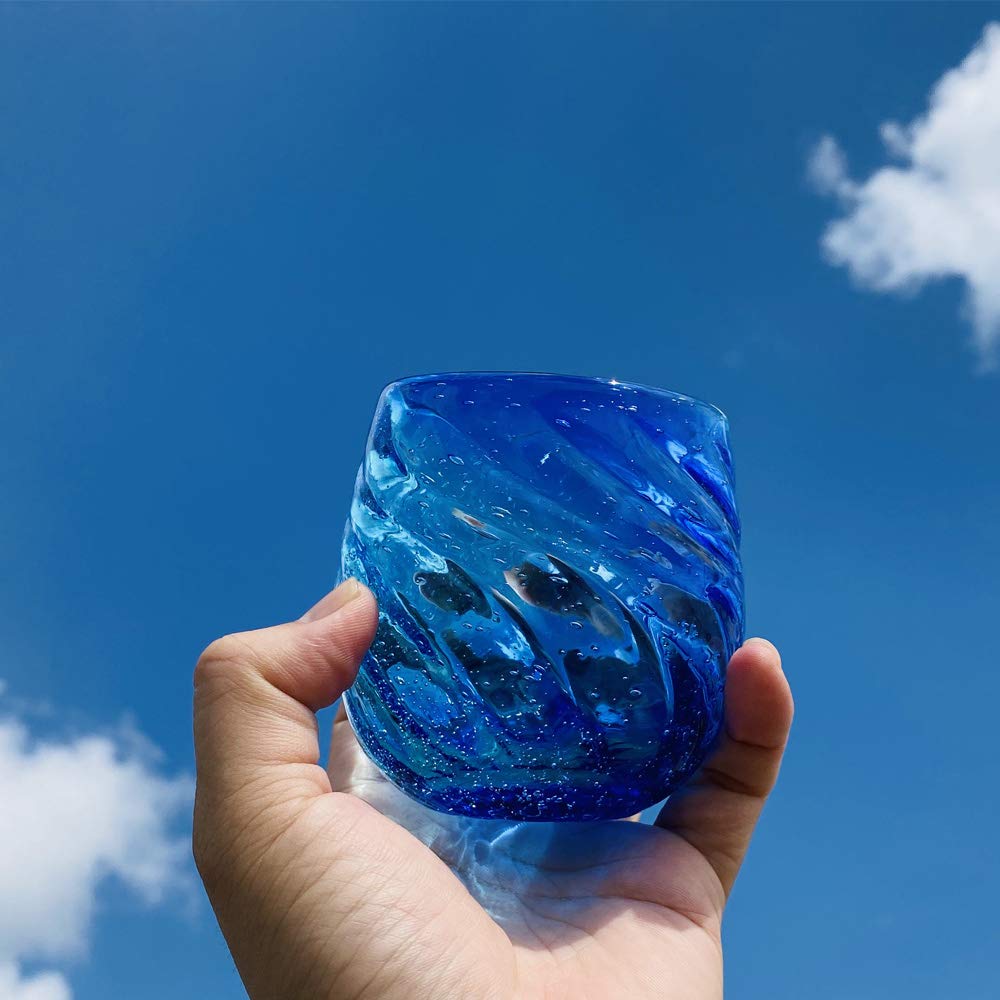
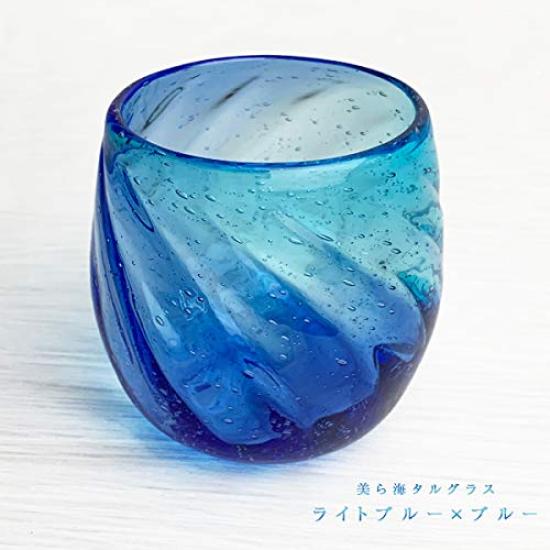
[Material: Soda glass][Size: Height: approx. 8cm, Diameter: approx. 8.2cm][Capacity: approx. 260ml][Manufacturing method: Ryukyu glass product made using the glassblowing method][Country of origin: China (※Food safety inspections in Japan have been completed)]
The origins of Ryukyu glass... It is believed that Ryukyu glass production began around the mid-Meiji period. Among the many traditional crafts of Okinawa, it is a relatively new craft with a short history. Mass production began shortly after the war, when it was made for American soldiers stationed in Okinawa. It is said that the colorful Ryukyu glass that continues to this day originated from recycling empty soft drink bottles discarded by American soldiers who occupied Okinawa at the time.
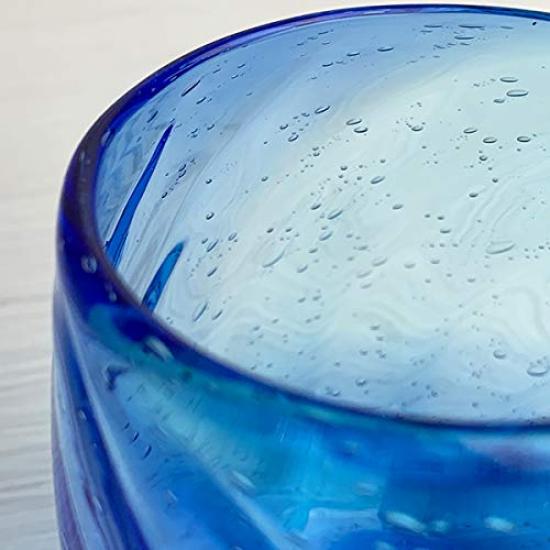
The Development of Ryukyu Glass... Due to the historical context of the continued presence of the American military after the war, Ryukyu glass underwent remarkable development. At that time, the raw material for Ryukyu glass was mainly recycled glass. It was thick, contained air bubbles, and the colors were not the vibrant primary colors of today, but rather dull, transparent colors. However, it lacked the transparency, coolness, and delicacy characteristic of other glassware, and its deep colors and unique air bubbles were appreciated as a charming feature unique to Okinawa, leading to its current form. Air bubbles, which would normally be considered defects, have been incorporated, utilized, and deepened as characteristics of Ryukyu glass, and even today, with more workshops using raw glass, they are passed down as a simple charm and an art of light.
The heart of a Ryukyu glass craftsman... There are two methods for making Ryukyu glass: "free-blowing," where glass is wrapped around the end of a blowpipe and shaped by blowing air into it, and "mold-blowing," where glass is blown directly into a mold. In the glassblowing process, the shaping must be completed before the glass cools completely. The glass, heated by flames reaching 1400 degrees Celsius, is molten and constantly moving like a living thing. It is a job that requires constant vigilance,
The heat will be beyond imagination. In such conditions, by aligning oneself with the movements of the glass, which seem to possess a will of its own, and by confronting the inherent characteristics of the glass, the colors and brilliance of Ryukyu glass are born that transcend the will and skill of the craftsman.
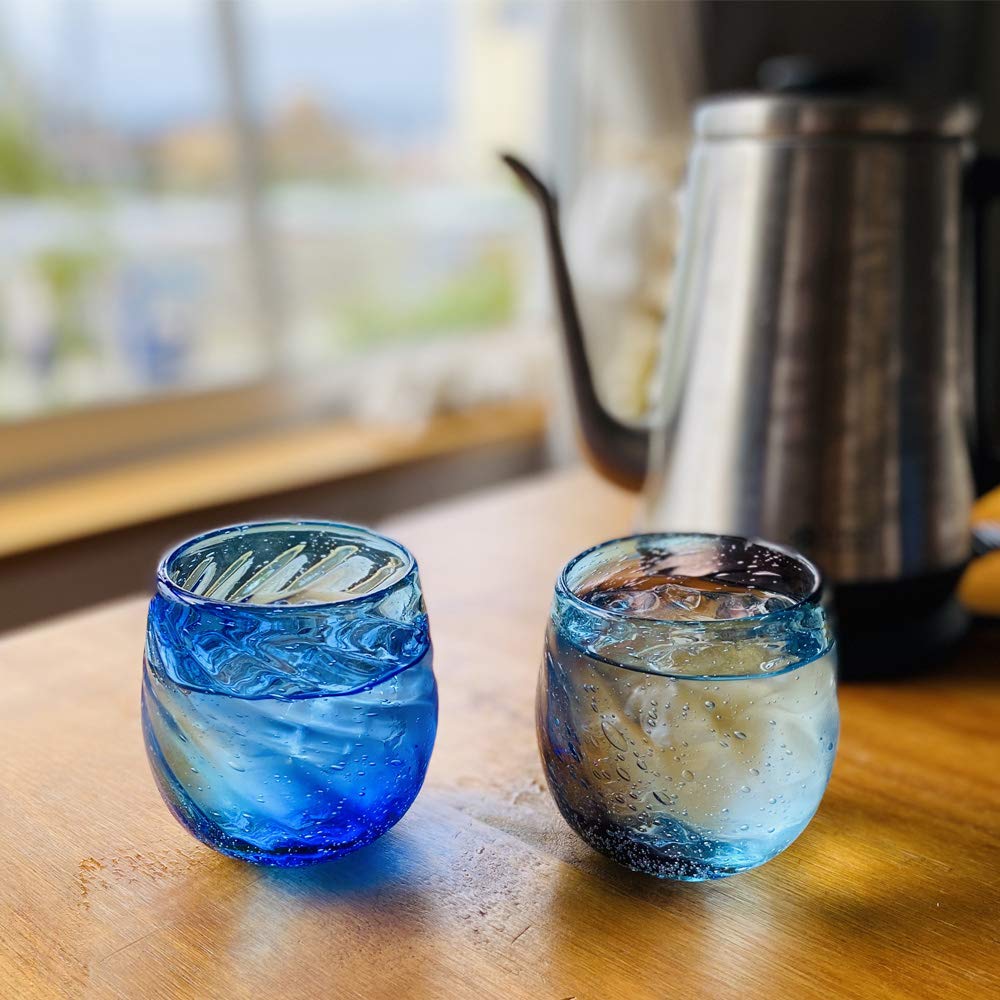
About our glass products... All the glass products we carry are handcrafted one by one by skilled artisans. No two pieces are exactly alike in color or pattern; each has its own unique character. Please understand that this is one of the charms of handmade products. Please enjoy the handmade charm created by skilled glass artisans.
Precautions for use: This product is not made of heat-resistant or tempered glass. Please refrain from using it in dishwashers, with hot water, boiling water, or in microwave ovens. Glass products can break due to sudden temperature changes. Please be careful not to cool or heat it rapidly.
>>The origin of Ryukyu glass<<
It is believed that Ryukyu glass production began around the middle of the Meiji era.
Among the many traditional crafts of Okinawa, this is a relatively new craft with a short history.
The mass production of these vehicles began shortly after the war, when they were produced for American troops stationed in Japan.
It is said that the colorful Ryukyu glass that continues to this day originated from the recycling of empty soft drink bottles discarded by American soldiers who occupied Okinawa at the time.
>>The Development of Ryukyu Glass<<
Due to the historical context of the continued presence of American troops after the war, Ryukyu glass underwent remarkable development.
At that time, recycled glass was the main raw material for Ryukyu glass.
The glass was thick, contained air bubbles, and the colors were not the vibrant primary colors we see today, but rather predominantly muted, transparent shades.
However, unlike other glassware, it lacks the transparency, coolness, and delicacy characteristic of glass. Instead, its deep colors and unique bubbles are appreciated as a charming feature unique to Okinawa, and this continues to this day.
Even air bubbles, which would normally be considered defects, are incorporated, utilized, and deepened as a characteristic of Ryukyu glass. Even today, with more workshops using raw glass, this simple charm and the art of light are still passed down.
>>The Heart of a Ryukyu Glass Craftsman<<
There are two methods for making Ryukyu glass: "free-blowing," where glass is wrapped around the end of a blowpipe and shaped by blowing air into it, and "mold-blowing," where glass is blown directly into a mold.
In the glassblowing process, the shaping must be completed before the glass has completely cooled.
The glass, heated by flames reaching 1400 degrees Celsius, is molten and constantly moving like a living thing.
The task requires constant attention,
It will be incredibly hot.
In this process, by aligning one's heart with the movements of the glass, which seem to possess a will of their own, and by confronting the inherent characteristics of the glass, the colors and brilliance of Ryukyu glass are born that transcend the will and skill of the craftsman.
>> About glass products <<
All the glass products we carry are handcrafted one by one by skilled artisans.
No two pieces are exactly alike in color or pattern; each one has a unique appearance.
Please understand that this is one of the charms of handmade products.
Please enjoy the handcrafted charm created by skilled glass artisans.
>> Precautions for Use <<
This product is not made of heat-resistant or tempered glass.
Please refrain from using dishwashers, hot water, boiling water, or microwaves.
Glass products can break due to sudden temperature changes.
Please be careful not to cool or heat it too quickly.


 No-delivery refund