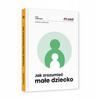
Postpartum Book - Natuli Publishing House.
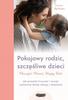
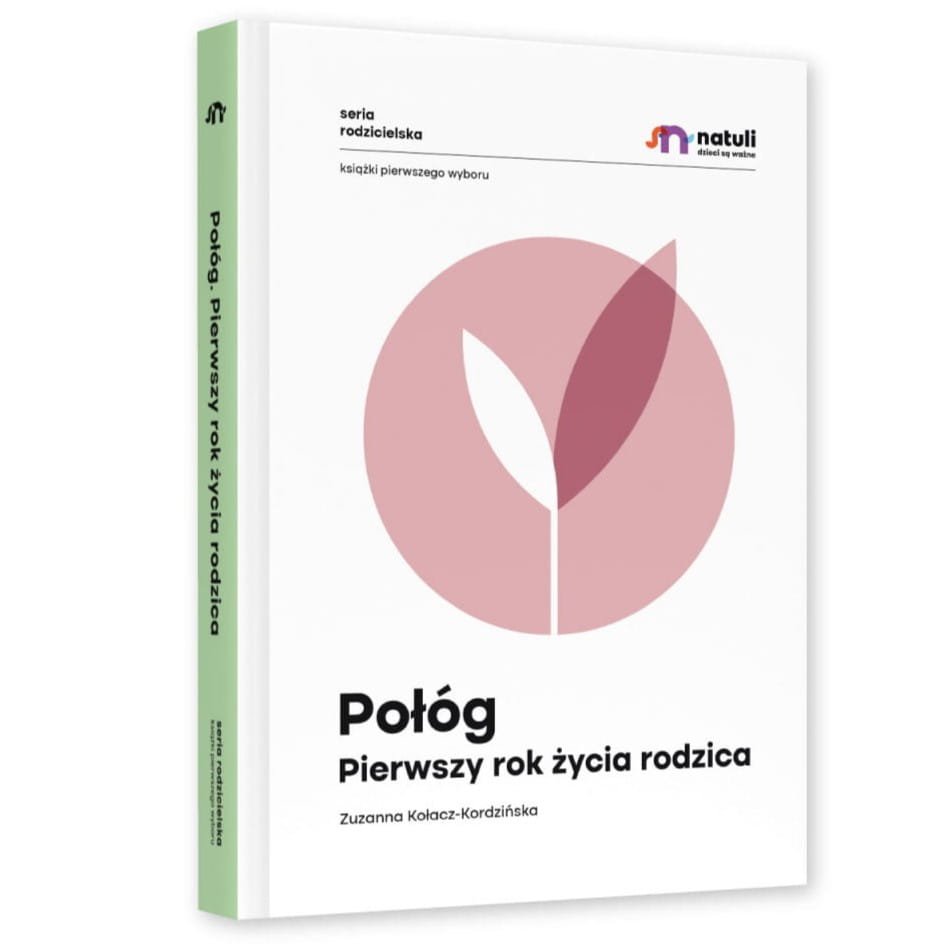
Here is the long-awaited holistic guide to the postpartum period. The author guides readers through a series of issues related to this groundbreaking moment with sensitivity and empathy.. In her perspective, the postpartum period is much more than just the reversal of physical changes after a recent pregnancy.. It considers the full range of emotions that accompany a young mother, defines the role of the co-parent, looks at sexuality, and suggests how to build a support village.. It provides knowledge about care and nutrition, debunks stereotypes that cast a shadow on motherhood, and thus holistically supports the mother's well-being.
The postpartum period is a great transformation in a young mother's life – identity and emotional – forming the foundations for the relationship with the child.. The author, with great empathy and knowledge of the subject, writes about the changing body and its physiology, as well as the accompanying emotions.. Deals with nutrition, looks at sexuality and the return to fertility, discusses physiological difficulties. It dedicates a lot of space to the co-parent, as well as to family and loved ones, helping them find their way in the new family situation.. It advises on how to cope in the later months and how to prepare for returning to the job market. It debunks myths about motherhood, all to support women in caring for their well-being.. In this way – full of warmth and care – it guides through the postpartum period, which becomes not only a time to survive, but a breakthrough moment in the family's life and an important complement to the perinatal triad. By bringing it out of the shadows, it allows one to appreciate its exceptionally bonding power.
The latest publication is a must-read for people who are expecting a child for the first time or again, or who are confronting their own postpartum experiences.
Author: Zuzanna Kołacz-Kordzińska – doula, hypnobirthing instructor, educator, also a craniosacral therapist, babywearing consultant and instructor, and master of women's and perinatal rituals. Wife and mother of two daughters.
Mount:Hard
Number of pages:300
TABLE OF CONTENTS
Introduction (11)
1. The Beginnings of Parenthood – Pregnancy and Childbirth (15)
A new stage in life (18)
Nesting, that is, what is important to us (22)
Preparation for childbirth and childcare (24)
Preparation for the postpartum period(39)
Postpartum period(43)
Celebrating pregnancy, its end, and the approaching birth(52)
2. Postpartum – a great transformation (57)
The Puerperium from a Holistic Perspective(61)
First – in the beginning it is unreal(61)Secondly – there's no need to rush(62)Thirdly – regaining strength(62)Fourthly – everyone falls in love differently (62)Fifth – we need care(65)Sixth, the most important thing – the postpartum period is not a return(65)
The Puerperium in World Cultures(70)
The first days after childbirth (78)Changing body(79)
3. Body and physiology in the postpartum period (85)
Hormonal changes(85)
Uterine involution(88)
Perineal healing(91)
Healing of a cesarean section scar(94)
Movement and sport in the postpartum period(96)
4. Emotions in the postpartum period (103)
Emotional turmoil (103)The new role, i.e. supermom, does not exist (107)Baby blues (112)Postpartum depression (117)
How to help yourself (122)
Psychotherapy and pharmacotherapy (123)
What besides pharmacotherapy and psychotherapy (126)
Social contact, i.e., a support village (129)
5. The role of the co-parent in the postpartum period / independent postpartum (133)
The First Days After Childbirth – A Celebration of Presence (133)Co-parent as the one who protects(139)
Presence and being in contact(140)
Tender care and observation(141)
Needs and emotions of a co-parent (143)
Establishing visiting rules (147)
Contacts with close family (147)
Postpartum and older children (150)
Independent postpartum (158)
6. Nutrition in the postpartum period (161)
The nourishing power of food(162)Strengthening power of food – power soup(168)Heating power of food(171)Mood-boosting food(174)Community power of food(177)
7. Physiological difficulties in the postpartum period (181)
Hemorrhoids(181)Urinary incontinence and other pelvic floor muscle dysfunctions(183)Puerperal infection(185)
What symptoms should be concerning(187)
How does the treatment proceed(187)
Breastfeeding difficulties(187)
Physiological soreness(188)
Incorrect feeding technique and improper latch(191)
Nipple cracks(193)
Food deluge(194)
Swelling, congestion, blocked milk duct, and mastitis(196)
8. Sexuality and return to fertility (201)
Readiness for sexual intercourse(201)Pain during sex(208)Sexuality is not just sex(209)Return to fertility(211)
9. The next months, i.e., the postpartum period until the child's first birthday (213)
Challenges faced by parents(214)
Crisis as an opportunity for development (216)
New roles in life(220)
Guilt(224)
Where is my instinct and intuition(230)
Physical and mental exhaustion(235)
The ability to ask for support(242)
Division of duties and responsibility(247)
Loneliness(260)
Returning to work – building a post-maternity identity(265)
Parent–employee in the first year of the child's life(270)
Returning to work and breastfeeding(276)
Celebrating the end of the postpartum period(278)
Cerrada – Mexican postpartum tradition(280)
10. End (289)
Thanks(286)Recommended reading(287)Bibliography(291)


 No-delivery refund