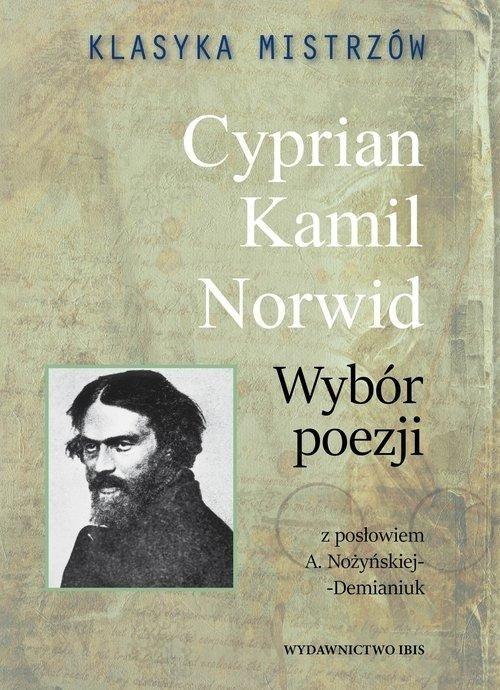
Cyprian Kamil Norwid (1821-1883) was a Polish poet, playwright, prose writer, painter, graphic artist, and sculptor. Born in the village of Głuchy near Radzymin, he was orphaned at an early age and raised by his great-grandmother, Hilaria Sobieska, née Buyna. The poet was related to King John III Sobieski. He attended high school in Warsaw, never graduating. He then entered a private painting school, where he took drawing lessons from Jan Klemens Minasowicz. In 1842, he left Poland permanently, initially living in Dresden, Venice, and Florence. In 1846, he was imprisoned in Berlin, where he developed the beginnings of deafness. From 1849, he lived in Paris, but he found no happiness there either. Struggling with financial problems and unfavorable opinions about his work, he decided to leave Paris for the United States. However, fate was not kind to him there either, and in 1854 he returned to Paris, which he remained there for the rest of his life. He died on May 23, 1883, at the St. Casimir's House in Paris. Norwid is considered one of the four most important Polish poets of the Romantic period, remarkably original and whose work transcended the era in which he lived. His innovative lyric poetry, steeped in philosophical thought, is the most outstanding achievement of the second generation of Romantics. This collection includes, among others, the following works: Bem's Mourning Rhapsody, [What Have You Done to Athens, Socrates], Chopin's Piano, In Verona, Assunta (or the Look), and Promethidion.


 No-delivery refund