Worth knowing:
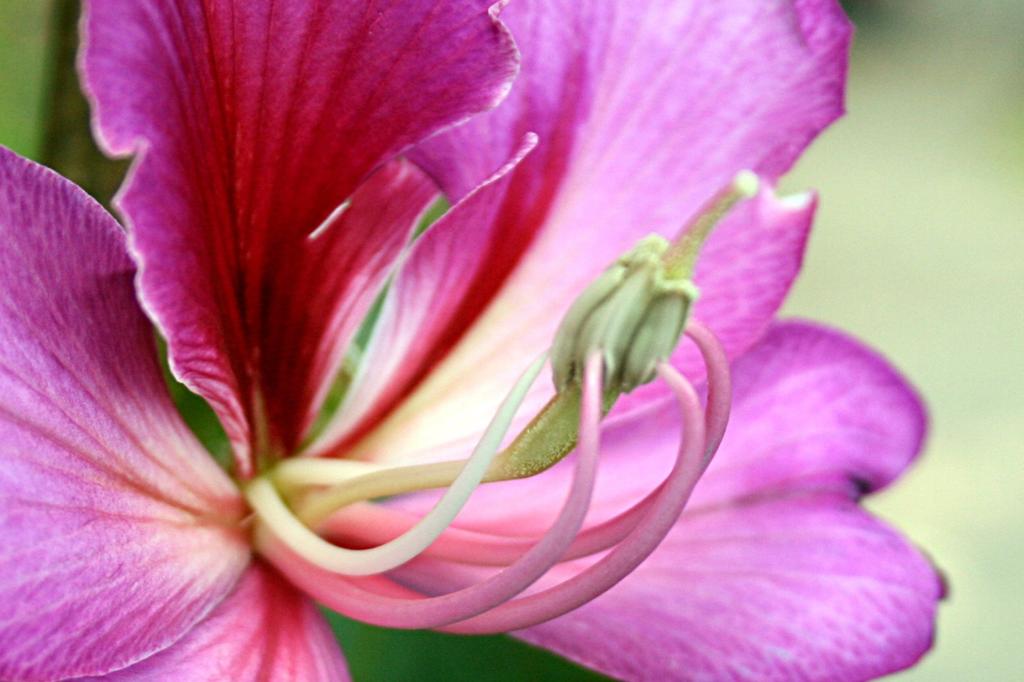
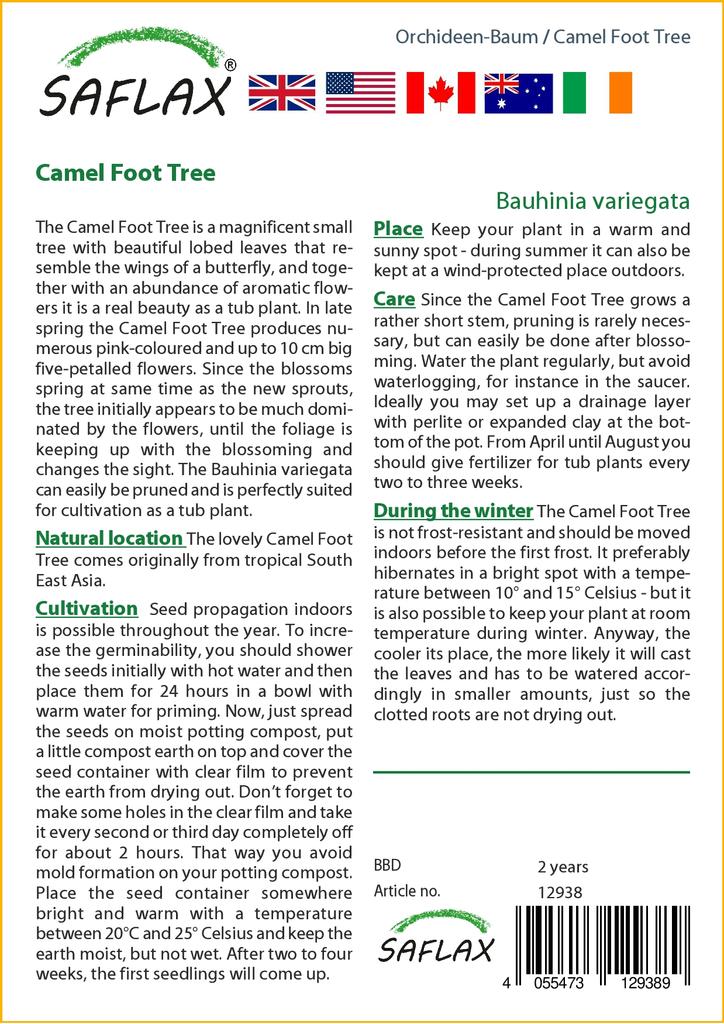
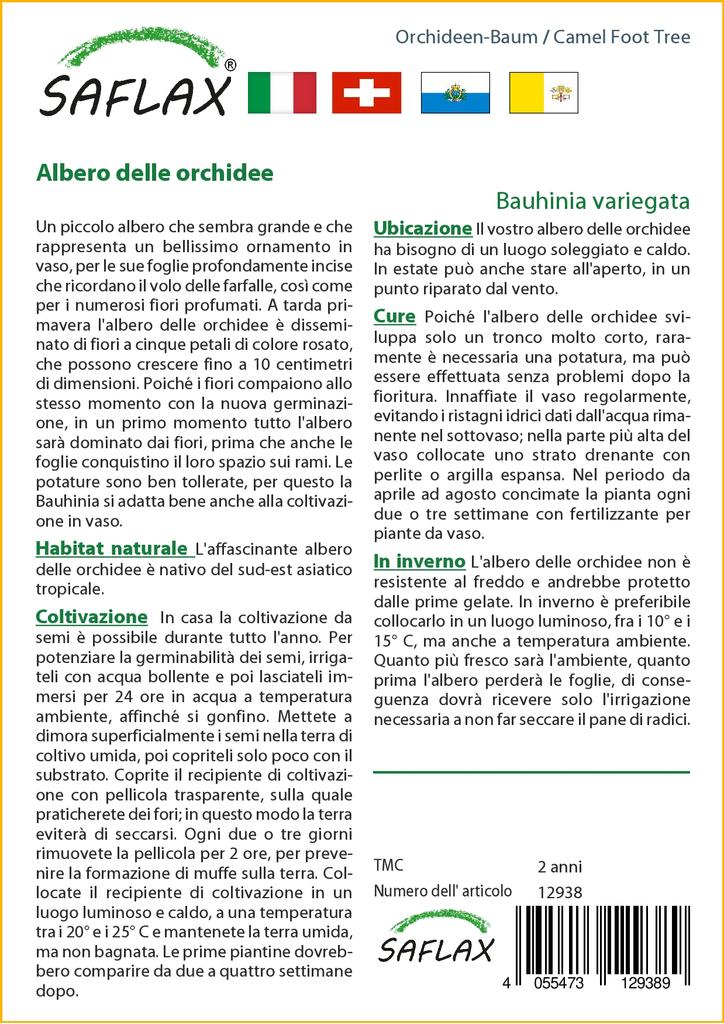
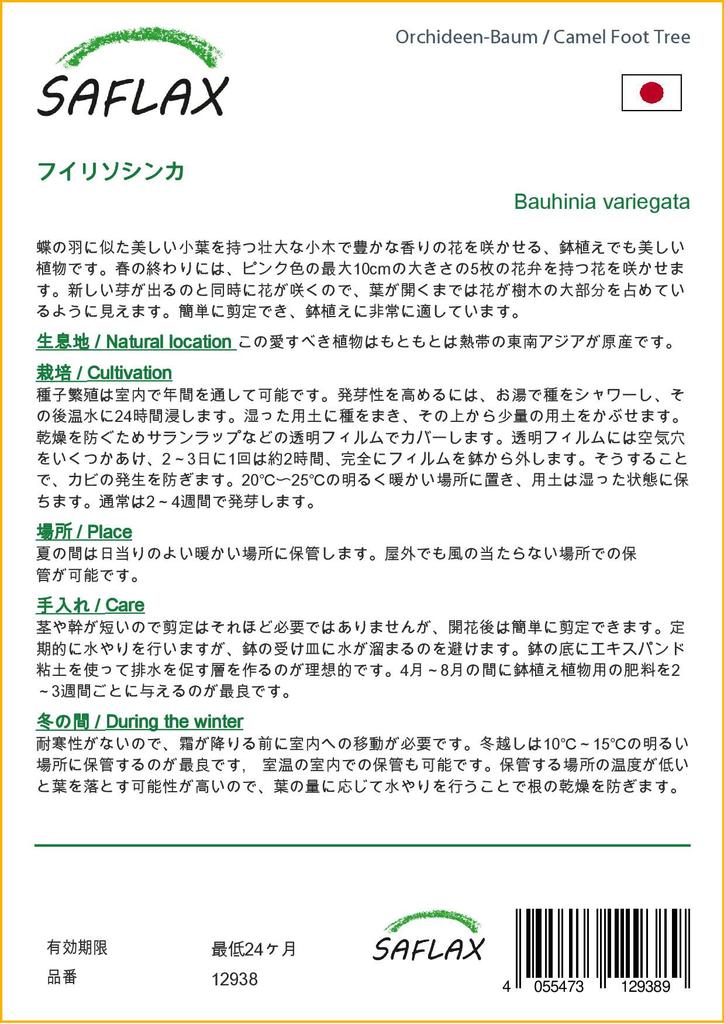
The Camel Foot Tree is a magnificent small tree with beautiful lobed leaves that resemble the wings of a butterfly, and together with an abundance of aromatic flowers it is a real beauty as a tub plant. In late spring the Camel Foot Tree produces numerous pink-coloured and up to 10 cm big five-petalled flowers. Since the blossoms spring at same time as the new sprouts, the tree initially appears to be much dominated by the flowers, until the foliage is keeping up with the blossoming and changes the sight. The Bauhinia variegata can easily be pruned and is perfectly suited for cultivation as a tub plant.
Natural Location:
The lovely Camel Foot Tree comes originally from tropical South East Asia.
Cultivation:
Seed propagation indoors is possible throughout the year. To increase the germinability, you should shower the seeds initially with hot water and then place them for 24 hours in a bowl with warm water for priming. Now, just spread the seeds on moist potting compost, put a little compost earth on top and cover the seed container with clear film to prevent the earth from drying out. Don’t forget to make some holes in the clear film and take it every second or third day completely off for about 2 hours. That way you avoid mold formation on your potting compost. Place the seed container somewhere bright and warm with a temperature between 20°C and 25° Celsius and keep the earth moist, but not wet. After two to four weeks, the first seedlings will come up.
Place:
Keep your plant in a warm and sunny spot - during summer it can also be kept at a wind-protected place outdoors.
Care:
Since the Camel Foot Tree grows a rather short stem, pruning is rarely necessary, but can easily be done after blossoming. Water the plant regularly, but avoid waterlogging, for instance in the saucer. Ideally you may set up a drainage layer with perlite or expanded clay at the bottom of the pot. From April until August you should give fertilizer for tub plants every two to three weeks.
During the winter:
The Camel Foot Tree is not frost-resistant and should be moved indoors before the first frost. It preferably hibernates in a bright spot with a temperature between 10° and 15° Celsius - but it is also possible to keep your plant at room temperature during winter. Anyway, the cooler its place, the more likely it will cast the leaves and has to be watered accordingly in smaller amounts, just so the clotted roots are not drying out.
Picture credits:
- © © Sabine Laue - © Saflax - http://www.saflax.de/copyright
- © Frank Laue - © Saflax - http://www.saflax.de/copyright
- © Frank Laue - © Saflax - http://www.saflax.de/copyright
- © Sabine Laue - © Saflax - http://www.saflax.de/copyright
- © 天問 小窩 - CC-BY-2.0 - http://creativecommons.org/licenses/by/2.0
- © Hedwig Storch - GFDL - http://www.gnu.org/licenses/fdl
- © tree-species - CC-BY-2.0 - http://creativecommons.org/licenses/by/2.0
- © Sabine Laue - © Saflax - http://www.saflax.de/copyright
- © - -










 No-delivery refund


