Worth knowing:
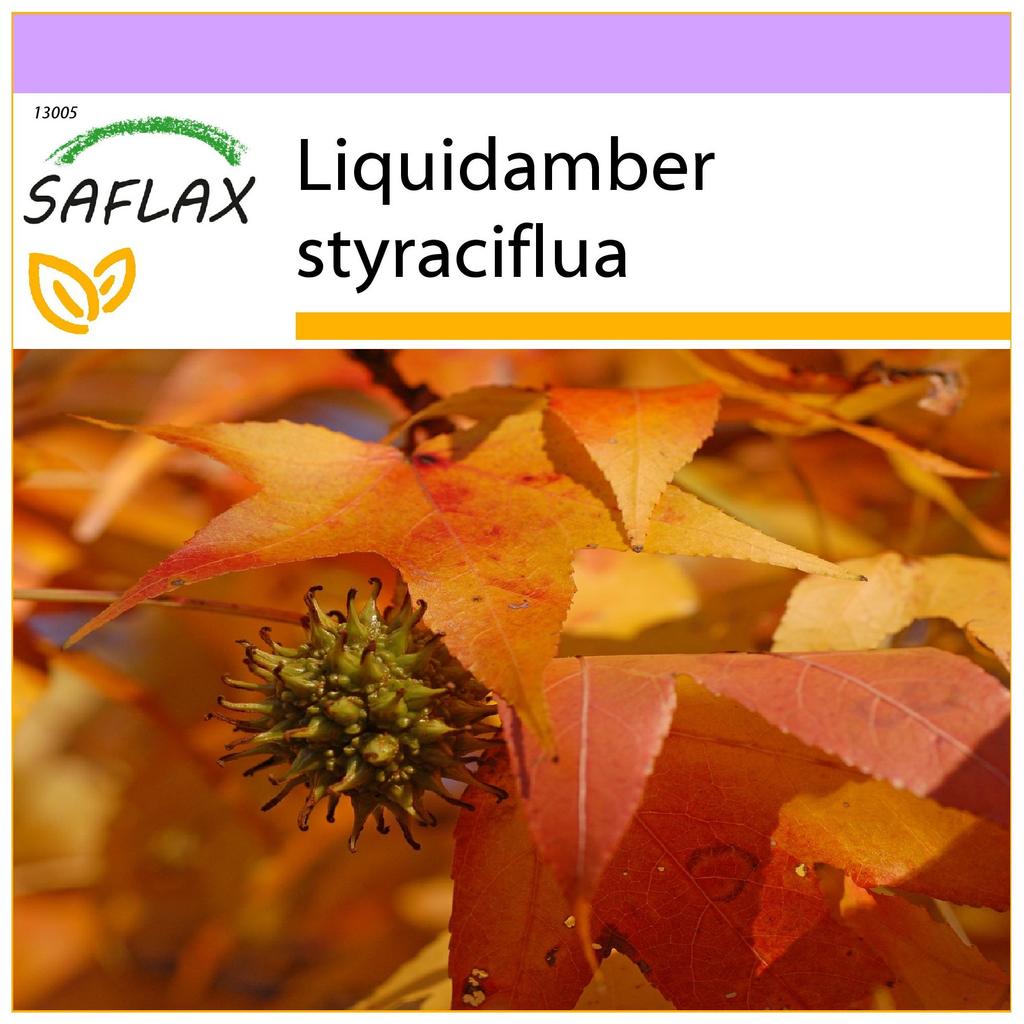
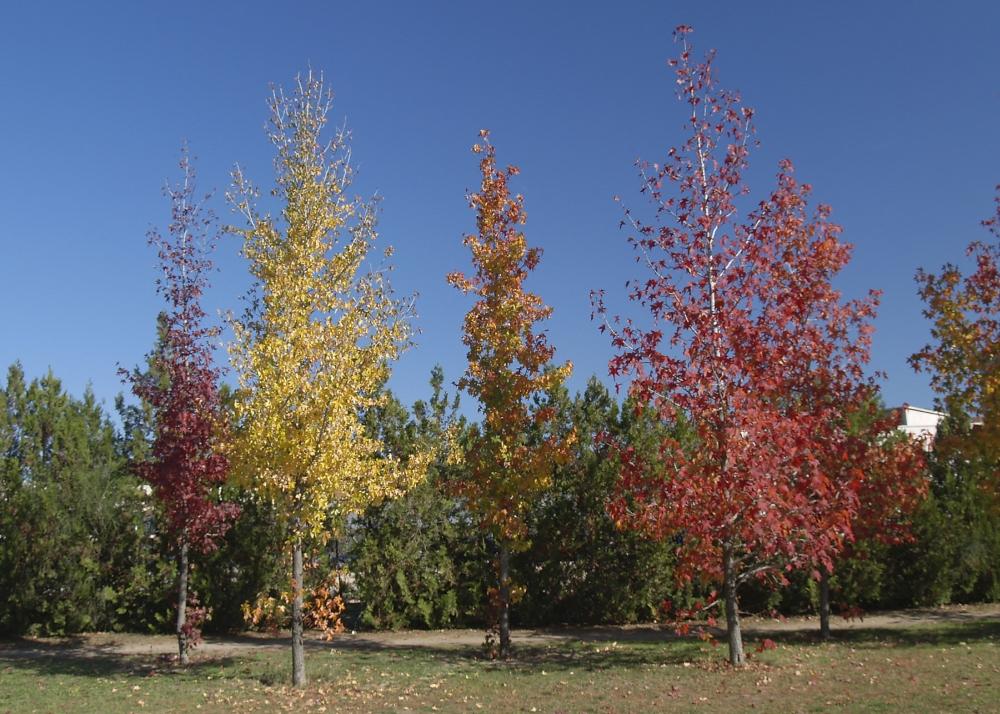
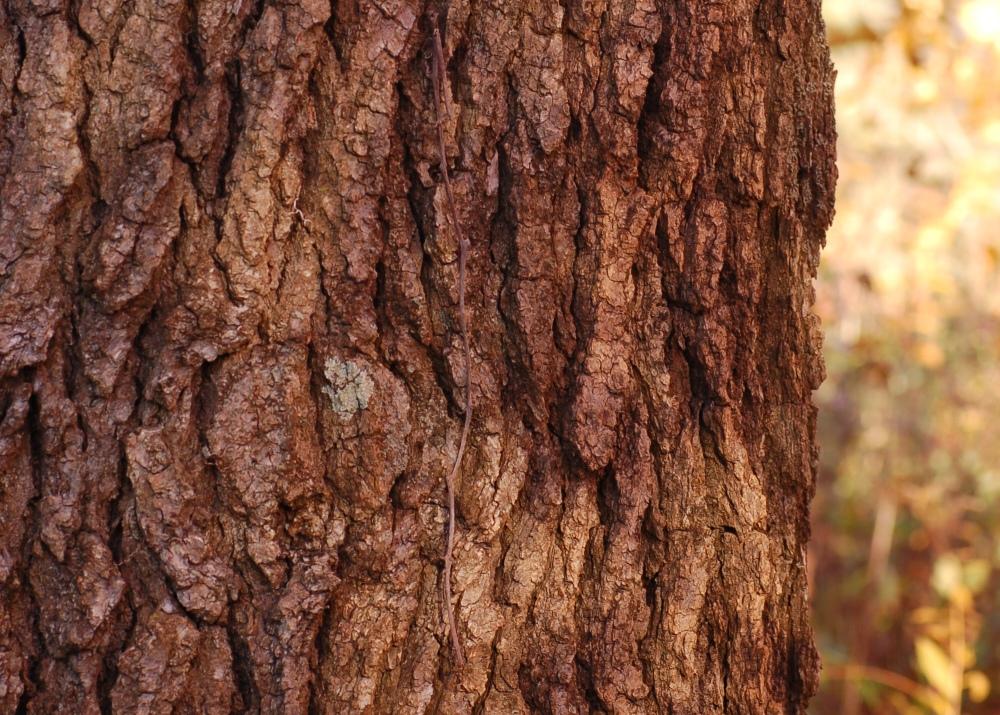
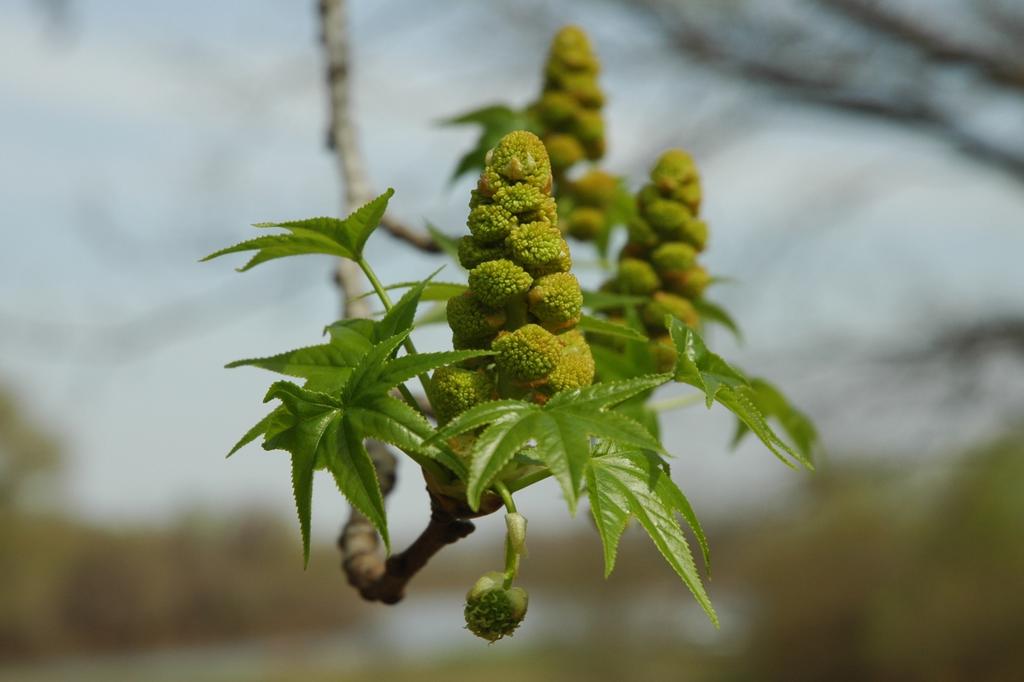
The frost-resistant American Sweet Gum creates with the beginning of September a furious play of colours, from orange to scarlet red until purple that stretches for a couple of weeks and makes the plant an often desired garden tree. With its rather slender crown it is especially suited for small gardens. The palmately lobed leaves reminding of a maple tree. After blossoming in May, the American Sweet Gum produces green-coloured, ball-shaped fruits that look somewhat like chestnuts. The initially red-brown coloured bark will turn grey-brown over the years and develops cork strips. The tree can be cultivated as a tub plant with a height of up to two meters - as an outdoor plant it can become 8 to 10 meters tall. The botanical name “Liquidambar” and the English name “American Sweet Gum” pointing to the fluid that comes out of the plant when scarified. In the USA this fluid is used for making chewing gum. The dark-coloured wood of the tree with its spicy smell and nice grain is predominantly used in the timber industry, while the aromatic resin is utilized in soap making and perfumery.
Natural Location:
The natural habitat of the American Sweet Gum reaches from the northeastern USA (State of New York) until Nicaragua. The tree grows mainly on humid mountain sides and in river valleys. Until the ice age it could also be found in Europe.
Cultivation:
Seed propagation indoors is possible throughout the year. Spread the seeds onto moist potting compost and put just a little compost earth on top. Then, cover the seed container with clear film to prevent the earth from drying out. Don’t forget to make some holes in the clear film and take it every second or third day completely off for about 2 hours. That way you avoid mold formation on your potting compost. Place the seed container somewhere bright and warm with a temperature between 20° and 25° Celsius and keep the earth moist, but not wet. After four to eight weeks the first seedlings will come up.
Place:
The American Sweet Gum can be cultivated in half-shaded to full sunny places, and in moist soil or even dry earth with additional watering. However, it doesn’t like waterlogging and compact soil and should therefore not be kept close to a porch or such, but rather in solitary on a lawn.
Care:
During summer the earth should not dry out - so see that you water your plant properly a couple of times every week. The American Sweet Gum has rather modest nutrient requirements, and some mineral fertilizer in April, June and August or long-term fertilizer for rhododendron plants should do the job. The tree grows without pruning very nicely and develops a steady, pyramid-shaped crown.
During the winter:
For younger plants a light frost protection is advisable - you best cover the root area with a thick layer of foliage. Matured trees are fully frost-resistant up to -25° Celsius.
Picture credits:
- © © Derek Ramsey - GFDL - http://www.gnu.org/licenses/fdl
- © Frank Laue - © Saflax - http://www.saflax.de/copyright
- © Frank Laue - © Saflax - http://www.saflax.de/copyright
- © Luis Fernández García - CC-BY-SA-2.5 - http://creativecommons.org/licenses/by-sa/2.5
- © Derek Ramsey - GFDL - http://www.gnu.org/licenses/fdl
- © Ikmo-ned - CC-BY-SA-3.0 - http://creativecommons.org/licenses/by-sa/3.0
- © Luis Fernández García - CC-BY-SA-2.5 - http://creativecommons.org/licenses/by-sa/2.5
- © Shane Vaughn - CC-BY-3.0 - http://creativecommons.org/licenses/by/3.0/
- © Derek Ramsey - GFDL - http://www.gnu.org/licenses/fdl