Worth knowing:
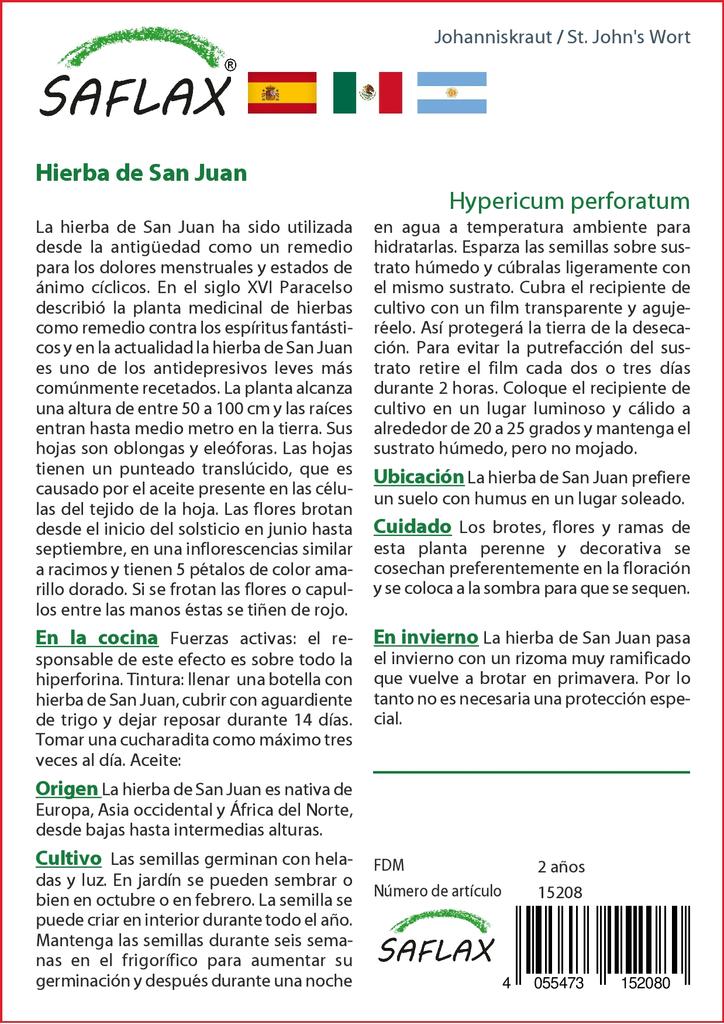
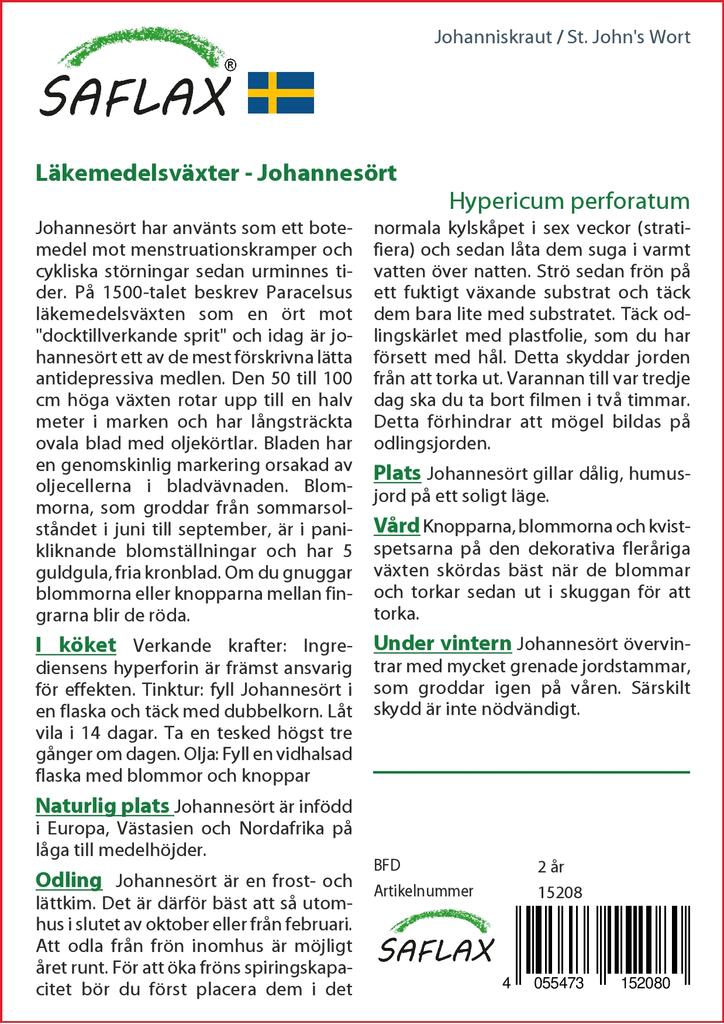
St. John’s Wort is used to ease menstrual cycle problems since ancient times. In the 16th century, the physician Paracelsus described the medicinal plant as herb against doll-making spirits. Today, St. John’s Wort is one of the most often prescribed mild antidepressants. The plant develops elongated, oval-shaped leafage with oil glands and grows 50 to 100 cm tall, while the roots reach up to half a meter deep into the earth. The leaves appear sheer dotted due to the oil cells embedded in the leaf tissue. From June until September, starting after the summer solstice, the plant produces blossoms with panicle-like inflorescences and five golden yellow-coloured crown leaves. If you grind the flowers or buds in your hand, your fingers will become red.
Natural Location:
St. John’s Wort is native in Europe, western Asia and North Africa and grows in low and mean altitudes.
Cultivation:
The St. John’s Wort is a cold and light germinator. Outdoors, you can plant the seeds preferably in late October or in February. Seed propagation indoors, however, is possible throughout the year. You should initially keep the seeds in the refrigerator for about six weeks to increase the germinability through stratification, and place them afterwards in a bowl with lukewarm water overnight for priming. Then, spread the seeds onto moist potting compost and put only very little compost earth on top. Cover the seed container with clear film to prevent the earth from drying out, but don’t forget to make some holes in the clear film and take it every second or third day completely off for about 2 hours. That way you avoid mold formation on your potting compost. Place the seed container somewhere bright and warm with a temperature between 20°C and 25°Celsius and keep the earth moist, but not wet.
Place:
St. John’s Wort prefers meagre, humous soil in a sunny location.
Care:
The buds, flowers and shoot tips of this decorative shrub plant, are best harvested during blossoming, and then dried in the shade.
During the winter:
St. John’s Wort hibernates with a widely ramified rootstock that sprouts anew in spring. Special protection during the winter is not necessary.
Picture credits:
- © © Cbaile19 - CC0 - http://creativecommons.org/publicdomain/zero/1.0/
- © Frank Laue - © Saflax - http://www.saflax.de/copyright
- © Frank Laue - © Saflax - http://www.saflax.de/copyright
- © Cbaile19 - CC0 - http://creativecommons.org/publicdomain/zero/1.0/
- © - -
- © - -
- © - -
- © - -
- © - -




 No-delivery refund