Worth knowing:
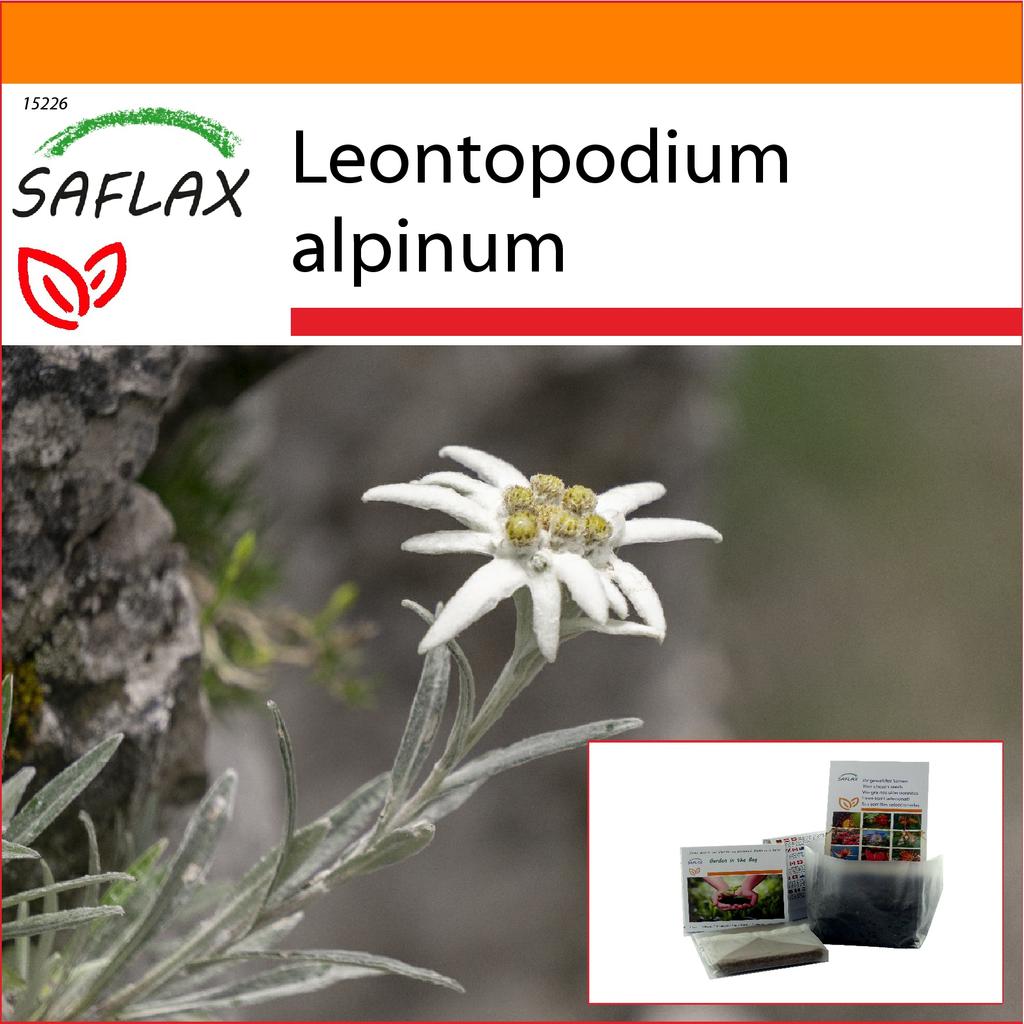
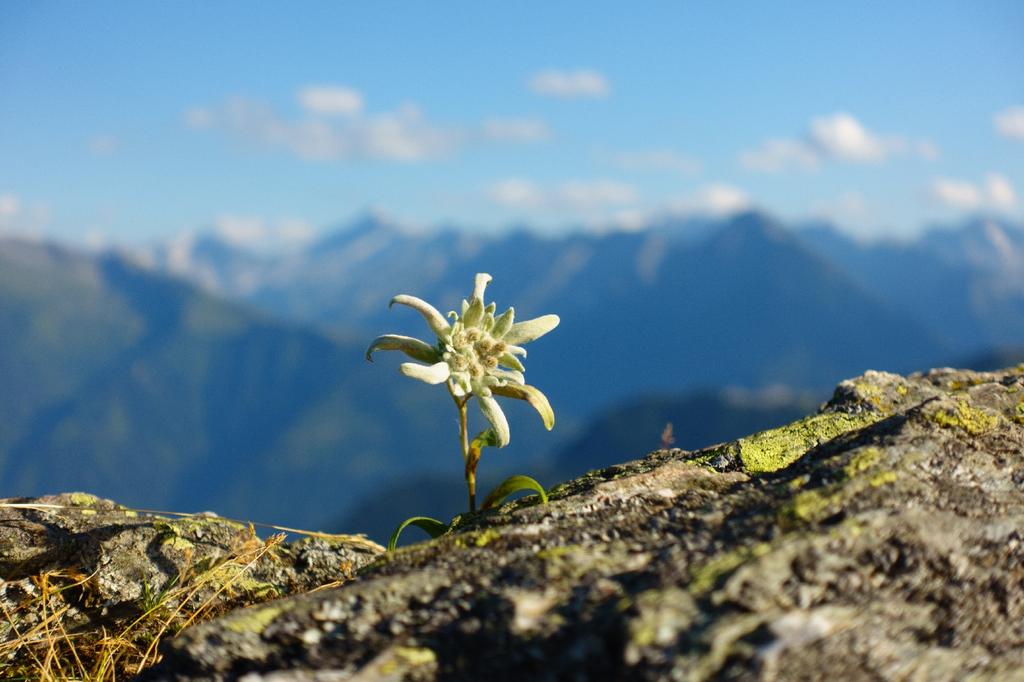
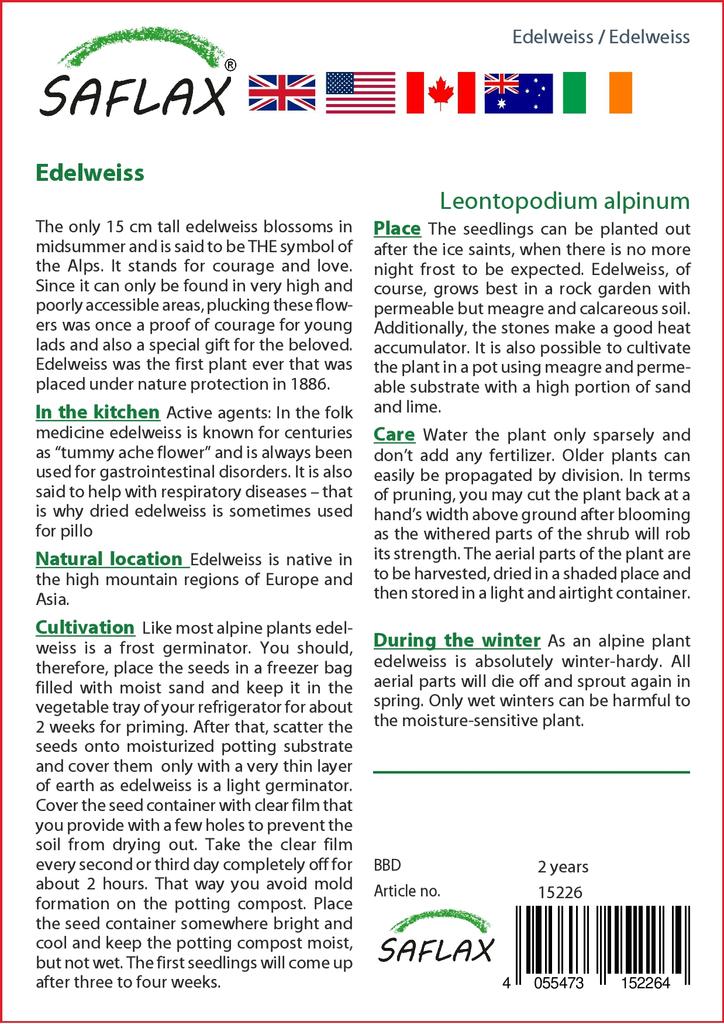
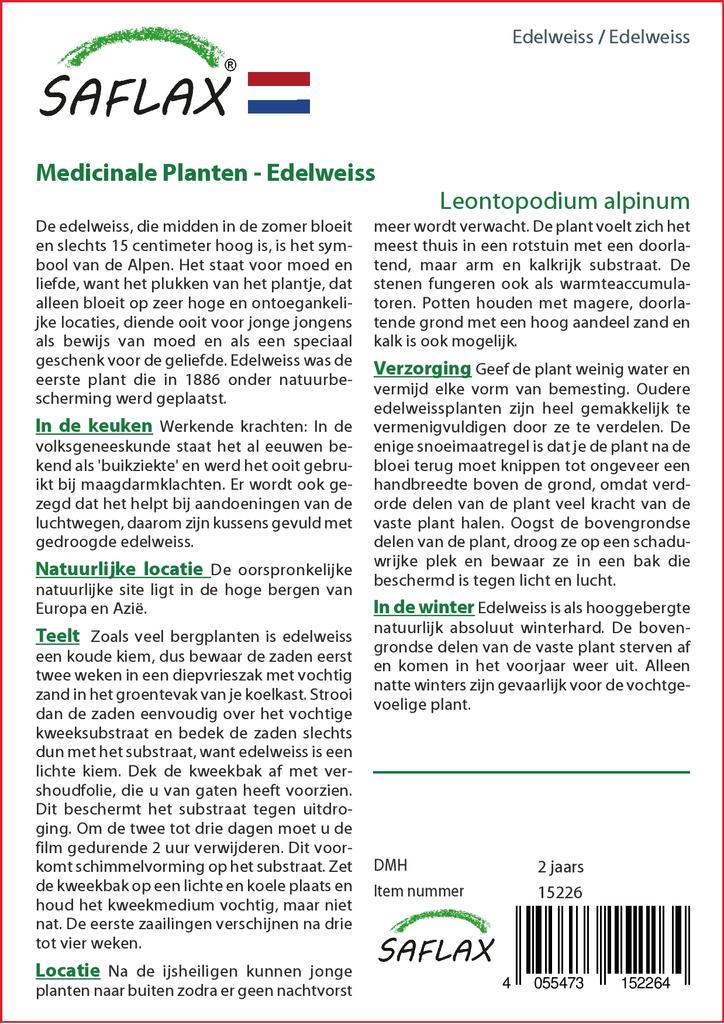
The only 15 cm tall edelweiss blossoms in midsummer and is said to be THE symbol of the Alps. It stands for courage and love. Since it can only be found in very high and poorly accessible areas, plucking these flowers was once a proof of courage for young lads and also a special gift for the beloved. Edelweiss was the first plant ever that was placed under nature protection in 1886.
Natural Location:
Edelweiss is native in the high mountain regions of Europe and Asia.
Cultivation:
Like most alpine plants edelweiss is a frost germinator. You should, therefore, place the seeds in a freezer bag filled with moist sand and keep it in the vegetable tray of your refrigerator for about 2 weeks for priming. After that, scatter the seeds onto moisturized potting substrate and cover them only with a very thin layer of earth as edelweiss is a light germinator. Cover the seed container with clear film that you provide with a few holes to prevent the soil from drying out. Take the clear film every second or third day completely off for about 2 hours. That way you avoid mold formation on the potting compost. Place the seed container somewhere bright and cool and keep the potting compost moist, but not wet. The first seedlings will come up after three to four weeks.
Place:
The seedlings can be planted out after the ice saints, when there is no more night frost to be expected. Edelweiss, of course, grows best in a rock garden with permeable but meagre and calcareous soil. Additionally, the stones make a good heat accumulator. It is also possible to cultivate the plant in a pot using meagre and permeable substrate with a high portion of sand and lime.
Care:
Water the plant only sparsely and don’t add any fertilizer. Older plants can easily be propagated by division. In terms of pruning, you may cut the plant back at a hand’s width above ground after blooming as the withered parts of the shrub will rob its strength. The aerial parts of the plant are to be harvested, dried in a shaded place and then stored in a light and airtight container.
During the winter:
As an alpine plant edelweiss is absolutely winter-hardy. All aerial parts will die off and sprout again in spring. Only wet winters can be harmful to the moisture-sensitive plant.
Picture credits:
- © About © : Contact SAFLAX - - http://www.saflax.de/copyright
- © Frank Laue - © Saflax - http://www.saflax.de/copyright
- © Frank Laue - © Saflax - http://www.saflax.de/copyright
- © About © : Contact SAFLAX - - http://www.saflax.de/copyright
- © About © : Contact SAFLAX - - http://www.saflax.de/copyright
- © Andrew Bossi - CC-BY-SA-2.5 - http://creativecommons.org/licenses/by-sa/2.5
- © About © : Contact SAFLAX - - http://www.saflax.de/copyright
- © About © : Contact SAFLAX - - http://www.saflax.de/copyright
- © - -






 No-delivery refund