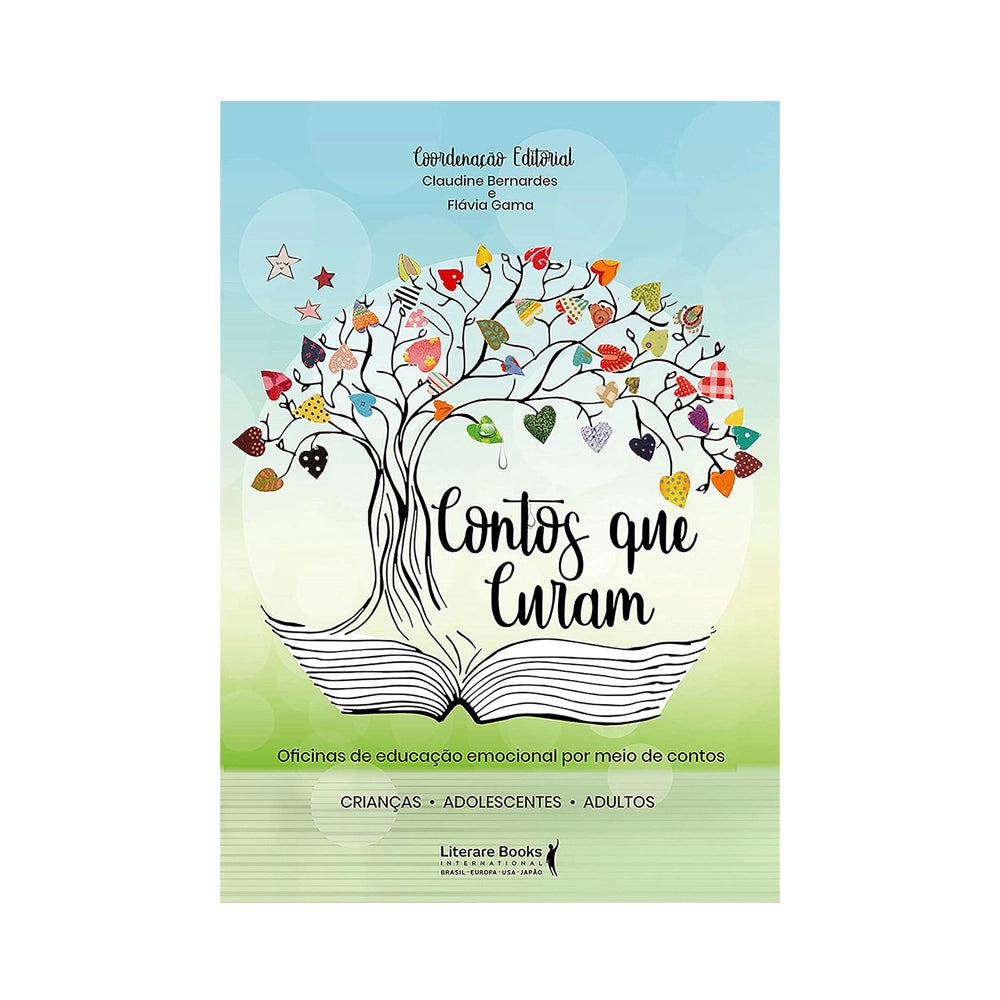
The work “Tales that Heal” uses the simplicity of symbolic language for personal development in a playful, ethical, and light manner.,. Whenever one speaks of tales, be they fairy tales, or in general, there is the thought of entertaining and amusing children. However, these stories are more than just a tool for entertainment, they are capable of aiding in human development, and proof of this is the work “Tales that Heal”, published by the publisher Literare Books International. The book brings together studies, stories, and workshops by a group of specialists to present the meanings and also the messages that the stories transmit, both to the conscious and to the unconscious mind.. As narratives unfold, they give space to consciousness, showing the paths to satisfy needs and desires, according to the demands of the ego and superego. That is, a true inner transformation occurs, which ends up transcending over the individual's entire life.. The reader will discover a valuable resource that hides behind the simplicity of the stories: the symbolic language. Through it, it is possible to explain problems, steps, or facts, which are directed to the human unconscious and suggest perspectives and alternatives.. In this way, children, adolescents, and adults will be able to see their concerns and desires expressed. The public will understand that the tales have at least five functions or utilities that influence human life: 1. Magic: stimulate the imagination and fantasy; 2. Playful: entertain and amuse; 3. Ethics: transmit moral teachings and identify values; 4. Spiritual: understanding of metaphysical and philosophical truths; 5. Therapeutics: find in the characters and situations references for life, in addition to guidance for understanding the inner world and conflicts. These and other themes are addressed in the workshops included in the work, with the psychopedagogical objective. It is worth noting that, when working with the tales, the professional should present them, allowing the participants/listeners to express their opinions and preferences, without ever judging or questioning negatively.. In the work the reader will find relevant themes, such as: self-acceptance, self-knowledge, resilience, gratitude, reframing, empowerment, love, among others. All specially selected to work on human development and emotion regulation.


 No-delivery refund