Worth knowing:
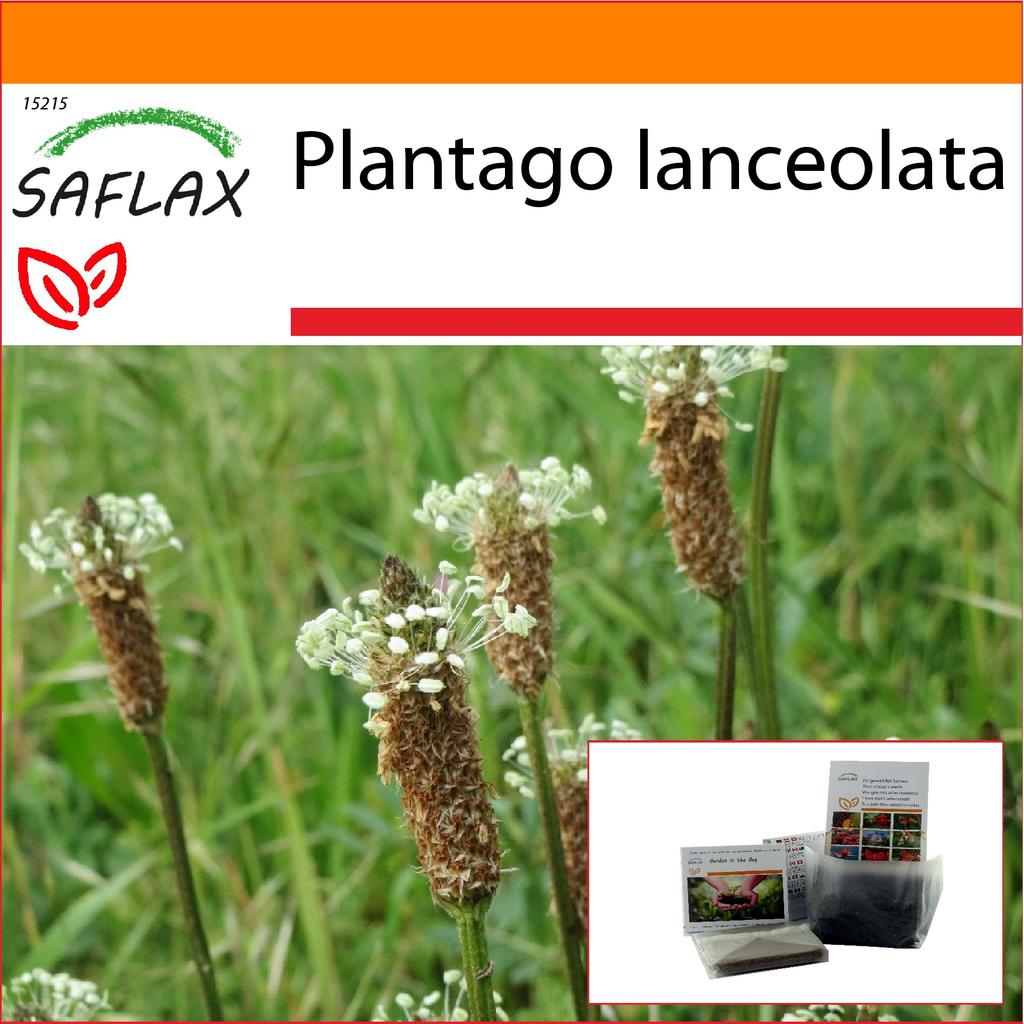
The deep rooting English Plantain grows up to 40 cm tall and develops a basilar rosette with the leaves. From April until September, it develops rather inconspicuous blossoms with initially globose and later cylindrical flower spikes, out of which yellowish-white coloured stamens hang out noticeably long. The blossoms are free of scent and nectar, and equipped for wind pollination. The English Plantain was already highly appreciated in the healing arts of the classical antiquity, and Greek as well as Roman healers prescribed the plant for numerous diseases. It also takes up considerable space in the medicinal literature of the Middle Ages. In the time during the World Wars, the wild growing English Plantain was used as welcoming substitute for salad.
Natural Location:
The Enlish Plantain originally only comes from Europe, but nowadays it can be found worldwide.
Cultivation:
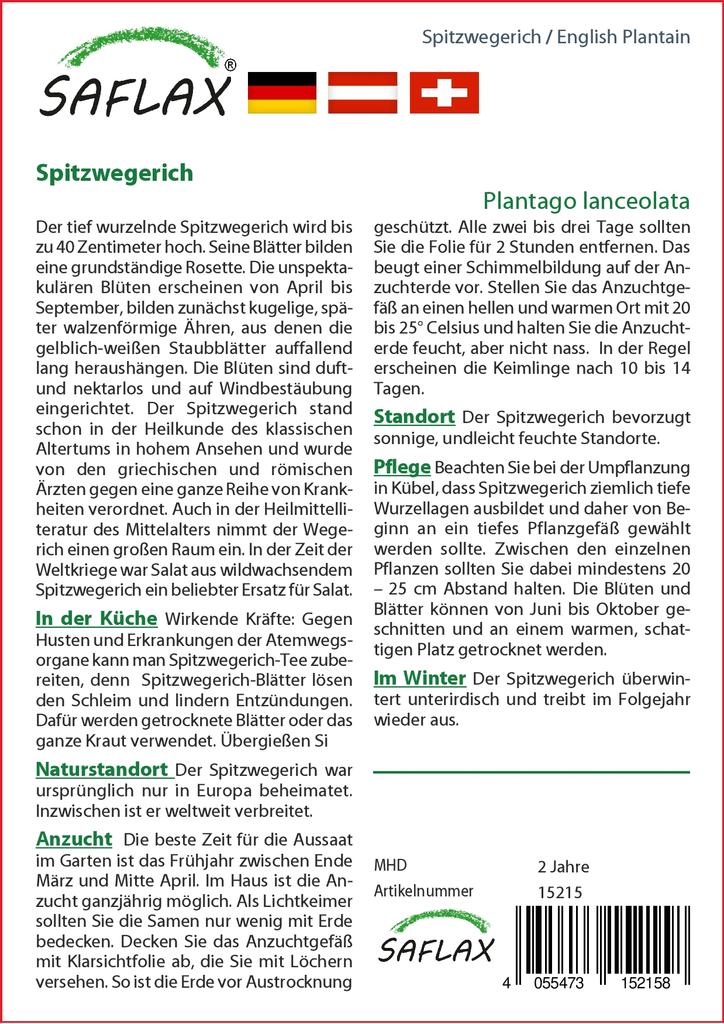
The best time for seeding directly in the garden would be in spring between end of March and mid April. Seed propagation indoors, however, is possible throughout the year. The English Plantain is a light germinator and should only be covered with very little compost earth while planting. Cover the seed container with clear film to prevent the earth from drying out, but don’t forget to make some holes in the clear film and take it every second or third day completely off for about 2 hours. That way you avoid mold formation on your potting compost. Place the seed container somewhere bright and warm with a temperature between 20°C and 25°Celsius and keep the earth moist, but not wet. Usually, the first seedlings already come up after 10 to 14 days.
Place:
The English Plantain prefers a sunny and moderate moist place for cultivation.
Care:
In tub cultivation, you should consider the rather deep reaching roots of the plant and use a tall potting container straight away. The plants should also have enough breathing space between them, at least 20 to 25 cm are recommended. The blossoms and leaves can be cut from June until October, and then kept in a warm and shaded place for drying.
During the winter:
The English Plantain hibernates subterraneously and shoots again next year.
Picture credits:
- © © AnRo0002 - CC0 - http://creativecommons.org/publicdomain/zero/1.0/
- © Frank Laue - © Saflax - http://www.saflax.de/copyright
- © Frank Laue - © Saflax - http://www.saflax.de/copyright
- © AnRo0002 - CC0 - http://creativecommons.org/publicdomain/zero/1.0/
- © - -
- © - -
- © - -
- © - -
- © - -




 No-delivery refund